
Short Answer
Definition of Electrical Machines
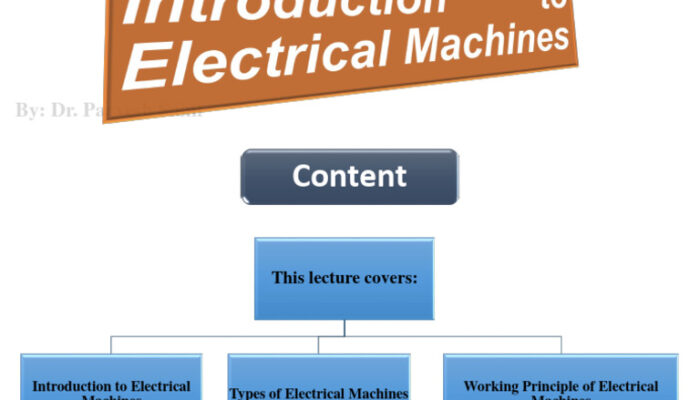
Electrical machines are devices that convert electrical energy into mechanical energy or vice versa. They form a crucial part of electrical engineering, combining theoretical principles with practical applications to perform essential functions in various industries. These machines include motors, generators, and transformers, each serving specific roles in power generation, transmission, and utilization.
Fundamental Concepts Underpinning Electrical Machines
Before delving into electrical machines, it is essential to grasp the basic principles of electricity and magnetism. These foundational concepts include electric fields, magnetic fields, and electromagnetic induction, which govern the operation of all electrical machines.
- Electricity and Magnetism:
Understanding the behavior of electric charges and magnetic forces is vital for comprehending how electrical machines function. - Electromagnetic Induction:
This principle explains how a changing magnetic field induces an electric current, a phenomenon central to the operation of generators and transformers. - Ohm’s and Kirchhoff’s Laws:
These laws describe the relationships between voltage, current, and resistance in electrical circuits, providing tools to analyze machine behavior.
Role of Circuit Theory in Electrical Machines
Electrical machines operate within electrical circuits, making circuit theory indispensable for understanding their performance. Key concepts such as Thevenin’s and Norton’s theorems help simplify complex circuits, enabling better analysis of machine interactions within larger systems.
- Thevenin’s Theorem:
Allows the reduction of a complex circuit to a simple equivalent circuit with a single voltage source and resistance. - Norton’s Theorem:
Similar to Thevenin’s, it simplifies circuits to a current source and parallel resistance, aiding in machine analysis.
Utilizing textbooks, online tutorials, and video lectures can enhance comprehension by providing visual and interactive explanations of these theories.
Classification and Types of Electrical Machines
Electrical machines are broadly categorized into two main types based on the nature of current they use: alternating current (AC) machines and direct current (DC) machines.
- AC Machines:
These include synchronous and asynchronous (induction) motors and generators, widely used in industrial and commercial applications due to their efficiency and reliability. - DC Machines:
Comprising DC motors and generators, these machines have historical significance and are still employed in specific applications requiring precise speed control.
This classification aids learners in understanding the distinct operational principles and applications of each machine type.
Modeling and Simulation of Electrical Machines
Mathematical modeling is a critical aspect of studying electrical machines, enabling the prediction and analysis of their behavior under various conditions. Equivalent circuit models represent machines in simplified electrical terms, facilitating easier analysis.
- Equivalent Circuits:
These models translate the physical components of machines into electrical circuit elements, helping to analyze performance parameters. - Simulation Software:
Tools like MATLAB/Simulink and PSpice allow for dynamic simulation of machine operations, providing visual insights and enhancing practical understanding.
Performance Parameters and Efficiency
Understanding the performance characteristics of electrical machines is essential for optimizing their operation. Key parameters include torque, efficiency, power factor, and losses.
- Torque:
The rotational force produced by motors, crucial for mechanical work output. - Efficiency:
The ratio of useful output power to input power, indicating how effectively a machine converts energy. - Power Factor:
A measure of how effectively electrical power is converted into useful work, impacting energy consumption and system stability. - Losses:
Include copper losses, iron losses, and mechanical losses, all of which reduce machine efficiency.
Analyzing performance curves and exploring methods to minimize losses contribute to a comprehensive understanding of machine operation.
Collaborative Learning and Community Engagement
Engaging with peers and professionals through study groups, forums, and online communities enriches the learning experience. These platforms facilitate the exchange of ideas, problem-solving strategies, and practical insights.
- Engineering Forums:
Online spaces where learners and experts discuss challenges and innovations in electrical machines. - Social Media Groups:
Communities dedicated to electrical engineering topics, offering support and resources.
Hands-On Experience and Practical Applications
Practical exposure is indispensable for mastering electrical machines. Laboratory experiments, internships, and project work provide tangible experience that complements theoretical knowledge.
- Laboratory Work:
Experimenting with real machines such as induction motors and transformers to observe their behavior firsthand. - Industrial Visits:
Observing large-scale electrical machines in operation within manufacturing plants, power stations, and transportation systems. - Project-Based Learning:
Building and testing miniature machines to develop problem-solving and engineering skills.
Electrical Machines in Sustainable Technology
The evolution of electrical machines is closely linked to advancements in sustainable and renewable energy technologies. Understanding their role in electric vehicles, renewable energy systems, and smart grids is increasingly important.
- Electric Vehicles:
Utilize efficient electric motors to reduce carbon emissions and dependence on fossil fuels. - Renewable Energy Systems:
Generators and converters in wind turbines and solar power plants rely on advanced electrical machines. - Smart Grid Technology:
Integration of intelligent electrical machines enhances grid stability and energy management.
Continuous Learning and Professional Development
The field of electrical machines is dynamic, with ongoing technological innovations. Lifelong learning through workshops, conferences, and advanced studies is essential to stay current and deepen expertise.
- Workshops and Conferences:
Opportunities to learn about the latest research and network with industry professionals. - Advanced Education:
Specializations in robotics, automation, and renewable energy applications expand career prospects. - Research and Publications:
Engaging with scholarly articles fosters a deeper understanding of emerging trends and technologies.
Conclusion: Navigating the Study of Electrical Machines
Embarking on the study of electrical machines requires a structured approach, beginning with fundamental principles and advancing through theoretical, practical, and collaborative learning. By integrating knowledge of electricity, circuit theory, machine classification, modeling, and real-world applications, learners can develop a comprehensive understanding. Embracing continuous education and practical experience ensures readiness to contribute effectively to the evolving field of electrical engineering, leading to a fulfilling and impactful career.
FAQ
What are electrical machines?
Electrical machines are devices that convert electrical energy into mechanical energy or vice versa, including motors and generators.
Why is understanding circuit theory important for electrical machines?
Circuit theory helps explain how electrical machines operate within electrical systems, facilitating analysis of performance and behavior.
What practical experiences are beneficial for studying electrical machines?
Laboratory experiments, internships, hands-on projects, and industrial visits provide practical exposure essential for mastering electrical machines.
How does sustainable technology relate to electrical machines?
Electrical machines play a critical role in renewable energy and electric vehicles, making knowledge of sustainable technology important for future engineers.




Leave a Reply