
Short Answer
Definition of Nuclear Fission
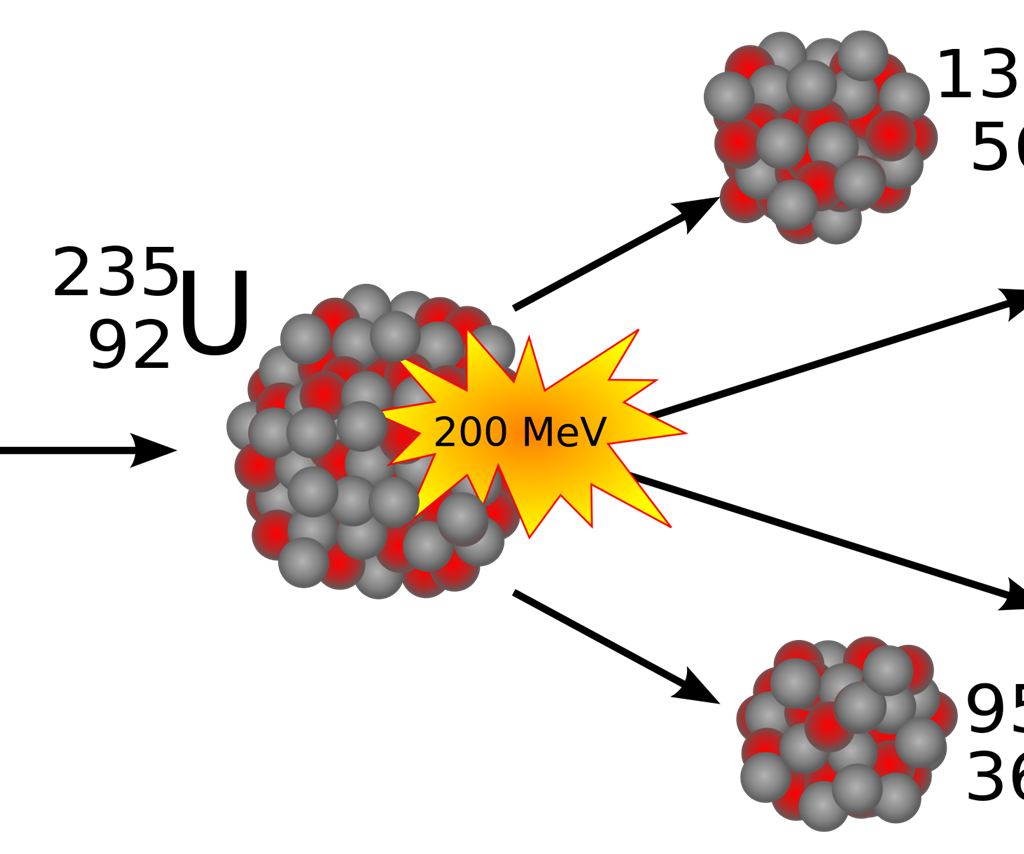
Nuclear fission is a fundamental process in nuclear physics where the nucleus of a heavy atom, such as uranium or plutonium, splits into two or more smaller nuclei. This division releases a significant amount of energy, as described by Einstein’s equation, E=mc², which illustrates the conversion of mass into energy. The phenomenon is central to both nuclear power generation and the explosive force of atomic bombs.
Mechanism of Nuclear Fission
The fission process begins when a heavy atomic nucleus absorbs a neutron, causing it to become unstable. This instability leads the nucleus to split rapidly into smaller fragments, releasing energy in the form of kinetic energy of the fragments and electromagnetic radiation. Importantly, the energy released exceeds the energy required to initiate the fission, making the reaction self-sustaining under the right conditions.
Chain Reaction and Critical Mass
A key feature of nuclear fission is the chain reaction. Each fission event emits additional neutrons-typically two or three-that can trigger further fission in nearby fissile nuclei. This creates an exponential increase in reactions, similar to a wildfire spreading through dry brush. To maintain this chain reaction, a minimum quantity of fissile material, known as the critical mass, must be present. Below this threshold, the reaction ceases; above it, the reaction escalates rapidly, releasing enormous energy.
Designs of Atomic Bombs Utilizing Fission
Gun-Type Assembly
This design involves propelling one sub-critical mass of fissile material into another using conventional explosives. When combined, these masses form a supercritical assembly, initiating a rapid chain reaction and resulting in a powerful explosion. The simplicity of this method made it one of the earliest approaches to nuclear weapon design.
Implosion-Type Assembly
The implosion design employs a spherical arrangement of explosives surrounding a sub-critical core. When detonated simultaneously, these explosives compress the core inward, increasing its density and pressure to achieve a supercritical state. This method is more efficient in utilizing fissile material and produces a more powerful explosion relative to the amount of material used.
Energy Release and Radiation Effects
The energy discharged during fission manifests not only as an intense explosive force but also as harmful radiation. Gamma rays and neutrons emitted during the reaction can cause severe biological damage by disrupting cellular structures and molecular bonds. This dual nature of nuclear fission-both as a source of immense energy and a cause of radiation hazards-underscores its profound impact on life and the environment.
Formation and Characteristics of the Fireball
The fireball generated by a nuclear explosion results from the extreme heat produced during fission, reaching temperatures of millions of degrees Celsius. This intense heat causes the surrounding air to expand rapidly, creating shock waves that travel faster than the speed of sound. The iconic mushroom cloud that follows is a visual representation of this violent energy release, symbolizing both the destructive capacity of nuclear weapons and the vast power harnessed through scientific innovation.
Ethical Considerations and Global Impact
The development and use of atomic bombs raise profound ethical questions. The immense destructive power and long-lasting radiation effects have sparked ongoing debates about the responsibilities of scientists and policymakers. The existence of nuclear weapons challenges humanity to balance scientific progress with moral accountability, emphasizing the need for careful stewardship of such technologies.
Significance of Nuclear Fission in Modern Society
Nuclear fission plays a dual role in contemporary life: it is a source of both energy and potential devastation. While nuclear reactors harness fission to generate electricity, the same principles underpin the destructive force of nuclear weapons. Understanding the science behind fission and its consequences is crucial for promoting responsible use of nuclear technology and preventing catastrophic outcomes.
Summary: The Paradox of Nuclear Energy
The journey from the splitting of an atomic nucleus to the creation of a fireball encapsulates the paradox inherent in nuclear energy. It embodies the potential for groundbreaking advancements in energy production alongside the capacity for unprecedented destruction. This complex interplay calls for continued scientific inquiry guided by ethical considerations, ensuring that nuclear science serves humanity’s progress rather than its peril.
FAQ
What is nuclear fission?
Nuclear fission is the splitting of a heavy atomic nucleus into smaller nuclei, releasing a large amount of energy.
How does an atomic bomb initiate a chain reaction?
By assembling a supercritical mass of fissile material, neutrons released initiate an exponential chain reaction producing a massive explosion.
What are the differences between gun-type and implosion-type atomic bombs?
Gun-type bombs use conventional explosives to bring two sub-critical masses together, while implosion-type bombs compress a fissile core symmetrically using explosives to achieve supercriticality.
What are the effects of radiation from atomic bombs?
Radiation causes severe biological damage, including cellular destruction and increased cancer risk.
Why are ethical considerations important in nuclear weapons development?
Due to their destructive power and long-lasting effects, ethical considerations guide responsible use and policy decisions.






Leave a Reply