
Short Answer
Definition of Dark Matter
Dark matter is a mysterious and invisible form of matter that permeates the universe, influencing its structure and evolution through gravitational effects. Unlike ordinary matter, it does not emit, absorb, or reflect light, making it undetectable by conventional telescopes. Despite its elusive nature, dark matter is believed to constitute approximately 27% of the universe’s total mass-energy content, playing a crucial role in cosmic dynamics.
- Invisible Mass:
Dark matter cannot be observed directly because it does not interact with electromagnetic radiation. - Gravitational Influence:
Its presence is inferred from gravitational effects on visible matter, radiation, and the large-scale structure of the universe.
Evidence Supporting Dark Matter
Observational data accumulated over decades reveal inconsistencies between the gravitational forces expected from visible matter and those actually measured. One of the most compelling pieces of evidence comes from the rotation curves of galaxies, which show stars orbiting at speeds too high to be explained solely by the gravitational pull of observable matter. This discrepancy suggests the existence of an unseen mass component-dark matter-that exerts additional gravitational force.
The Ghostly Ring Phenomenon
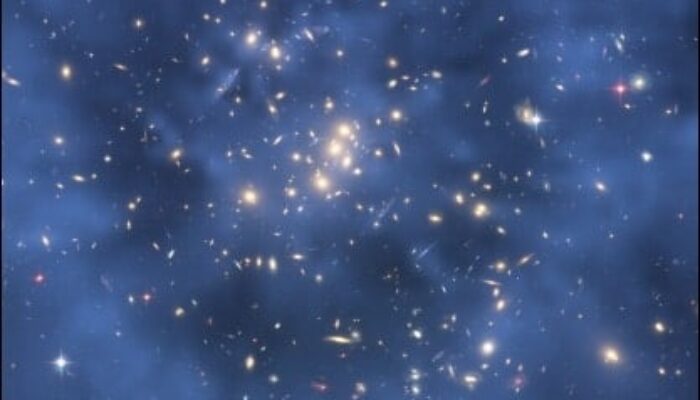
A striking example of indirect evidence for dark matter is the so-called “ghostly ring,” observed in merging galaxy clusters. This ring-like structure emerges through gravitational lensing, where the gravity of massive objects bends and distorts the light from background galaxies. The ghostly ring is a visual signature of dark matter’s distribution, revealed as clusters collide and interact, producing shock waves and cosmic filaments that warp spacetime.
Gravitational Lensing: A Window into the Invisible
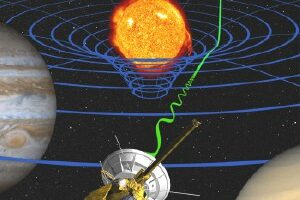
Gravitational lensing is a fundamental concept derived from Einstein’s General Relativity, describing how massive bodies curve spacetime and bend the path of light traveling near them. This effect allows astronomers to map the presence and distribution of dark matter by analyzing distortions in the images of distant galaxies. The ghostly ring is a vivid example of how gravitational lensing exposes the hidden mass within galaxy clusters, reinforcing the hypothesis of dark matter’s existence.
Dark Matter Candidates and Theoretical Models
The term “dark matter” encompasses a variety of theoretical particles and phenomena, each with unique properties and implications. Among the leading candidates are Weakly Interacting Massive Particles (WIMPs), axions, and sterile neutrinos. These hypothetical particles differ in mass, interaction strength, and behavior, influencing how dark matter might cluster and interact with ordinary matter.
- WIMPs:
Hypothetical particles that interact via the weak nuclear force and gravity, making them difficult to detect. - Axions:
Extremely light particles proposed to solve certain problems in quantum chromodynamics, potentially constituting dark matter. - Sterile Neutrinos:
Hypothetical neutrinos that do not interact via the standard weak force, possibly contributing to dark matter.
Alternative Theories and Scientific Debate
While dark matter remains the prevailing explanation for observed cosmic phenomena, alternative theories challenge this view. Modified gravity models, such as Modified Newtonian Dynamics (MOND), propose adjustments to the laws of gravity to account for galactic rotation curves and lensing effects without invoking unseen matter. These competing hypotheses highlight the ongoing scientific discourse and the need for further empirical evidence to resolve the debate.
Technological Advances and Observational Tools
Modern telescopes and observatories, including the Hubble Space Telescope and the forthcoming James Webb Space Telescope, are instrumental in advancing our understanding of dark matter. These instruments enable detailed observations of galaxy formation, cluster mergers, and the cosmic web, providing critical data to analyze phenomena like the ghostly ring. Additionally, collaborations between theorists and experimentalists foster the development of direct and indirect detection experiments aimed at capturing elusive dark matter particles.
Direct Detection Efforts
Experimental searches for dark matter involve highly sensitive detectors placed deep underground to shield them from cosmic radiation and other background noise. These detectors aim to observe rare interactions between dark matter particles and ordinary matter, which, if detected, would offer groundbreaking insights into the nature of dark matter and validate theoretical models.
Common Misconceptions About Dark Matter
Dark matter is simply ordinary matter that is hidden or dark.
Dark matter is fundamentally different from ordinary matter, as it does not interact with light or electromagnetic forces.
Dark matter can be seen with powerful telescopes.
Dark matter cannot be observed directly; its presence is inferred through gravitational effects.
Modified gravity theories have been disproven.
While less widely accepted, modified gravity models remain active areas of research and debate.
Significance of Dark Matter in Cosmology
Understanding dark matter is essential for comprehending the universe’s large-scale structure, galaxy formation, and cosmic evolution. It influences the behavior of galaxies and clusters, shapes the cosmic web, and affects the universe’s fate. The ghostly ring and similar phenomena serve as crucial clues in unraveling these cosmic mysteries, driving scientific inquiry and technological innovation.
Conclusion: The Ongoing Quest to Unveil Dark Matter
The study of dark matter embodies the dynamic nature of scientific exploration, marked by compelling evidence, theoretical challenges, and technological advancements. The ghostly ring phenomenon exemplifies the intricate interplay between observation and theory, highlighting both the progress made and the questions that remain. As research continues, the pursuit of understanding dark matter not only enriches our knowledge of the cosmos but also deepens our appreciation for the universe’s profound enigmas.
FAQ
What is dark matter?
Dark matter is a mysterious and invisible form of matter that makes up about 27% of the universe’s mass-energy content, influencing its structure and evolution through gravitational effects.
What is the ghostly ring phenomenon?
The ghostly ring phenomenon is an observable structure in galaxy clusters resulting from gravitational lensing, which provides indirect evidence of dark matter’s presence.
How do scientists search for dark matter?
Scientists search for dark matter through observational methods like gravitational lensing and experimental setups designed to detect rare interactions between dark matter and ordinary matter.



Leave a Reply