
Short Answer
Understanding Fermions: A Quantum Perspective
In quantum mechanics, particles often exhibit behaviors that challenge classical expectations. Among these particles, fermions stand out due to their unique properties, which can be described as both “degenerate” and “elegant.” This duality captures the essence of fermions, especially as scientific inquiry reveals increasingly intricate states they can occupy. Defined by their half-integer spin and strict compliance with the Pauli exclusion principle, fermions are fundamental to explaining a wide range of physical phenomena-from the stability of ordinary matter to the remarkable characteristics of superconductors.
Definition and Fundamental Properties of Fermions
Fermions are a class of subatomic particles characterized primarily by their half-integer spin values (e.g., 1/2, 3/2). They obey the Pauli exclusion principle, which prohibits two identical fermions from occupying the same quantum state simultaneously. This intrinsic antisymmetry in their wavefunctions leads to the concept of degeneracy in their energy states.
- Half-Integer Spin:
Fermions possess spins such as 1/2, distinguishing them from bosons, which have integer spins. - Pauli Exclusion Principle:
This principle restricts fermions from sharing identical quantum states, enforcing a structured filling of energy levels. - Degeneracy:
Refers to the number of quantum states available at a given energy level, with fermions limited to one particle per state due to antisymmetry.
Degeneracy and Its Role in Atomic Structure
Degeneracy in fermions manifests as a limitation on how many particles can occupy a particular energy state. This principle is foundational in the arrangement of electrons within atoms, dictating the structure of atomic orbitals and the periodic table. Electrons fill orbitals in an orderly fashion, ascending to higher energy levels as lower ones become fully occupied. This creates a delicate balance between order and complexity, where systems naturally seek the lowest possible energy configuration while maintaining stability against external disturbances.
Quantum Behavior at Low Temperatures: Degenerate Fermi Gases
At temperatures approaching absolute zero, fermions form degenerate Fermi gases, a state where quantum effects dominate particle behavior. In this regime, fermions occupy the lowest available energy states up to the Fermi energy, resulting in unique phenomena such as superfluidity and the distinctive electrical properties of metals. These degenerate states challenge classical interpretations of particle interactions and highlight the probabilistic nature of quantum mechanics, where particle identity and wavefunction overlap create complex collective behaviors.
Topological Phases and Exotic Fermionic States
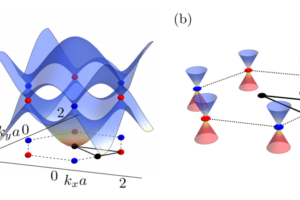
Beyond conventional descriptions, fermions exhibit complex states linked to the topology of the system they inhabit. Topological phases of matter are characterized not by local order but by global, topological properties. A prominent example is the Majorana fermion, a particle predicted to be its own antiparticle and to obey non-abelian statistics. These exotic states are of great interest for quantum computing, as they offer pathways to fault-tolerant quantum operations by leveraging their topological protection against decoherence.
Symmetry, Symmetry Breaking, and Fermions
Symmetry principles play a crucial role in particle physics, governing fundamental interactions. Fermions are deeply connected to these symmetries, and their breaking leads to significant physical consequences. For instance, electroweak symmetry breaking, mediated by the Higgs mechanism, imparts mass to fermions and other particles. This interplay between symmetry and fermionic properties illustrates the profound unity of physical laws across scales, from subatomic particles to cosmological phenomena.
Collective Excitations and Emergent Phenomena in Solid-State Physics
In condensed matter systems, fermions can exhibit collective excitations that give rise to emergent properties not evident from individual particles alone. A key example is the formation of Cooper pairs in superconductors, where paired fermions condense into a coherent quantum state that allows electrical current to flow without resistance. This phenomenon exemplifies how degeneracy and quantum coherence combine to produce technologically significant effects, influencing energy transmission and electronic device performance.
Philosophical Implications of Fermionic Behavior
The study of fermions extends beyond practical applications, inviting reflection on the fundamental nature of reality. The probabilistic and sometimes counterintuitive behavior of fermions challenges classical notions of determinism and causality. These quantum insights provoke ongoing debates about the interpretation of quantum mechanics and the underlying structure of spacetime, highlighting the philosophical depth embedded within modern physics.
Significance of Fermions in Modern Science
Research into degenerate fermionic states continues to expand our comprehension of the universe. The intricate behaviors of fermions not only elucidate the principles governing matter and energy but also inspire new technologies and theoretical frameworks. This evolving understanding underscores the elegance that arises from complexity and the enduring human quest to decode the mysteries of the cosmos.
Summary
The exploration of fermions, particularly their degenerate yet elegant states, weaves together themes from quantum mechanics, topology, and emergent phenomena. Each discovery deepens our grasp of the fundamental workings of matter and the universe. As investigations progress, fermions remain central to both theoretical advancements and practical innovations, embodying the profound connection between the microscopic world and the grand tapestry of existence.
FAQ
What are fermions?
Fermions are a class of particles characterized by half-integer spin and the Pauli exclusion principle, preventing identical fermions from occupying the same state.
What is degeneracy in fermions?
Degeneracy refers to the number of quantum states available at a particular energy level, which fermions can occupy uniquely due to their antisymmetric properties.
How do fermions behave at low temperatures?
At temperatures close to absolute zero, fermions form degenerate Fermi gases, where quantum effects dominate and unique phenomena like superfluidity occur.




Leave a Reply