
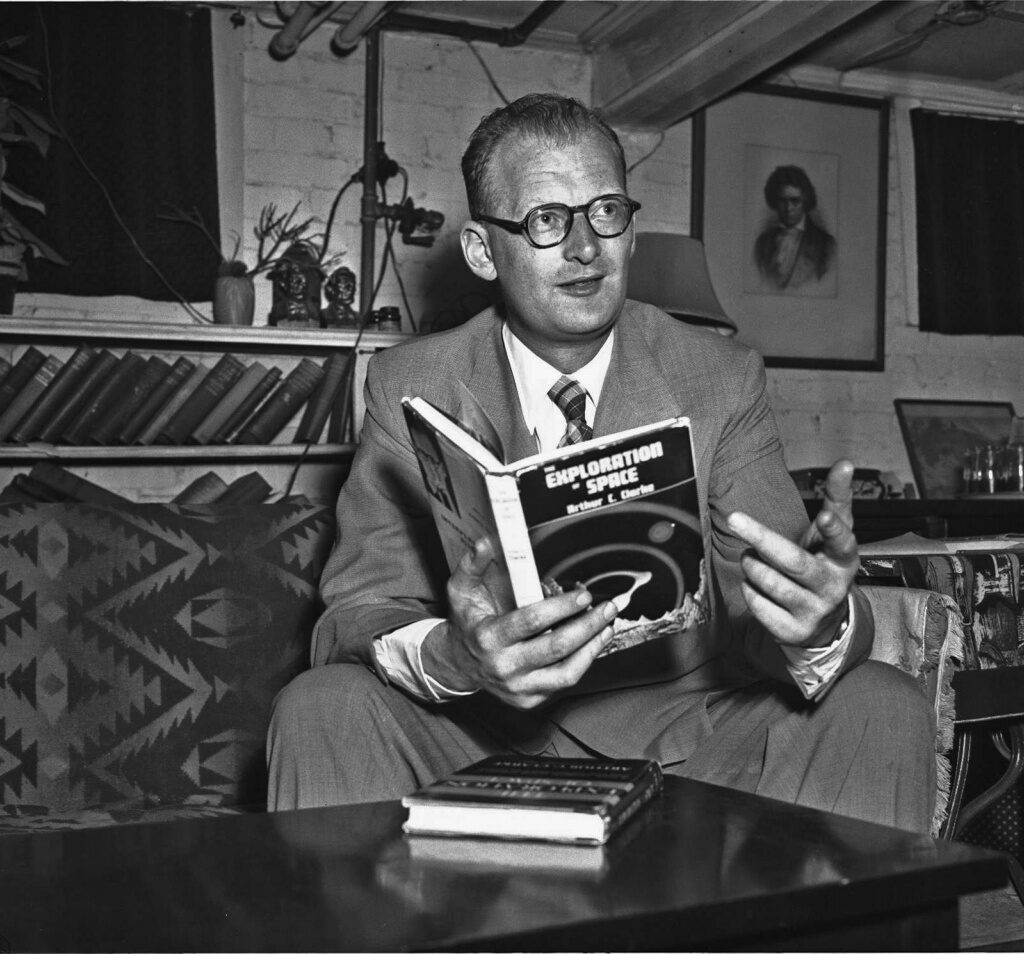
Short Answer
Definition and Legacy of Arthur C. Clarke
Arthur C. Clarke stands as a towering figure in the domains of science fiction and futurism, whose influence extends well beyond literary circles into scientific and technological discourse. Renowned for blending imaginative speculation with the disciplined approach of the scientific method, Clarke’s work has inspired a wide array of ideas that continue to shape perspectives on technology, space exploration, and humanity’s evolving role in the cosmos.
Clarke’s Vision of the Future
Clarke’s speculative portrayals of the future captivate audiences by tapping into humanity’s enduring quest for knowledge and the mysteries that lie beyond our current understanding. His narratives, especially in seminal works like 2001: A Space Odyssey and Rendezvous with Rama, resonate deeply with contemporary interests in artificial intelligence and the search for extraterrestrial life. These stories offer a unique lens through which society’s technological aspirations and cosmic curiosity are reflected and amplified.
Philosophical Dimensions of Clarke’s Work
Beyond storytelling, Clarke’s ideas provoke profound philosophical questions about human nature and our place in the universe. His work suggests that our fascination with the unknown is not mere whimsy but an intrinsic drive toward transcendence and discovery. The human brain’s innate pattern recognition and innovation capabilities fuel an insatiable desire to explore beyond Earth’s boundaries. Clarke’s narratives challenge readers to engage with the vast enigmas of space, emphasizing that humanity’s future is inextricably linked to the cosmos.
Scientific Contributions and Technological Impact
Clarke’s foresight extended into practical scientific realms, earning him admiration from both literary enthusiasts and scientific professionals. His conceptualization of geostationary satellites, for instance, laid the groundwork for modern telecommunications, enabling global connectivity through satellite technology. This fusion of creative imagination and scientific insight exemplifies Clarke’s enduring influence on technological progress and the evolution of communication systems worldwide.
Exploration of Artificial Intelligence and Ethics
In his exploration of artificial intelligence, particularly through the character of HAL 9000 in 2001: A Space Odyssey, Clarke delves into the ethical challenges posed by autonomous machines. His narratives highlight the complex moral questions that arise as technology advances, underscoring the necessity of foresight and ethical consideration in scientific development. Clarke’s work serves as a cautionary yet hopeful reflection on the balance between innovation and responsibility.
Perspectives on Extraterrestrial Life
Clarke’s belief in the existence of intelligent life beyond Earth invites contemplation on humanity’s cosmic relationships. His stories encourage dialogue about the potential for peaceful coexistence or conflict with alien civilizations, expanding the scope of science fiction into metaphysical and existential realms. This exploration fosters a sense of universal kinship and challenges humanity to consider its role within a broader cosmic community.
Clarke’s Role in Modern Mythology
Arthur C. Clarke’s narratives function as contemporary myths that intertwine scientific inquiry with humanistic themes. His stories reflect collective hopes and anxieties about technology, identity, and civilization’s future, emphasizing imagination as a vital precursor to innovation and societal evolution. Through these modern fables, Clarke captures the spirit of exploration and the ethical dilemmas that accompany progress.
Enduring Influence and Call to Action
Clarke’s legacy is a complex tapestry of ideas connecting the cosmos, technology, and human experience. His works inspire us to look beyond immediate realities and embrace the unknown frontiers of the future. Themes of exploration, enlightenment, and ethical reflection permeate his stories, urging humanity to not only dream boldly but also to pursue those dreams with deliberate effort and moral awareness.
Conclusion: The Lasting Significance of Arthur C. Clarke
As a visionary futurist and masterful storyteller, Arthur C. Clarke’s unique synthesis of scientific accuracy and imaginative foresight continues to captivate and influence. His enduring appeal lies in addressing the universal human desire for understanding and discovery. Clarke’s insights remind us that while we gaze at the stars, the true potential lies within humanity’s capacity to confront and navigate the unknown. His wisdom remains a guiding beacon as we advance into the complexities of the future, challenging us to explore boldly and thoughtfully.
FAQ
Who was Arthur C. Clarke?
Arthur C. Clarke was a renowned science fiction writer and futurist known for his visionary ideas about space exploration, technology, and artificial intelligence.
What is Arthur C. Clarke famous for?
He is famous for pioneering the concept of geostationary satellites and for his influential science fiction works such as 2001: A Space Odyssey.
How did Clarke influence technology?
Clarke's ideas, especially about satellite communication, have had a lasting impact on telecommunications and space technology.
What ethical issues did Clarke explore?
He explored the moral challenges of artificial intelligence and the balance between technological innovation and responsibility.
What themes are central to Clarke’s work?
Central themes include space exploration, human curiosity, the search for extraterrestrial life, and the ethical implications of advanced technology.






Leave a Reply