
Short Answer
Definition of Elastic Lava and Volcanic Explosivity
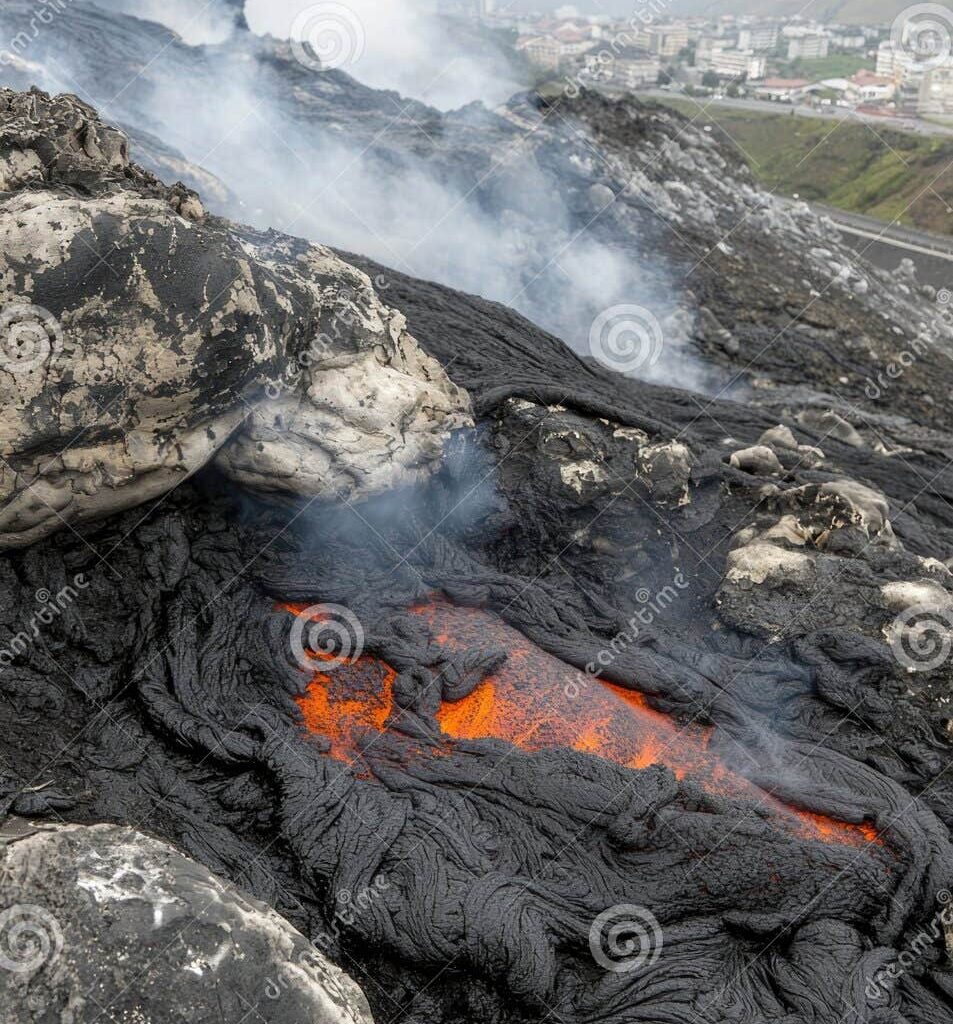
Elastic lava refers to a distinctive type of molten rock that exhibits elastic properties under specific thermodynamic conditions during its ascent through the Earth’s crust. This behavior arises as magma undergoes phase transitions influenced by variations in pressure and temperature, shifting from a viscous fluid to a more elastic state. Such transformations are critical in understanding the explosive nature of certain volcanic eruptions, where the interplay of magma composition, gas content, and physical state governs eruption dynamics.
Classification of Volcanic Eruptions
Volcanic eruptions are generally categorized based on their eruptive style and energy release:
- Effusive Eruptions:
Characterized by the steady outpouring of low-viscosity lava, these eruptions typically form broad, gently sloping shield volcanoes. - Explosive Eruptions:
Marked by violent fragmentation of magma, these eruptions eject ash, gases, and rock fragments, often building stratovolcanoes with steep profiles. - Phreatomagmatic Eruptions:
Result from interactions between magma and external water sources, producing steam-driven explosions that propel fragmented material into the atmosphere.
Mechanisms Behind Explosive Volcanic Activity
The genesis of explosive eruptions is primarily influenced by three interrelated factors: magma viscosity, volatile gas content, and the characteristics of the magma chamber. High-viscosity magmas, such as those rich in andesitic or rhyolitic compositions, are adept at trapping dissolved gases. As magma ascends and pressure decreases, these gases exsolve, forming bubbles that expand rapidly. This expansion increases magma volume and decreases density, culminating in explosive fragmentation when the confining pressure is suddenly released.
Role of Volatiles in Eruption Dynamics
Volatile compounds-mainly water vapor (H2O), carbon dioxide (CO2), and sulfur dioxide (SO2)-play a pivotal role in driving explosive eruptions. As magma rises, the drop in pressure causes these dissolved gases to separate from the melt, creating a foam-like magma structure. The rapid growth and coalescence of gas bubbles generate internal pressures that can exceed the strength of the surrounding rock, triggering violent eruptions.
Elastic Deformation and Energy Storage
Elastic deformation within the magma and surrounding crustal rocks is fundamental to the buildup and release of eruptive energy. Pressure accumulation in the magma chamber stores elastic strain energy in the crust. When this pressure surpasses the elastic limit of the enclosing rocks, fracturing occurs, allowing magma and gases to escape explosively. The presence of groundwater can amplify this effect, leading to phreatic explosions where steam generation further fragments rock and ejects material.
Scientific Approaches to Studying Explosive Volcanism
Understanding the complex behavior of elastic lava and explosive eruptions involves a multidisciplinary approach combining fieldwork, laboratory analysis, and remote sensing technologies:
- Field Investigations:
Stratigraphic analysis of volcanic deposits, including ash and tephra layers, helps reconstruct eruption histories and magnitudes. - Petrological Studies:
Examination of rock samples reveals volatile contents and textures, providing clues about magma evolution and eruption triggers. - Remote Sensing and Geophysical Monitoring:
Satellite imagery and ground deformation measurements enable real-time tracking of volcanic activity and pre-eruptive changes.
Mathematical and Physical Principles of Explosive Eruptions
The dynamics of explosive volcanic eruptions can be described through principles of fluid dynamics, thermodynamics, and elasticity. Key variables include magma viscosity (η), gas volume fraction (φ), pressure (P), and temperature (T). The rapid expansion of gas bubbles follows the ideal gas law and phase transition kinetics, while the elastic strain energy (U) stored in the crust can be approximated by:
U = ½ × σ × ε × V
- σ (Stress): The force per unit area within the rock.
- ε (Strain): The deformation relative to original dimensions.
- V (Volume): The affected volume of rock storing elastic energy.
This stored energy, when released, drives fracturing and explosive magma ejection.
Notable Examples of Explosive Volcanic Events
Historical eruptions provide valuable insights into the behavior of elastic lava and explosive volcanism:
- Mount St. Helens (1980):
This eruption featured a catastrophic lateral blast and extensive ash dispersal, demonstrating the destructive potential of elastic lava dynamics under critical pressure conditions. - Eyjafjallajökull (2010):
The eruption disrupted European air traffic due to widespread ash clouds, highlighting the far-reaching impacts of explosive volcanic activity on modern society.
Common Misconceptions About Explosive Volcanism
All volcanic eruptions are explosive.
Many eruptions are effusive, involving gentle lava flows rather than violent explosions.
Lava is always a liquid.
Under certain conditions, lava can exhibit elastic properties, behaving more like a deformable solid before fracturing.
Volcanic gases are insignificant.
Volatiles are crucial in driving explosive eruptions by increasing magma volume and pressure.
Significance of Understanding Elastic Lava and Explosive Eruptions
Comprehending the mechanisms behind elastic lava behavior and explosive volcanic eruptions is vital for multiple reasons. Scientifically, it advances knowledge in geology, materials science, and fluid mechanics. Practically, it enhances volcanic hazard assessment and risk mitigation, enabling better preparedness for communities near active volcanoes. Moreover, studying these processes contributes to our broader understanding of Earth’s dynamic systems and the natural forces shaping the planet’s surface.
FAQ
What is elastic lava?
Elastic lava is molten rock that shows elastic properties under certain conditions, influencing volcanic eruptions.
What causes explosive volcanic eruptions?
Explosive eruptions are typically caused by high-viscosity magma trapping gases, leading to rapid pressure buildup.
How do volatiles affect eruptions?
Volatile gases drive explosive eruptions by rapidly expanding and increasing internal pressures within the magma.




Leave a Reply