
Short Answer
Understanding Condensed Matter Theory
Condensed matter theory is a branch of physics that investigates the properties and behaviors of matter in its condensed phases, such as solids and liquids. This field bridges abstract mathematical formulations with the tangible characteristics of materials, aiming to unravel the complex interactions that govern matter at both microscopic and macroscopic scales. Much like the ancient pursuit of alchemy, which sought to transform base metals into gold, condensed matter theory strives to decode the mysterious phenomena exhibited by materials under various conditions.
Fundamental Concepts of Condensed Matter
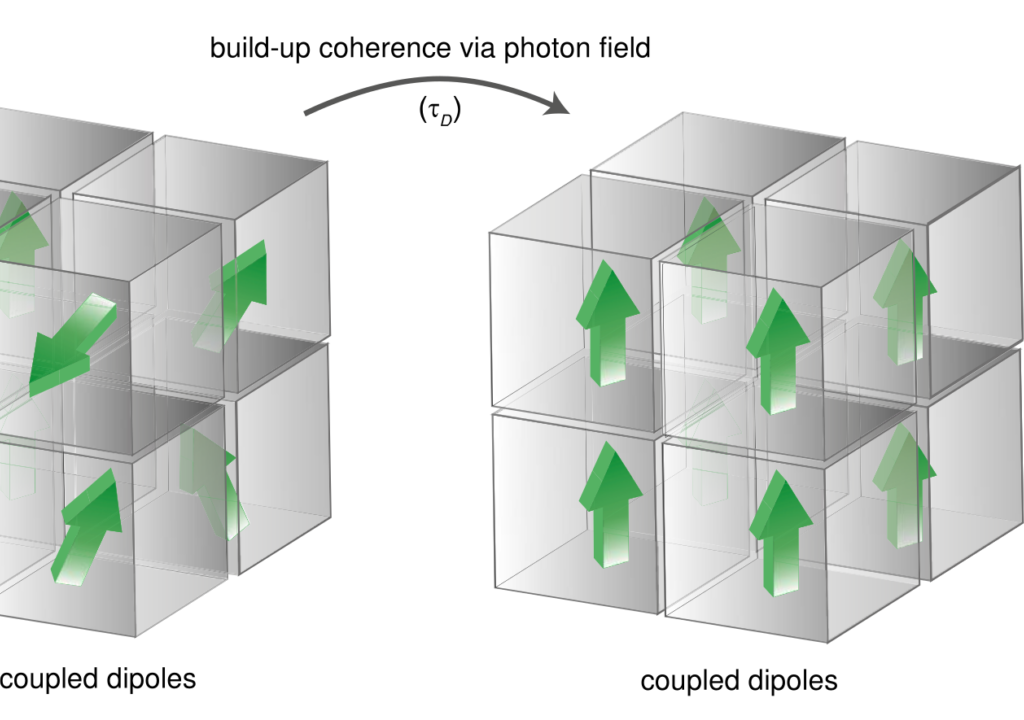
At its essence, condensed matter physics studies how large assemblies of atoms and molecules organize and interact to form different states of matter. These states range from the orderly patterns of crystalline solids to the more disordered arrangements found in liquids. The discipline views these systems as intricate ensembles where each particle contributes to the overall physical properties, much like individual instruments in a symphony creating harmonious or discordant effects.
- Atomic Interactions:
The forces and bonds between atoms dictate the structure and behavior of materials. - Emergent Properties:
Collective phenomena arise from the interactions of many particles, leading to new material characteristics not evident at the individual particle level.
Mathematical Frameworks in Condensed Matter Theory
Theoretical research in this domain relies heavily on sophisticated mathematical tools to represent and predict material behavior. These include complex equations involving tensors, integrals, and wave functions, which serve as the language through which physical concepts are expressed and explored. Each mathematical expression acts as a key to unlocking phenomena such as superconductivity and quantum phase transitions.
Key Theoretical Approaches
- Mean-Field Theory:
Simplifies particle interactions by averaging their effects, allowing researchers to focus on general trends rather than individual complexities. - Renormalization Group Methods:
Analyze how physical systems behave across different scales, revealing self-similar patterns and universal properties. - Quantum Field Theory:
Provides a framework to describe quantum mechanical interactions within condensed matter systems.
Mechanisms and Principles
Condensed matter theory operates by connecting microscopic particle interactions to macroscopic observable phenomena. For example, mean-field theory treats the collective influence of particles as an average field, akin to perceiving the overall temperature of a room rather than tracking each molecule’s motion. In contrast, renormalization group techniques delve into the hierarchical layers of complexity, much like peeling an onion, to uncover invariant properties that persist despite the system’s intricacies.
Applications and Technological Impact
The insights derived from condensed matter theory have profound implications for technology and material science. Understanding the fundamental principles behind material behavior enables the development of advanced materials such as superconductors, magnets, and semiconductors, which are integral to modern electronics and energy systems.
- Superconductors:
Materials that conduct electricity without resistance, revolutionizing power transmission and magnetic technologies. - Topological Insulators:
Exotic materials with unique surface states that hold promise for quantum computing advancements. - Semiconductors:
The backbone of electronic devices, enabling the functionality of computers, smartphones, and more.
Interaction Between Theory and Experiment
The relationship between theoretical predictions and experimental validation is a dynamic and iterative process in condensed matter research. Theoretical models guide experiments, which in turn provide data that refine and challenge existing theories. This synergy is essential for advancing both fundamental understanding and practical applications, much like an artist blending colors to create a vivid masterpiece.
Exploration and Challenges in Condensed Matter Research
Researchers in this field often embark on exploratory quests to discover new materials with extraordinary properties. This endeavor resembles a treasure hunt through a vast landscape of chemical compositions and structural configurations. The pursuit of novel materials, such as topological insulators, opens new frontiers with the potential to transform technology and society.
However, the field is also marked by inherent uncertainties and complex phenomena like quantum entanglement and emergent behavior, which continually push the boundaries of current knowledge. Navigating these challenges requires a blend of mathematical rigor and experimental ingenuity.
Significance of Condensed Matter Theory
Condensed matter theory represents a unique fusion of abstract mathematics and physical reality, embodying humanity’s enduring quest to comprehend the fundamental laws of nature. Its contributions extend beyond academic curiosity, influencing technological innovation and shaping the materials that underpin modern life. The discipline exemplifies how deep theoretical inquiry, coupled with empirical investigation, drives progress and enriches our understanding of the universe.
Common Misconceptions
Condensed matter physics only deals with solids.
While solids are a major focus, condensed matter physics also studies liquids, gases under certain conditions, and other complex states of matter.
Theoretical equations in condensed matter are purely abstract with no practical relevance.
These mathematical models directly inform the development of new materials and technologies, demonstrating tangible real-world impact.
FAQ
What is condensed matter theory?
Condensed matter theory is a branch of physics that studies the properties and behaviors of matter in its condensed phases, such as solids and liquids.
How does condensed matter theory impact technology?
Insights from condensed matter theory lead to the development of advanced materials like superconductors and semiconductors, which are essential for modern technology.



Leave a Reply