
Short Answer
Understanding Gravity and Its Cosmic Context
Gravity is a fundamental force that governs the motion and interaction of all matter in the universe. It is the invisible attraction that keeps planets orbiting stars, binds galaxies together, and even influences the path of light. The strength of gravity depends directly on the mass of an object: the greater the mass, the stronger the gravitational pull it exerts. On Earth, gravity arises from the planet’s substantial mass of approximately 5.97 × 1024 kilograms, anchoring everything from the atmosphere to oceans and living beings firmly to its surface.
Black Holes: Cosmic Giants of Gravity
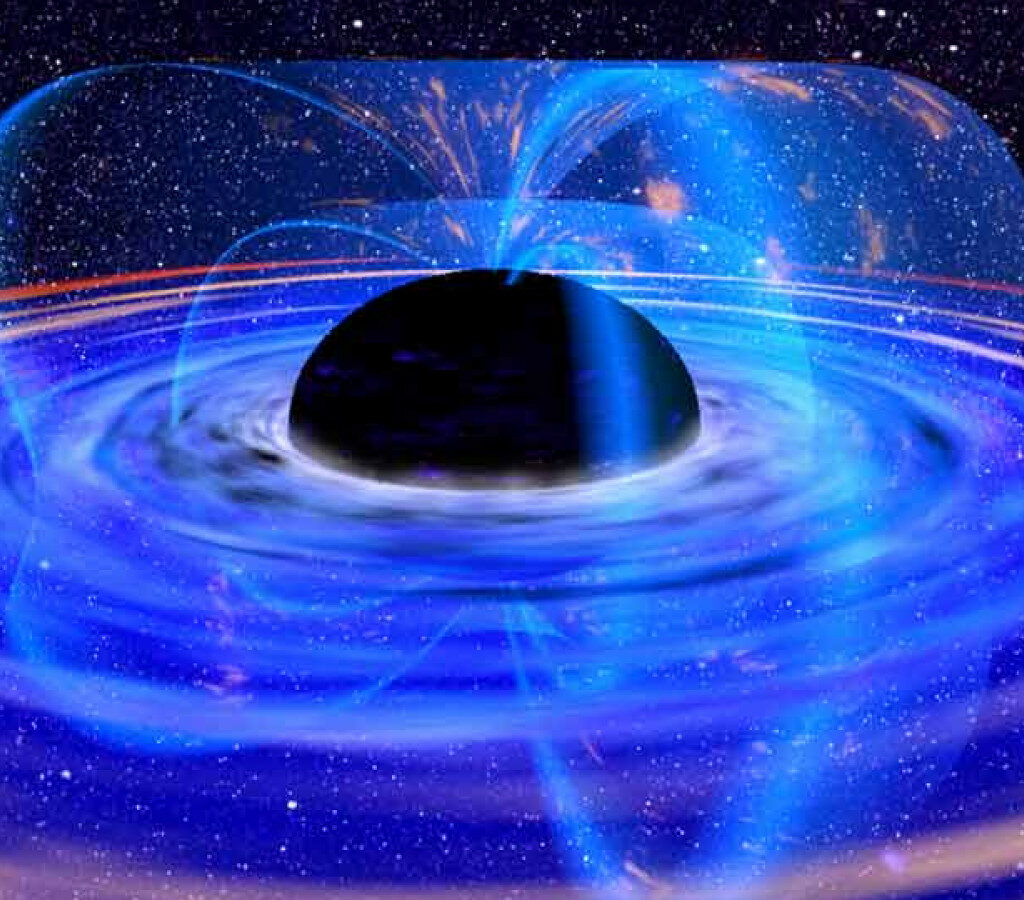
Black holes are among the most extreme gravitational entities in the cosmos. Their masses can range from a few times that of our sun to millions or even billions of solar masses. This immense mass is compressed into an incredibly small volume, creating a gravitational field so intense that nothing, not even light, can escape once it crosses the event horizon-the boundary surrounding a black hole.
- Massive Scale:
Black holes can be stellar-mass, formed from collapsing stars, or supermassive, residing at the centers of galaxies. - Event Horizon:
The point of no return beyond which escape is impossible due to extreme gravity.
How Gravity from Black Holes Affects Earth
Despite their formidable gravitational strength, black holes’ influence on Earth’s gravity is negligible due to the vast distances separating us. Gravity follows the inverse square law, meaning its strength diminishes rapidly as distance increases. Even a supermassive black hole millions of times the sun’s mass exerts an almost imperceptible gravitational pull on Earth because it is located many light-years away.
From Earth’s perspective, the gravitational effect of a distant black hole is similar to that of any other massive object at the same distance, as if all its mass were concentrated at a single point. This means that although black holes are incredibly dense, their gravitational pull at astronomical distances is comparable to that of other celestial bodies with equivalent mass.
The Dominance of the Sun’s Gravity
The sun’s gravitational force overwhelmingly governs Earth’s orbit and local gravitational environment. It maintains the delicate balance that keeps our planet in a stable orbit, overshadowing the influence of any distant black hole. For example, the closest known black hole, V616 Monocerotis, lies about 3,000 light-years away, making its gravitational effect on Earth effectively zero.
Dynamic Factors: Motion and Gravitational Waves
Black holes are not stationary; they move through the galaxy at various speeds. Hypothetically, if a black hole were to pass near our solar system, it could cause temporary disturbances in planetary orbits. However, such events are extraordinarily rare and currently unsupported by observational evidence.
Additionally, black holes can generate gravitational waves-ripples in spacetime produced by violent cosmic events like black hole mergers. These waves do reach Earth and have been detected by instruments such as LIGO. Nevertheless, their impact is fleeting and minuscule, causing distortions smaller than a proton’s diameter without permanently altering Earth’s gravitational field.
Black Holes and Dark Matter: A Cosmic Connection
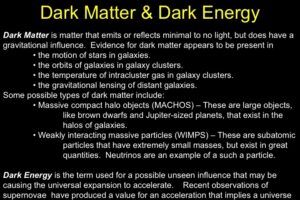
Some theories propose that primordial black holes might contribute to dark matter, the mysterious substance that makes up a significant portion of the universe’s mass and influences galactic structures. However, this remains speculative, and even if numerous black holes were scattered throughout the galaxy, their combined gravitational pull at Earth’s location would be diffused and insignificant compared to local masses.
Local Influences on Earth’s Gravity
Earth’s gravity is primarily shaped by its own mass and internal structure. Variations in gravity across the planet’s surface arise from local features such as mountain ranges, underground density differences, and ocean tides. These subtle fluctuations are measurable with sensitive instruments and highlight that Earth’s gravitational field is dominated by nearby factors rather than distant cosmic objects.
Clarifying Common Misunderstandings
- Misconception: Black holes can pull objects from Earth due to their immense gravity.
Correction: The gravitational pull of black holes on Earth is negligible because of the vast distances separating them from our planet. - Misconception: Gravitational waves from black holes permanently alter Earth’s gravity.
Correction: Gravitational waves cause only transient, extremely small distortions in spacetime and do not change Earth’s gravitational field.
Significance of Understanding Gravitational Influence
Exploring the gravitational relationship between black holes and Earth enriches our comprehension of cosmic forces and their limits. While black holes represent the extreme end of gravitational phenomena, their direct effect on our planet’s gravity is virtually nonexistent. Recognizing this distinction helps ground our understanding of gravity as a local force shaped by Earth and the solar system, while appreciating the grandeur of universal gravitational interactions.
Summary
In essence, although black holes are powerful gravitational entities, their influence does not extend meaningfully to affect Earth’s gravity. The gravity we experience daily is a product of our planet’s own mass and the dominant pull of the sun. This perspective underscores both the vastness of the universe and the localized nature of gravitational forces that govern our immediate environment.
FAQ
Do black holes affect Earth's gravity?
No, their gravitational influence is negligible due to the vast distances.
What is the closest black hole to Earth?
The closest known black hole is V616 Monocerotis, located about 3,000 light-years away.
What dominates Earth's gravitational field?
The Sun's gravity overwhelmingly governs Earth's orbit.
Leave a Reply