
Short Answer
Understanding Weight on Mars
Have you ever wondered, “How much would I weigh if I stood on Mars?” This seemingly simple question opens a window into the fascinating interplay between gravity, mass, and planetary characteristics. Mars, known as the Red Planet, captivates explorers and scientists alike with its stark, rusty terrain and unique environment. However, when it comes to measuring weight-a force we usually associate with Earth’s gravity-the answer reveals intriguing differences shaped by Mars’ distinct physical properties.
Definition of Weight and Its Variability
Weight is the force exerted on an object due to gravity acting on its mass. Unlike mass, which remains constant regardless of location, weight fluctuates depending on the gravitational pull of the celestial body you are on.
- Weight:
The gravitational force acting on an object’s mass, typically measured in pounds or newtons. - Mass:
The amount of matter contained in an object, which does not change with location. - Gravity on Earth:
Approximately 9.8 meters per second squared (m/s²), providing a familiar baseline for weight measurements. - Gravity on Mars:
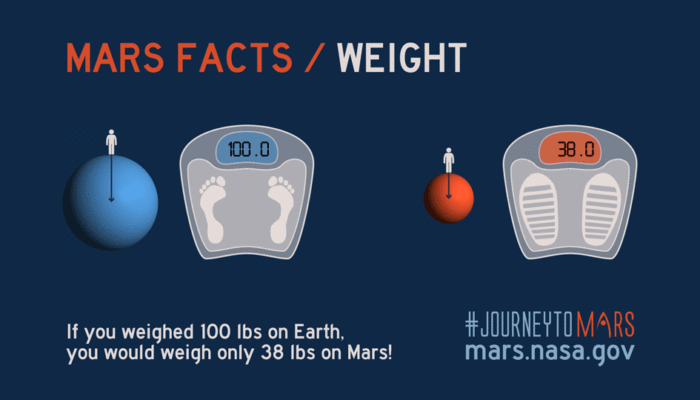
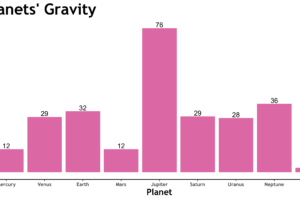
Roughly 38% of Earth’s gravity, due to Mars’ smaller size and mass.
Why Mars’ Gravity Is Different
Mars is about half the diameter of Earth and possesses only around 10% of Earth’s mass. These factors contribute to its weaker gravitational pull. Despite this, Mars maintains enough gravity to hold onto a thin atmosphere, primarily composed of carbon dioxide, which contrasts sharply with Earth’s nitrogen-rich air. This reduced gravity means that objects and people weigh significantly less on Mars than they do on Earth.
Practical Implications of Martian Weight
Imagine stepping onto Mars’ dusty, reddish surface. The sensation would be one of lightness and ease of movement. For example, a person weighing 180 pounds on Earth would register approximately 68 pounds on Mars. This substantial decrease in weight affects not only how you move but also how your body responds to the environment.
Effects on Human Physiology and Movement
The lower gravity on Mars reduces the strain on muscles and joints, making activities like jumping and running feel different. However, this environment also presents challenges:
- Muscle and Bone Health:
Prolonged exposure to reduced gravity can lead to muscle weakening and bone density loss, similar to conditions experienced by astronauts in microgravity. - Movement Coordination:
Balance and handling tools require adaptation due to altered gravitational forces. - Training Needs:
Specialized exercises and physical regimens are necessary to maintain health and functionality.
Distinguishing Weight from Mass
While your weight decreases on Mars, your mass remains unchanged. This means your body’s inertia-the resistance to changes in motion-stays the same. Consequently, even though you feel lighter, pushing or stopping your body requires the same effort as on Earth. This distinction is crucial for understanding how the human body interacts with different gravitational environments.
Engineering and Mission Design Considerations
The unique gravity on Mars influences the design of habitats, vehicles, and equipment:
- Inertia and Payloads:
Objects may feel lighter but still possess significant inertia, affecting handling and safety. - Landing Systems:
Must be engineered to accommodate Mars’ gravity for safe touchdown. - Mobility:
Walking, climbing, and other movements require adjustments for the altered gravitational pull.
Measuring Weight on Mars
Traditional scales calibrated for Earth’s gravity may not provide accurate readings on Mars. Therefore, specialized instruments designed to function under Martian gravity are essential for precise weight measurement. Future colonists will need to adapt to these new methods as part of their daily routines.
Exploring New Possibilities with Martian Gravity
The reduced gravity on Mars opens up exciting opportunities:
- Sports and Athletics:
Activities like high jumping and long jumping could reach new heights, redefining physical limits. - Artistic Expression:
Movement and performance arts might incorporate slow, floating motions impossible on Earth. - Human Experience:
The altered sense of weight and motion could transform everyday activities and cultural practices.
Common Misconceptions About Weight on Mars
Weight and mass are the same.
Mass is constant regardless of location, while weight varies with gravity.
Being lighter means less effort to move.
Inertia remains unchanged, so moving your body requires the same force.
Reduced gravity eliminates health risks.
Lower gravity can cause muscle and bone deterioration without proper countermeasures.
Significance of Understanding Weight Differences on Mars
Grasping how weight changes on Mars is vital for the success of human exploration and colonization. It influences astronaut health, mission planning, equipment design, and even cultural adaptation. This knowledge helps bridge the gap between Earth-based experiences and the realities of living on another world, underscoring the profound challenges and opportunities that await humanity beyond our home planet.
FAQ
How does weight differ between Earth and Mars?
Weight on Mars is significantly less due to its lower gravity, approximately 38% of what you would weigh on Earth.
What factors influence weight on Mars?
Mars' smaller size and mass contribute to its weaker gravitational pull, affecting how much you weigh.
Does mass change on Mars?
No, mass remains constant regardless of location; only weight is affected by gravity.

Leave a Reply