
Short Answer
Definition of Quasars
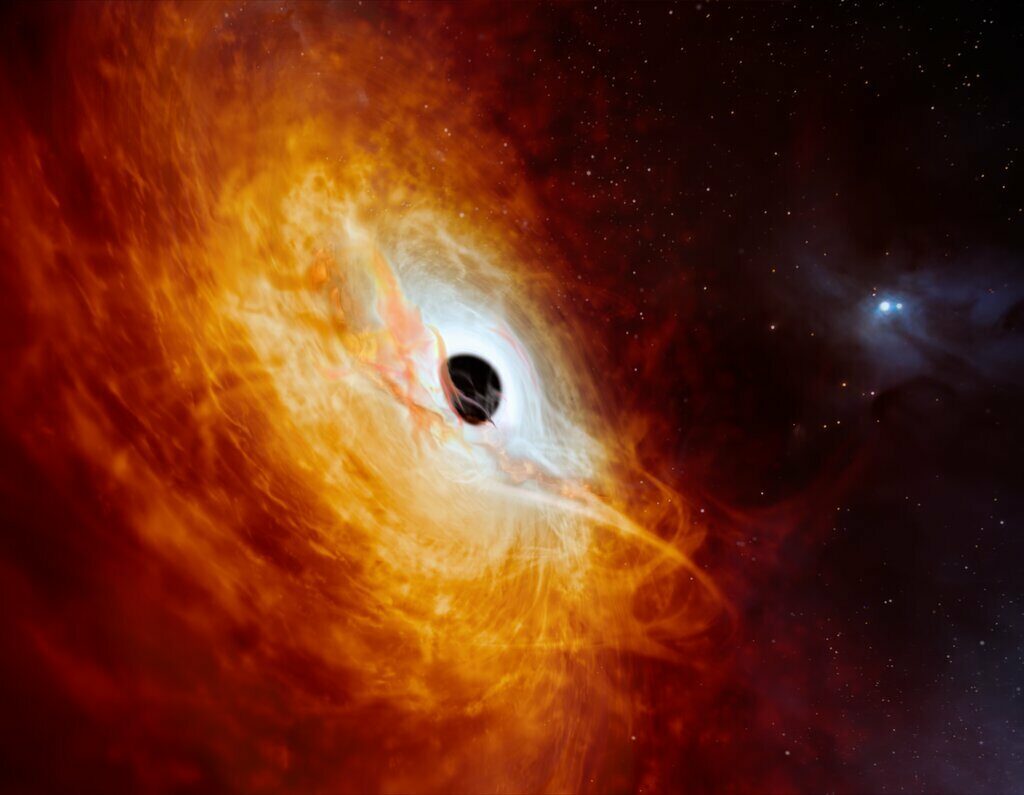
Quasars, short for “quasi-stellar objects,” are among the most luminous and enigmatic entities in the cosmos. Despite their star-like appearance, these objects emit energy on a scale comparable to thousands of entire galaxies. Their extraordinary brightness originates from the intense gravitational forces at play near supermassive black holes located at the centers of distant galaxies. As matter spirals inward toward these black holes, it heats up and radiates energy across the electromagnetic spectrum, from radio waves to gamma rays, making quasars some of the most detectable phenomena in the universe.
Formation and Mechanism of Quasar Luminosity
The dazzling light emitted by quasars is a direct consequence of accretion processes around supermassive black holes. When gas, dust, and other matter are drawn toward the black hole’s event horizon, they accelerate and compress, reaching extremely high temperatures. This heated material emits vast amounts of radiation, which is observed as the quasar’s intense luminosity. The energy output is so immense that it can outshine the combined light of billions of stars within the host galaxy.
Accretion and Radiation Emission
- Accretion Disk Formation:
Matter forms a rotating disk around the black hole, where friction and gravitational forces heat the material. - Electromagnetic Spectrum Emission:
The heated matter emits radiation spanning radio, infrared, visible, ultraviolet, X-ray, and gamma-ray wavelengths.
Cosmological Significance and Historical Context
Most quasars observed are located billions of light-years away, meaning their light has traveled across vast stretches of space and time to reach Earth. This allows astronomers to study the universe as it existed roughly 10 to 12 billion years ago, during its formative epochs. By examining quasars, scientists gain valuable insights into early galaxy formation, the growth of supermassive black holes, and the evolution of cosmic structures. These ancient light sources act as natural time capsules, preserving information about the conditions of the early universe.
Recent Breakthroughs in Quasar Research
Advancements in astronomical instrumentation have led to the discovery of an unprecedented quasar exhibiting extraordinary properties. This newly identified object, observed at an exceptionally high redshift, challenges existing theories about black hole growth and cosmic evolution. Its rapid mass accumulation suggests that traditional models, which assume gradual black hole development over extended periods, may need revision. This discovery hints at the possibility of alternative astrophysical processes or a new class of phenomena that enable accelerated black hole formation in the early universe.
Implications for Black Hole Growth Models
- Conventional Understanding:
Black holes grow by steadily accreting matter over millions to billions of years. - New Observations:
The rapid growth indicated by this quasar suggests more efficient or previously unknown mechanisms at work.
Interactions Between Quasars and Their Host Galaxies
The intense activity surrounding supermassive black holes profoundly influences their host galaxies. As matter falls into the black hole, energetic feedback processes such as powerful jets and outflows are generated. These phenomena can regulate star formation by heating or expelling gas, thereby shaping the evolutionary trajectory of the galaxy. Understanding these interactions is crucial for reconstructing the star formation history and the dynamic balance that governs galaxy evolution in the early universe.
Broader Impact and Philosophical Reflections
The discovery and study of quasars extend beyond scientific curiosity, touching on humanity’s enduring quest to comprehend the cosmos. These celestial phenomena inspire philosophical contemplation about our place in the universe, linking the microscopic world of atomic particles to the vastness of cosmic structures. Each new finding enriches the collective narrative of existence, fostering a profound sense of connection between humanity and the universe.
Future Prospects in Quasar Exploration
Ongoing improvements in observational technology, including both ground-based and space telescopes, are rapidly expanding our ability to detect and analyze faint and distant quasars. This progress promises to uncover more such objects, each contributing vital data to refine our understanding of the universe’s timeline and structural development. As research continues, quasars will remain pivotal in unraveling the mysteries of cosmic history and the fundamental processes shaping the cosmos.
Summary
Quasars represent a cornerstone in the study of astrophysics and cosmology, illuminating the processes behind galaxy formation, black hole dynamics, and cosmic evolution. Their extraordinary luminosity and distant origins provide a unique window into the early universe, while recent discoveries challenge and enrich existing scientific paradigms. Beyond their scientific significance, quasars evoke a deeper reflection on humanity’s connection to the vast universe, underscoring the intricate and awe-inspiring tapestry of cosmic life.
FAQ
What is a quasar?
A quasar, or quasi-stellar object, is a highly luminous entity powered by a supermassive black hole at the center of a distant galaxy.
Why are quasars important in astronomy?
Quasars provide insights into early galaxy formation, the growth of black holes, and the evolution of cosmic structures.





Leave a Reply