
Short Answer
Definition of the Invisible Universe
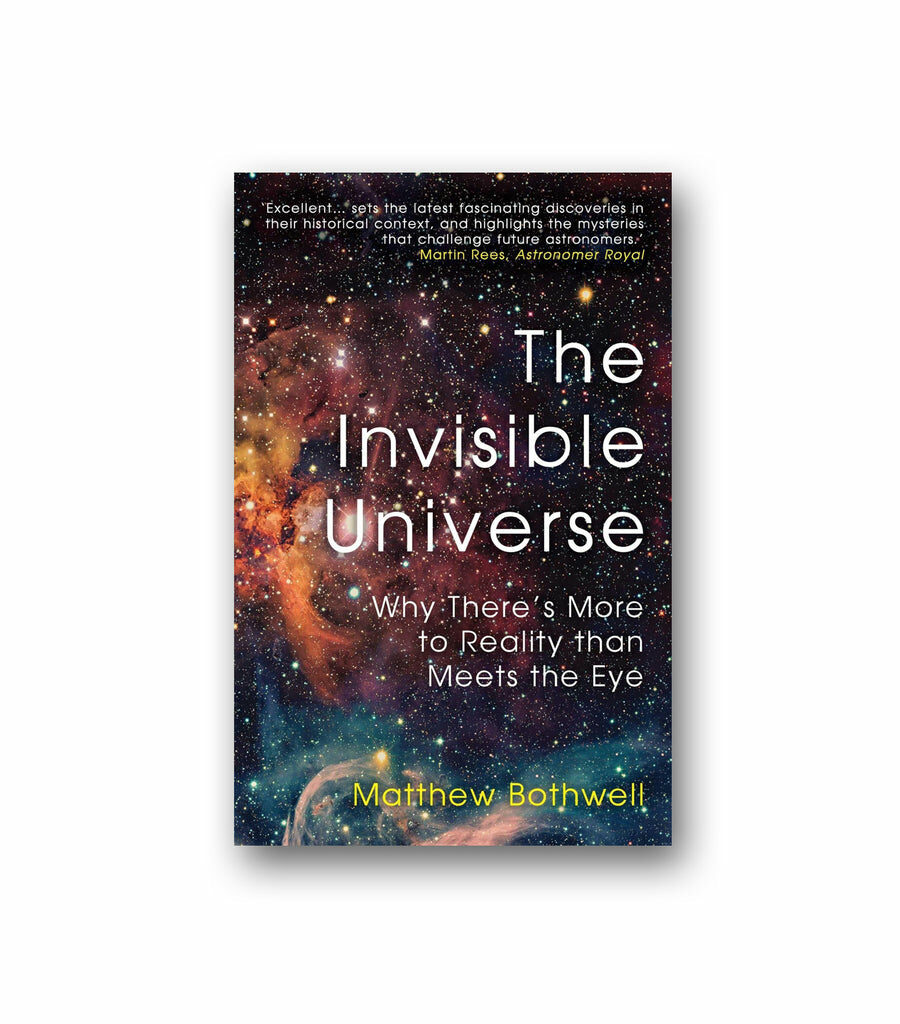
The term “Invisible Universe” refers to the vast array of cosmic phenomena that cannot be directly observed through conventional means but have significant implications for our understanding of reality. This concept encompasses elements and forces that remain hidden from human perception yet play a crucial role in shaping the cosmos. It represents the unseen fabric of existence that challenges and expands our comprehension of the universe.
- Invisible Phenomena:
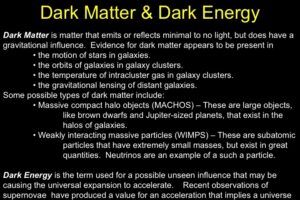
Entities such as dark matter, dark energy, and black holes that cannot be detected by ordinary telescopes or sensors but influence visible matter and cosmic structures. - Scientific Significance:
These hidden components constitute approximately 95% of the universe’s total energy and mass, underscoring their fundamental importance despite their elusive nature.
Historical and Psychological Perspectives
Humanity’s enduring fascination with the Invisible Universe is deeply rooted in both intellectual curiosity and psychological drives. Historically, the cosmos has been a source of wonder and mystery, inspiring countless inquiries into what lies beyond the observable. Psychologically, the unknown aspects of the universe often mirror internal human experiences, such as fear, awe, and existential questioning.
- Metaphorical Landscape:
Just as natural landscapes are shaped by unseen forces like wind and gravity, the universe is sculpted by invisible energies and particles, highlighting the profound impact of the unseen on the visible world. - Symbolism of Black Holes:
Black holes, with their intense gravitational pull that traps even light, symbolize the unknown fears and mysteries lurking beneath human consciousness, representing a boundary between the known and the unknowable.
Scientific Foundations and Theoretical Frameworks
The Invisible Universe challenges the limits of empirical science, prompting the development of advanced theoretical models to explain phenomena beyond direct observation. These frameworks seek to describe the fundamental nature of reality and the forces that govern it.
- Dark Matter and Dark Energy:
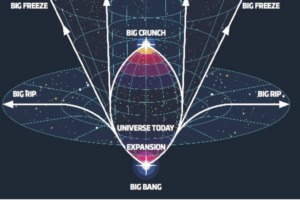
These components are inferred from their gravitational effects on visible matter and the accelerated expansion of the universe, respectively, yet remain undetectable by current instruments. - Quantum Mechanics and String Theory:
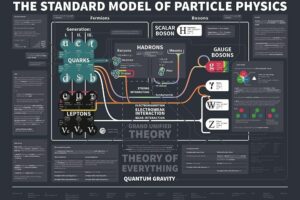
These theories attempt to reconcile the paradoxes of measuring the immeasurable, offering new paradigms that question traditional physical laws and propose deeper layers of reality. - Higgs Boson Discovery:
Confirmed in 2012, the Higgs boson validates the existence of the Higgs field, which imparts mass to elementary particles, thereby elucidating a critical aspect of the universe’s structure.
Role of Imagination and Metaphor in Exploration
In the absence of direct evidence, scientific inquiry into the Invisible Universe relies heavily on creative thinking and metaphorical language. These tools enable researchers to conceptualize and communicate abstract ideas that defy straightforward description.
- Wormholes:
Hypothetical tunnels through spacetime that could connect distant regions of the universe, inspired by general relativity and often depicted as bridges within the cosmic fabric. - Art and Science Fusion:
The interplay between imaginative storytelling and scientific theory enriches our understanding and fascination with the unseen cosmos.
Sociocultural Impact and Popular Representation
The Invisible Universe has permeated popular culture, influencing media, literature, and public discourse. Its themes resonate with collective human experiences and anxieties, serving as a backdrop for exploring existential questions.
- Media Influence:
Films, books, and documentaries frequently use cosmic mysteries to frame narratives about human existence and the search for meaning. - Astral Archetypes:
These symbolic representations embody humanity’s hopes and fears, reflecting our emotional responses to the vastness and mystery of the cosmos.
Emotional and Existential Dimensions
The Invisible Universe evokes a spectrum of emotions, from awe to existential dread, highlighting the profound connection between cosmic mysteries and human psychology. This emotional engagement underscores the significance of the Invisible Universe beyond scientific inquiry.
- The Great Silence:
The vast emptiness and apparent absence of detectable extraterrestrial life provoke feelings of isolation and wonder, mirroring inner psychological landscapes. - Bridging Macrocosm and Microcosm:
Our fascination with the unseen universe creates a link between the immense scale of the cosmos and the intimate realm of human experience.
Importance of Studying the Invisible Universe
Understanding the Invisible Universe is vital for advancing scientific knowledge and addressing fundamental questions about existence. It drives technological innovation, shapes philosophical thought, and enriches cultural narratives.
- Scientific Advancement:
Investigations into dark matter, dark energy, and quantum phenomena push the boundaries of physics and cosmology. - Technological Progress:
The pursuit of detecting and analyzing invisible cosmic elements fosters the development of cutting-edge instruments and methodologies. - Philosophical Inquiry:
Exploring the unseen aspects of reality challenges and refines our concepts of existence, knowledge, and the universe’s nature.
Conclusion: The Enduring Allure of the Invisible Universe
The Invisible Universe captivates humanity by inviting us to confront the unknown and expand the horizons of our understanding. This pursuit embodies a fundamental human drive to impose order on chaos and to seek meaning within the vast, often indifferent cosmos. As scientific exploration progresses, the Invisible Universe remains a profound source of inspiration, reflection, and discovery.
FAQ
What is the Invisible Universe?
The Invisible Universe refers to cosmic phenomena like dark matter and dark energy that cannot be directly observed but significantly influence our understanding of the cosmos.
Why is the Invisible Universe important?
Understanding the Invisible Universe is crucial for advancing scientific knowledge and addressing fundamental questions about existence, as it constitutes a major portion of the universe's energy and mass.

Leave a Reply