
Short Answer
Understanding Antimatter
Antimatter is a fascinating concept in physics, referring to particles that mirror ordinary matter but carry opposite electrical charges. Each particle of matter has a corresponding antiparticle; for instance, the proton, which has a positive charge, is paired with the antiproton, bearing a negative charge. The simplest antimatter atom is antihydrogen, composed of an antiproton orbited by a positron-the antimatter counterpart of the electron. This atomic structure serves as a near-perfect reflection of hydrogen, the most basic element in the universe.
Challenges in Studying Antihydrogen
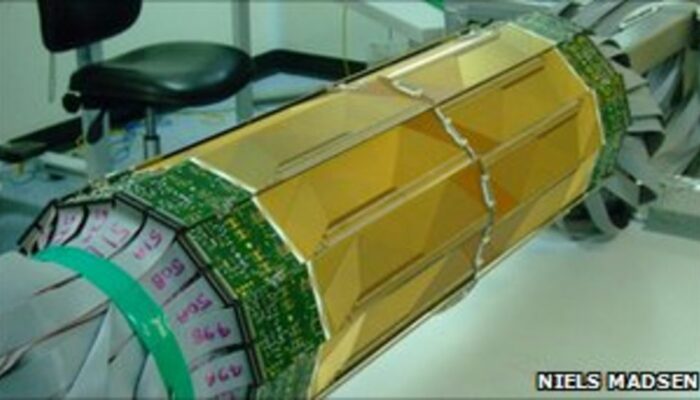
One of the primary difficulties in antimatter research is the ephemeral nature of antihydrogen atoms. These atoms exist only briefly before annihilating upon contact with normal matter, releasing energy in the process. This inherent instability complicates experimental efforts to observe and analyze antihydrogen. To overcome this, the ALPHA collaboration at CERN developed sophisticated electromagnetic traps that isolate antihydrogen atoms from matter, preventing immediate annihilation and enabling detailed study.
Significance of Trapping Antihydrogen
The successful containment of antihydrogen represents a major breakthrough, not only technologically but also scientifically. It allows physicists to test fundamental symmetries predicted by the Standard Model of particle physics, which posits that matter and antimatter should behave identically. However, the observable universe is overwhelmingly composed of matter, a phenomenon known as matter-antimatter asymmetry. Investigating antihydrogen could provide critical insights into why this imbalance exists and shed light on the origins of the cosmos.
Exploring Fundamental Symmetries
By holding antihydrogen atoms stable for extended periods, researchers can perform high-precision measurements comparing their properties to those of hydrogen. One key area of study is the spectral lines-patterns of light absorption and emission-which should theoretically be identical for both hydrogen and antihydrogen. Any detected differences could challenge existing physical theories and potentially lead to new physics beyond the Standard Model.
Gravitational Behavior of Antimatter
Another intriguing question is how antihydrogen responds to gravity. Does it fall at the same rate as ordinary matter, or does it exhibit unique gravitational interactions? Experiments designed to observe the gravitational effects on antihydrogen could revolutionize our understanding of gravity and its role in the universe, possibly revealing new aspects of fundamental forces.
Technological and Practical Implications
Research into antimatter has already influenced practical technologies, such as positron emission tomography (PET) used in medical imaging. PET scanners rely on positrons and their interactions with matter to produce detailed images of the human body. Advancements in antimatter science could enhance these technologies, leading to improved diagnostic tools and novel applications in medicine and industry.
Educational and Philosophical Impact
The pursuit of antimatter research inspires both the scientific community and the public by deepening our understanding of the universe’s fundamental nature. It encourages curiosity and critical thinking, fostering the next generation of physicists and promoting widespread interest in particle physics. Beyond science, the existence of antimatter invites profound philosophical questions about the universe’s origins and our place within it. If matter and antimatter were created equally during the Big Bang, what caused the dominance of matter? This mystery bridges physics and metaphysics, challenging our worldview.
Summary and Future Prospects
CERN’s achievement in trapping antihydrogen marks a pivotal moment in antimatter research, combining experimental ingenuity with profound scientific inquiry. This milestone opens new pathways for exploring the fundamental symmetries of nature and the underlying principles governing the cosmos. As investigations continue, each discovery holds the promise of deepening our comprehension of matter, antimatter, and the very fabric of reality, potentially transforming our understanding of the universe.
FAQ
What is antihydrogen?
Antihydrogen is the antimatter equivalent of hydrogen, composed of an antiproton and a positron.
How does CERN trap antihydrogen?
CERN uses electromagnetic traps developed by the ALPHA collaboration to isolate and hold antihydrogen atoms, preventing them from annihilating with matter.
Why is studying antihydrogen important?
Studying antihydrogen helps scientists understand fundamental symmetries in physics, test the Standard Model, and explore why the universe is dominated by matter.
What future applications might result from this research?
Research on antihydrogen could lead to improvements in technologies like positron emission tomography (PET) and deepen our understanding of gravity and fundamental forces.






Leave a Reply