What do most physics majors end up doing for work?

Definition Physics majors study the fundamental principles that govern the natural world, equipping themselves with a deep understanding of physical laws and phenomena. This academic foundation opens doors to a wide spectrum of career opportunities across various sectors, including technology, research, education, and industry. The question of what career paths physics graduates pursue invites an […]

Read More →

Where in the world can a physicist work?

Definition Physics is a fundamental scientific discipline that explores the nature and properties of matter, energy, space, and time. It serves as a foundation for understanding the universe, providing insights that drive technological progress and innovation across various industries. Physicists apply their expertise to analyze complex phenomena, develop new theories, and solve practical problems, making […]

Read More →

Which is the best book to start Modern Physics with?

Understanding Modern Physics Modern physics represents a transformative branch of science that challenges and extends beyond the classical frameworks of time, space, and matter. It introduces groundbreaking theories that redefine our understanding of the universe, moving past Newtonian mechanics to embrace concepts such as relativity and quantum mechanics. This field captivates scientists and enthusiasts alike […]

Read More →

Hot Topic: The Physics Behind Climate Debates

Understanding Temperature in the Context of Climate Change Temperature is a fundamental physical property that quantifies the average kinetic energy of particles within a material. As particles move more rapidly, the temperature rises, reflecting increased molecular motion. This concept, rooted in kinetic molecular theory, forms the basis for interpreting weather patterns and broader climatic phenomena. […]

Read More →

What are some areas of research in applied physics?

Definition of Applied Physics Applied physics is a multidisciplinary scientific field that connects theoretical physics concepts with practical applications in technology and industry. It focuses on utilizing fundamental physical principles to solve real-world problems, driving innovation across various sectors. This branch of physics encourages researchers to explore complex phenomena and develop novel technologies that impact […]

Read More →

Is it possible to pursue MD after a BSc in Physics?

Definition The transition from a Bachelor of Science (BSc) in Physics to a Doctor of Medicine (MD) involves shifting from a discipline grounded in the physical sciences to one focused on medical and biological sciences. This pathway explores how foundational knowledge in physics can complement and enhance medical education and practice. BSc in Physics: An […]

Read More →

Impedance Matching: When Physics Meets Perfect Harmony

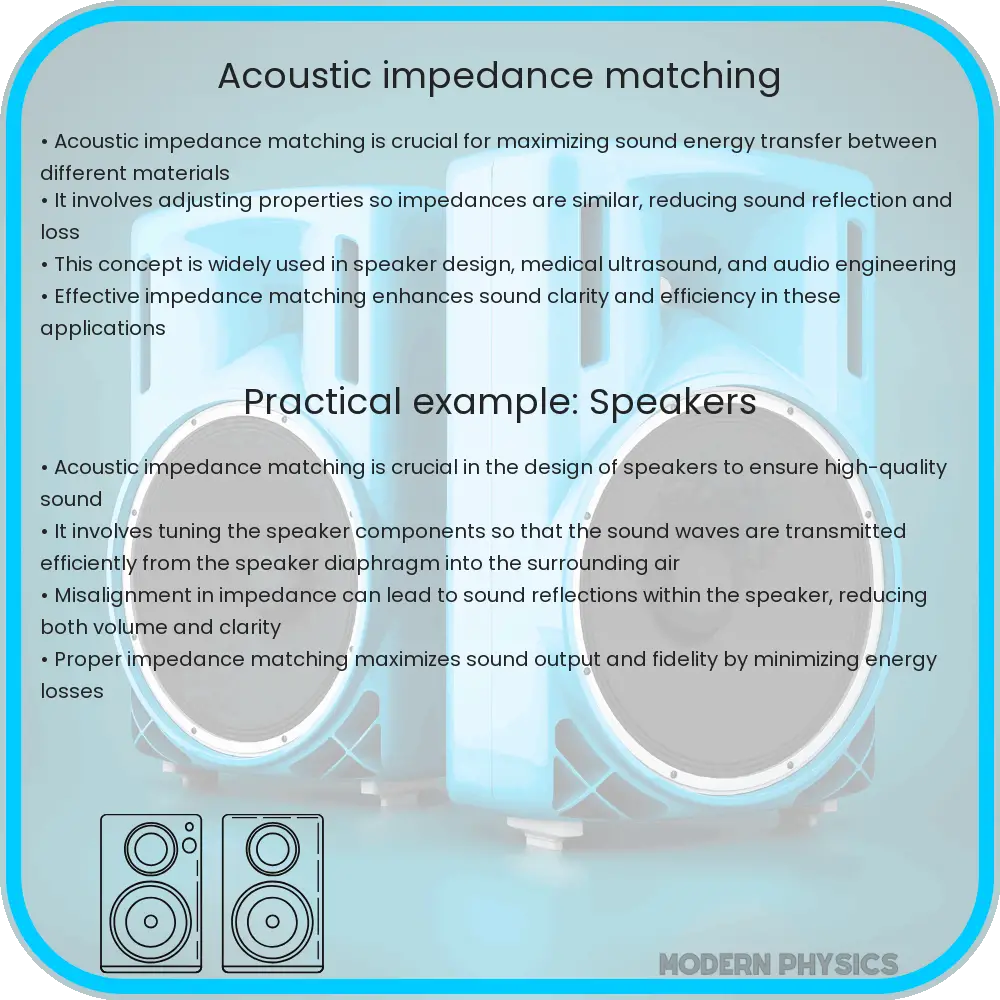
Definition of Impedance and Impedance Matching Impedance refers to the measure of opposition that a system presents to the flow of energy, particularly in the context of wave propagation and signal transmission. It is a fundamental concept that spans multiple disciplines, including physics, electronics, acoustics, and optics. Impedance matching is the process of adjusting the […]

Read More →

The Curious Case of Trey Jamison Slauter: Physics Policy and Purpose

Definition and Overview The intriguing phenomenon surrounding Trey Jamison Slauter represents a unique blend of experimental physics, science policy, and philosophical inquiry into the purpose of scientific research. This multifaceted case captivates interest by bridging the gap between rigorous scientific investigation and the broader societal implications of such work. It challenges conventional boundaries and invites […]

Read More →

Why is gravity so difficult to include in the Standard Model?

Understanding Gravity Gravity is a fundamental force that orchestrates the motion of celestial bodies such as planets and stars. Despite its universal influence, gravity remains one of the most perplexing phenomena in modern theoretical physics. While the Standard Model successfully describes three fundamental forces-electromagnetic, weak nuclear, and strong nuclear interactions-gravity resists incorporation into this framework. […]

Read More →