
Short Answer
Definition and Overview of CERN
The European Organization for Nuclear Research, commonly known as CERN, is a premier scientific institution dedicated to advancing our understanding of the universe’s fundamental components. Founded in 1954, CERN’s primary objective is to investigate the basic building blocks of matter through the study of high-energy particle physics. It serves as a hub for cutting-edge research and technological innovation, attracting scientists worldwide to unravel the mysteries of the subatomic world.
Key Facilities and Technological Innovations
The Large Hadron Collider: Engineering Excellence
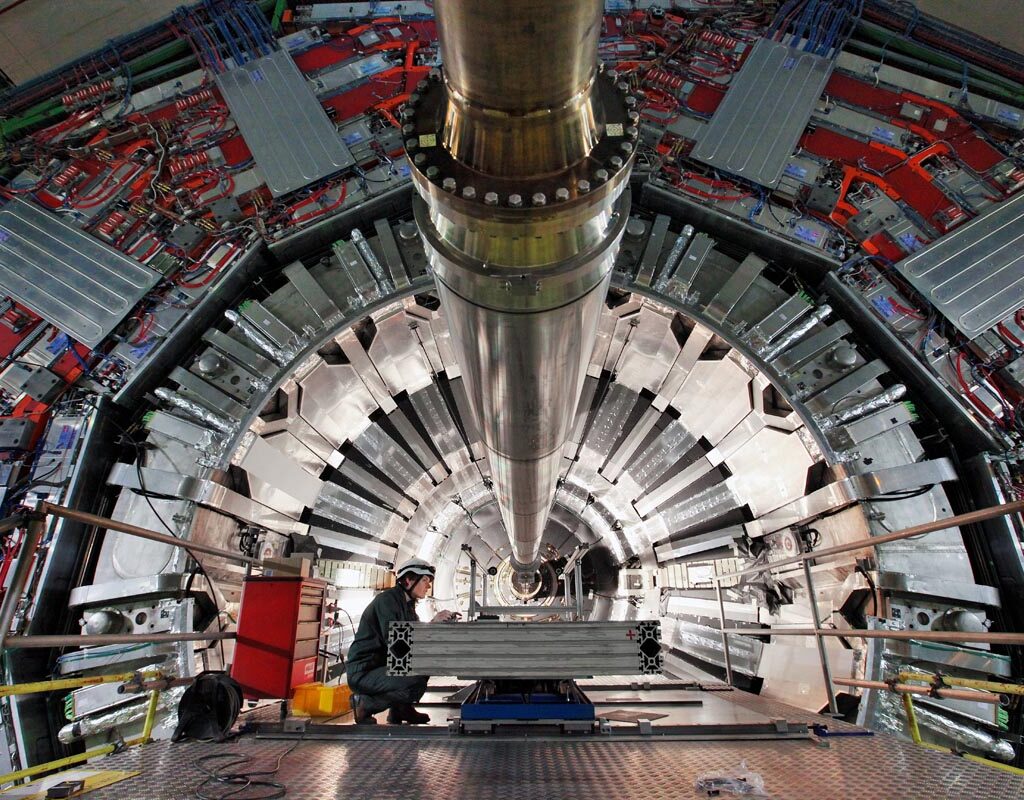
Central to CERN’s experimental capabilities is the Large Hadron Collider (LHC), the most powerful particle accelerator ever constructed. This colossal machine stretches approximately 27 kilometers (17 miles) beneath the border between France and Switzerland. Utilizing a complex network of superconducting magnets and sophisticated detectors, the LHC accelerates protons to velocities approaching the speed of light. These high-energy collisions recreate conditions similar to those fractions of a second after the Big Bang, enabling scientists to probe the origins of the universe. The LHC’s construction and ongoing operation represent a monumental achievement in international scientific collaboration and engineering.
Discovering the Higgs Boson: A Scientific Milestone
Among CERN’s most celebrated accomplishments is the 2012 discovery of the Higgs boson, a particle integral to the Standard Model of particle physics. Often dubbed the “God particle,” the Higgs boson explains how other particles gain mass through the Higgs field. This discovery, confirmed by two independent experiments at the LHC, validated theoretical predictions made nearly five decades earlier. The breakthrough earned François Englert and Peter Higgs the Nobel Prize in Physics in 2013, cementing CERN’s role as a leader in fundamental physics research.
Historical Contributions Beyond Particle Physics
The Origin of the World Wide Web
In addition to its scientific achievements, CERN is renowned for pioneering the World Wide Web. In 1989, Tim Berners-Lee, a British computer scientist at CERN, proposed a system to facilitate seamless information sharing among researchers. This innovation evolved into the global web infrastructure that revolutionized communication and information access worldwide. CERN’s commitment to open access allowed the web to flourish, profoundly impacting both scientific collaboration and everyday life.
International Collaboration and Multidisciplinary Research
Global Scientific Partnership
CERN exemplifies the power of international cooperation in science. With 23 member states and numerous observer nations, it unites thousands of researchers, engineers, and students from over 100 countries. This diverse community fosters a dynamic environment for exchanging ideas and driving innovation. Collaborative projects such as the LHC and the Compact Muon Solenoid (CMS) detector highlight the collective ambition to deepen our understanding of the universe through shared expertise and resources.
Expanding Research Horizons
While particle physics remains CERN’s core focus, its research portfolio extends into various interdisciplinary fields. Applications include medical physics, where particle beams are utilized in cancer therapies, and computational science, which benefits from CERN’s advancements in data processing and detector technology. Innovations developed at CERN have practical uses in areas like data mining and imaging, demonstrating the institution’s broad scientific impact.
Exploring the Universe’s Mysteries
Investigating Dark Matter and Dark Energy
CERN is at the forefront of efforts to understand dark matter and dark energy, which together constitute about 95% of the universe’s total mass-energy content yet remain largely enigmatic. Through experiments conducted at the LHC and plans for the Future Circular Collider (FCC), CERN aims to explore phenomena beyond the Standard Model. These initiatives seek to identify potential dark matter particles and unravel the forces driving the universe’s accelerated expansion.
Open Science and Public Engagement
The CERN Open Data Initiative
Committed to transparency and inclusivity, CERN has launched the Open Data initiative, granting worldwide access to experimental data from projects like the LHC. This program encourages educational outreach and innovation by enabling researchers, students, and enthusiasts to analyze real scientific data. The democratization of information marks a transformative approach to sharing knowledge and fostering global scientific participation.
Education and Outreach Programs
CERN actively promotes science education and public engagement through various initiatives. It welcomes thousands of visitors annually, offering exhibitions, guided tours, and lectures designed to inspire curiosity about physics. The CERN Summer Student Program provides undergraduate students with hands-on research opportunities, mentorship, and involvement in pioneering projects. These efforts nurture future generations of scientists and cultivate a widespread appreciation for scientific inquiry.
Future Prospects in Particle Physics
The trajectory of particle physics research at CERN is poised for exciting developments. The proposed Future Circular Collider (FCC) aims to surpass the LHC’s capabilities, pushing the boundaries of energy and precision in particle collisions. This next-generation accelerator aspires to deepen insights into fundamental forces and particles, potentially unveiling new physics beyond current theories. As technology evolves, CERN continues to expand the frontiers of knowledge, inspiring new questions and discoveries.
Significance of CERN in Science and Society
CERN stands as more than a research facility; it symbolizes humanity’s relentless pursuit of understanding the universe at its most fundamental level. Its groundbreaking experiments, technological innovations, and global collaborations have profoundly influenced science, technology, and education. By fostering international cooperation and open access to knowledge, CERN not only advances particle physics but also enriches society’s collective intellectual heritage, offering a window into the profound mysteries that shape our existence.
FAQ
What is CERN?
CERN is the European Organization for Nuclear Research, a leading particle physics laboratory that operates the Large Hadron Collider.
What is the Large Hadron Collider?
The Large Hadron Collider is the world's largest and most powerful particle accelerator, designed to collide protons at near-light speeds.
What is the significance of the Higgs boson discovery?
The Higgs boson discovery confirmed the mechanism by which particles acquire mass, a fundamental aspect of the Standard Model of particle physics.
How did CERN contribute to the World Wide Web?
Tim Berners-Lee created the World Wide Web at CERN to improve information sharing among scientists, which later revolutionized global communication.
What is CERN's Open Data initiative?
It is a program that provides free access to CERN's experimental data to promote education, research, and public engagement.




Leave a Reply