What is a quark

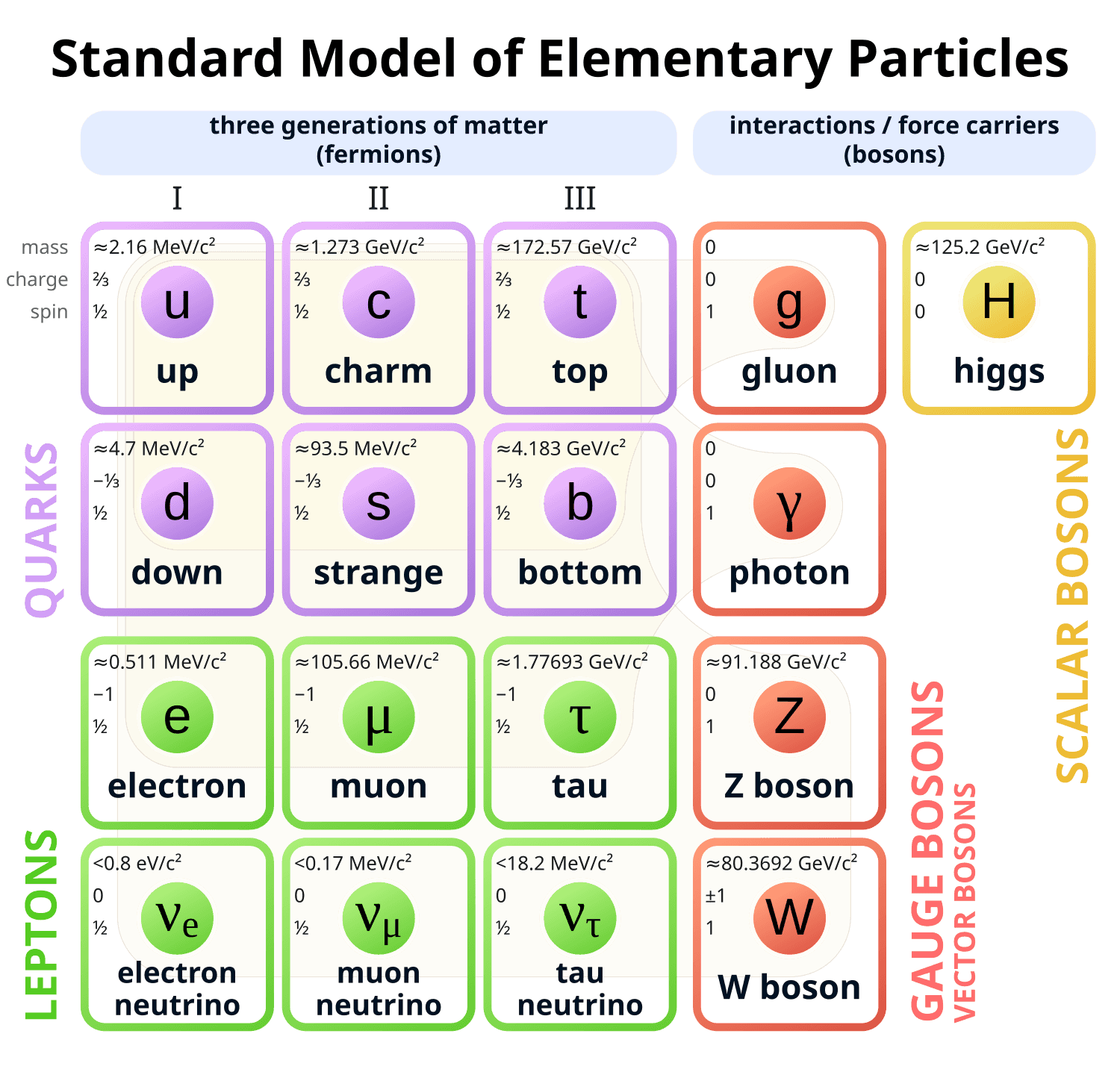
Definition of Quarks Quarks are fundamental particles that serve as the essential building blocks of matter. They are elementary constituents that combine to form protons, neutrons, and other hadrons, playing a pivotal role in the composition of the universe. As one of the core elements in particle physics, quarks provide critical insight into the structure […]

Read More →

What’s the geometry of an elementary particle?

Definition of Elementary Particle Geometry The geometry of elementary particles encompasses the mathematical and physical frameworks used to describe their spatial and intrinsic characteristics. This concept extends beyond viewing particles as mere point-like entities, incorporating advanced theoretical models that attribute geometric and topological properties to these fundamental constituents of matter. Point Particles: Traditionally, elementary particles […]

Read More →

Nucleons: The Power Players in Every Atom

Definition of Nucleons Nucleons are the fundamental particles residing within the atomic nucleus, comprising protons and neutrons. These particles form the core foundation of all matter, playing a crucial role in defining the properties and stability of atoms. Together, nucleons govern the structure of elements and influence the chemical behavior of substances. Protons: Positively charged […]

Read More →

How to learn about particle physics?

Definition of Particle Physics Particle physics is the scientific discipline focused on investigating the most basic building blocks of matter and radiation. It seeks to understand the fundamental particles that constitute the universe and the forces that govern their interactions. This field not only deepens our comprehension of the physical world but also challenges conventional […]

Read More →

What are the differences between cyclotrons and reactors?

Overview of Cyclotrons and Nuclear Reactors Within the vast domain of nuclear physics, cyclotrons and nuclear reactors stand out as two essential devices, each distinguished by their unique functions and characteristics. Both play critical roles in advancing scientific knowledge and technological progress, yet they operate on fundamentally different principles and serve diverse purposes. This article […]

Read More →

Do electron particle accelerators increase volts and amps?

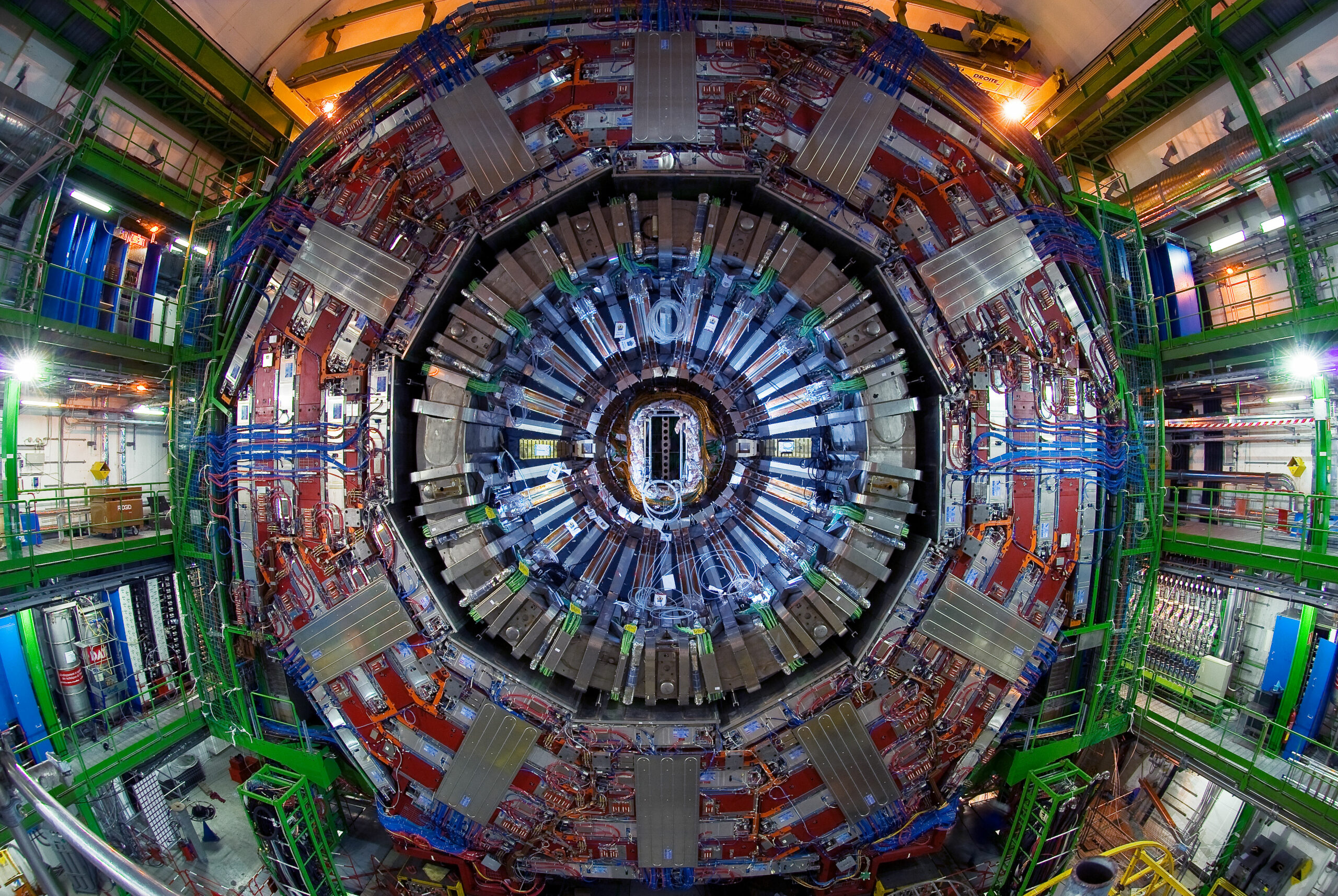
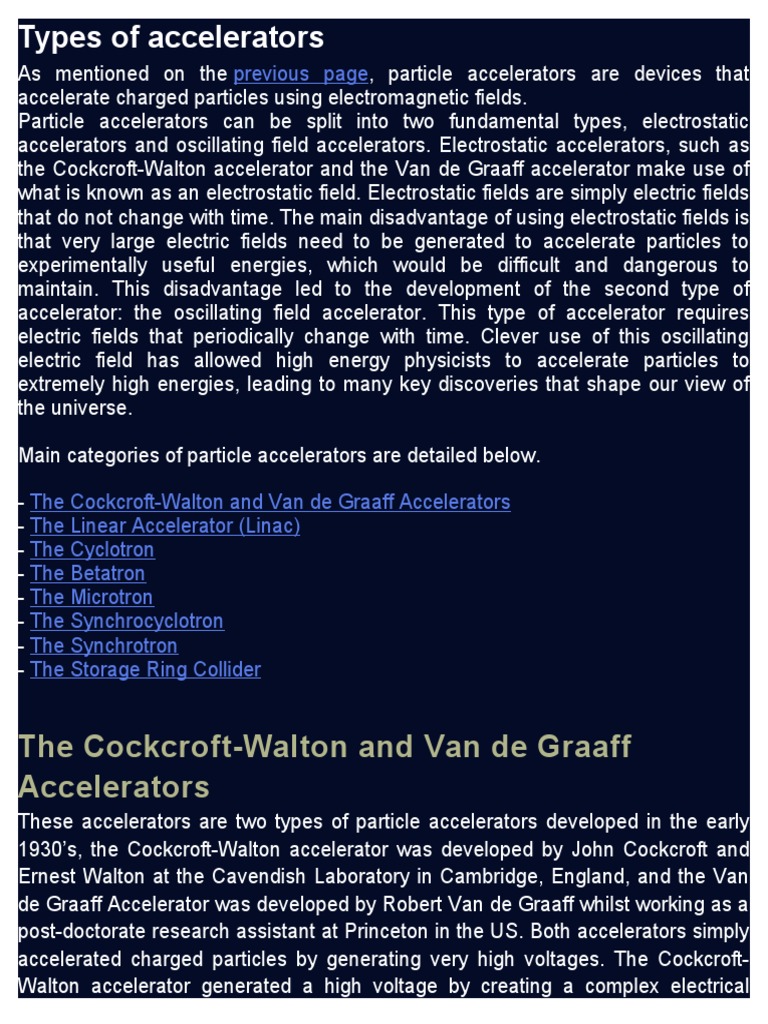
Definition of Electron Particle Accelerators Electron particle accelerators, also known as particle colliders or synchronous machines, are sophisticated devices used primarily in high-energy physics research. Their main function is to accelerate charged particles, such as electrons, to extremely high energies. This acceleration enables scientists to investigate the fundamental building blocks of matter and the forces […]

Read More →

What laws apply to quarks?

Definition of Quarks Quarks are elementary particles that serve as the fundamental components of protons and neutrons, which in turn constitute the nuclei of atoms. Understanding quarks is essential for grasping the principles of particle physics, as they reveal the underlying structure of matter and the universe at its most basic scale. The Standard Model […]

Read More →

What is the role of a neutron in an atom?

Definition and Fundamental Characteristics of Neutrons Neutrons are subatomic particles located within the atomic nucleus alongside protons. Unlike protons, neutrons carry no electric charge, making them electrically neutral. Their mass is marginally greater than that of protons, approximately 1.008664 atomic mass units (amu). This slight mass difference is significant in nuclear interactions and decay mechanisms. […]

Read More →