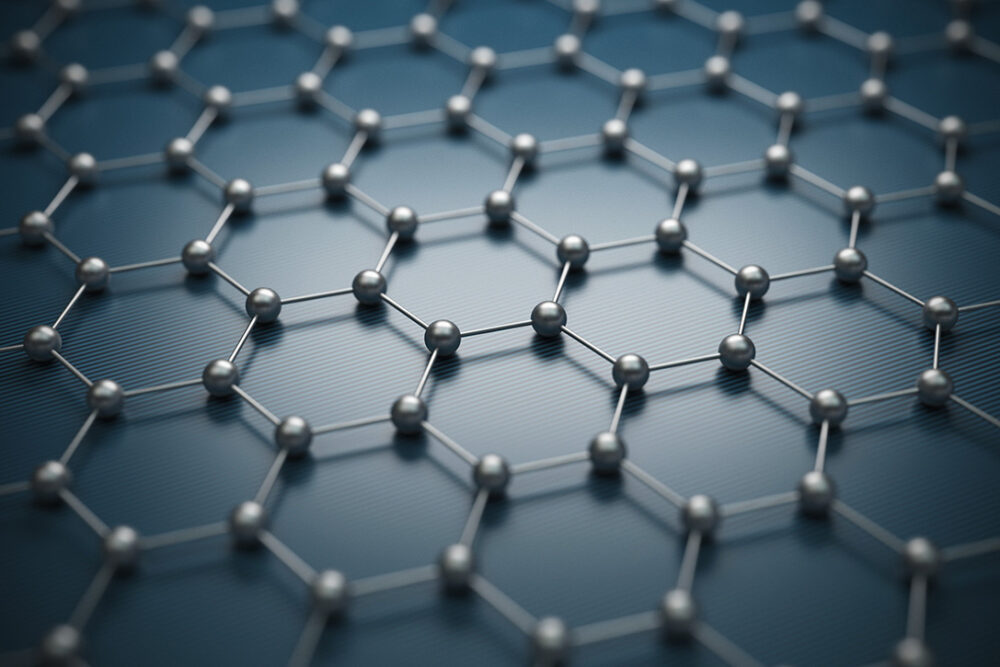
What uses are predicted for Graphene?

Definition of Graphene Graphene is a unique form of carbon characterized by a single atomic layer arranged in a two-dimensional hexagonal lattice. This structure endows graphene with remarkable physical and chemical properties, making it a subject of intense scientific and industrial interest. Its extraordinary electrical conductivity, mechanical robustness, and thermal performance distinguish it from other […]

Read More →

Nanotube Armor: When Bullets Bounce Off Carbon

Definition of Carbon Nanotube Armor Carbon nanotube armor represents an innovative class of protective materials composed of carbon nanotubes (CNTs), which are cylindrical nanostructures made entirely of carbon atoms arranged in a hexagonal lattice similar to graphene. This armor aims to combine extraordinary strength with minimal weight, offering a revolutionary alternative to conventional bulletproof materials. […]

Read More →

How to determine disclination charge of a topological defect?

Definition of Disclination and Disclination Charge Within the fields of condensed matter physics and materials science, disclinations represent a specific category of topological defects characterized by sudden angular discontinuities in the orientation of crystalline or ordered structures. These defects disrupt the regular arrangement of atoms or molecules, leading to localized distortions in the lattice geometry. […]

Read More →

Will graphene be used in our every day life?

Definition of Graphene Graphene is a single layer of carbon atoms arranged in a two-dimensional honeycomb lattice, making it just one atom thick. Since its discovery in 2004, this extraordinary material has attracted significant attention from scientists, engineers, and the public due to its exceptional physical and chemical properties. Atomic Structure: Graphene’s carbon atoms form […]

Read More →

What is the future of solid state physics?

Definition of Solid-State Physics Solid-state physics is a specialized branch of physics focused on the study of rigid matter, particularly solids, at the atomic and molecular scale. It investigates the physical properties, structures, and behaviors of solid materials, which form the foundation of many modern technologies. Scope: Examines crystalline and amorphous solids, their electronic, magnetic, […]

Read More →

Max Barbosa’s Atomic Ambitions: Innovation at the Nano Frontier

Understanding Nanotechnology Nanotechnology is a multidisciplinary science focused on manipulating matter at an incredibly small scale, typically between 1 and 100 nanometers. At this dimension, materials exhibit unique properties due to quantum mechanical effects that do not appear at larger scales. This field holds transformative potential across numerous industries, including medicine, electronics, and materials engineering, […]

Read More →

How do Boron and Nitrogen share electrons in Boron nitride?

Definition of Boron Nitride Boron nitride (BN) is a remarkable compound known for its distinctive properties and wide-ranging uses. Structurally similar to graphite, boron nitride is a covalent network solid that stands out due to its exceptional thermal resistance and chemical inertness. Understanding the nature of BN requires exploring the electron interactions between its two […]

Read More →

What are the 3D animations that look like 2D?

Definition of 3D Animations with 2D Visual Characteristics 3D animations that emulate the appearance of 2D art represent a unique fusion of dimensional techniques in digital media. Often termed as 2.5D animations, this style combines the depth and spatial complexity of three-dimensional modeling with the simplicity and stylistic charm of traditional two-dimensional imagery. This hybrid […]

Read More →

Chemical Origami: 2D Discs Fold into 3D Masterpieces

Definition of Chemical Origami Chemical origami is an innovative interdisciplinary field that merges principles from materials science, chemistry, and the traditional art of origami. Unlike conventional paper folding, this discipline focuses on transforming two-dimensional (2D) chemical precursors into intricate three-dimensional (3D) structures. This transformative process opens new avenues in areas such as nanotechnology, targeted drug […]

Read More →

Is Graphite 2D or 3D? A Layered Mystery

Definition of Graphite and Its Dimensionality Graphite is a well-known allotrope of carbon characterized by its unique atomic arrangement. It consists of multiple layers of carbon atoms bonded in a hexagonal lattice, which has sparked ongoing debate regarding whether graphite should be classified as a two-dimensional (2D) or three-dimensional (3D) material. This question arises from […]

Read More →