What is the difference between cesium and an atomic clock?

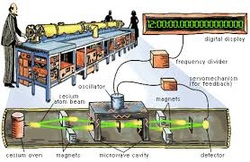
Definition of Cesium and Atomic Clocks Cesium is a chemical element classified among the alkali metals, symbolized as Cs with an atomic number of 55. It is distinguished by its silvery-blue hue and unique atomic characteristics, particularly the specific energy transitions within its atoms. These transitions occur at a microwave frequency of exactly 9,192,631,770 hertz, […]

Read More →

How do atoms join together to form molecules?

Definition of Atoms and Molecules Atoms serve as the essential units of matter, forming the foundation for all substances around us. When atoms connect, they create molecules, which are the building blocks of the diverse materials and biological systems present in the universe. Understanding how atoms combine to form molecules requires an examination of atomic […]

Read More →

How does attosecond imaging of molecular orbitals work?

Definition of Attosecond Imaging Attosecond imaging is an advanced technique in ultrafast optics and quantum physics that allows scientists to visualize electron movements within molecules on an attosecond timescale (10-18 seconds). This capability is crucial for capturing the rapid electronic processes that govern chemical reactions, molecular transitions, and the intrinsic properties of matter. By providing […]

Read More →

What are cold sources of light?

Definition of Cold Light Sources Cold light sources refer to types of illumination that emit visible light while producing minimal heat. Unlike traditional incandescent bulbs or open flames, which generate significant infrared radiation and warmth, cold light sources operate efficiently by converting electrical energy primarily into light rather than heat. Common examples include light-emitting diodes […]

Read More →

How do atoms move if there are no gaps between them?

Understanding Atomic Motion in Solids Atoms, the fundamental units of matter, are often visualized as fixed, densely packed particles within solid materials. This perception raises a compelling question: how can atoms move if there is no apparent space between them? Exploring this question requires a deep dive into atomic behavior, thermal dynamics, and quantum mechanics, […]

Read More →

How would you explain chemical bonds to a child?

Definition of Chemical Bonds Chemical bonds are the essential forces that connect atoms, enabling the formation of the vast variety of substances found throughout the universe. These bonds are the invisible links that hold atoms together, creating everything from the air we breathe to the objects we use daily. Understanding chemical bonds helps explain how […]

Read More →

Are atoms held together by magnetism?

Definition of Atomic Structure Atoms are the essential units that constitute all matter in the universe. These minuscule particles, invisible to the naked eye, form everything from the air we inhale to the distant stars illuminating the night sky. Understanding the forces that maintain the integrity of atoms is fundamental to grasping the nature of […]

Read More →

What are some examples of tetra atomic molecules?

Definition of Tetraatomic Molecules Tetraatomic molecules are chemical species composed of exactly four atoms bonded together. These molecules exhibit a variety of structural arrangements and chemical behaviors, which make them significant in numerous scientific and industrial contexts. Their configurations influence physical properties, reactivity, and biological functions, highlighting the intricate relationship between atomic composition and molecular […]

Read More →

How did the atomic clock work better than an alarm clock?

Definition of Timekeeping Devices Timekeeping is an essential aspect of human life, enabling the organization of daily activities and coordination across various domains. Among the many devices designed to measure and indicate time, two stand out for their contrasting technologies and purposes: atomic clocks and alarm clocks. While alarm clocks have long served as practical […]


Read More →