Why Do Scientists Believe in Something They Can’t See?

Understanding Scientific Confidence in the Unseen Throughout human history, a compelling question has intrigued both casual observers and expert scientists alike: why do researchers place steadfast trust in phenomena and entities that cannot be directly observed? This inquiry delves into the epistemological roots of scientific knowledge and highlights humanity’s enduring fascination with what lies beyond […]

Read More →

What Is Gravity? The Simplest Explanation Ever

Definition of Gravity Gravity is a fundamental natural phenomenon characterized by the mutual attraction between masses. It is the invisible force that keeps objects anchored to the Earth, governs the motion of celestial bodies, and shapes the large-scale structure of the universe. This force acts universally, influencing everything from the smallest particles to the largest […]

Read More →

Is One Hour in Space Really 7 Years on Earth?

Understanding Time Dilation Time dilation is a fascinating concept derived from Einstein’s theories of relativity, revealing that time is not an absolute constant but varies depending on factors such as gravity and velocity. The popular phrase “one hour in space equals seven years on Earth” captures public imagination but oversimplifies the complex physics behind how […]

Read More →

Does Dark Energy Grow as the Universe Expands?

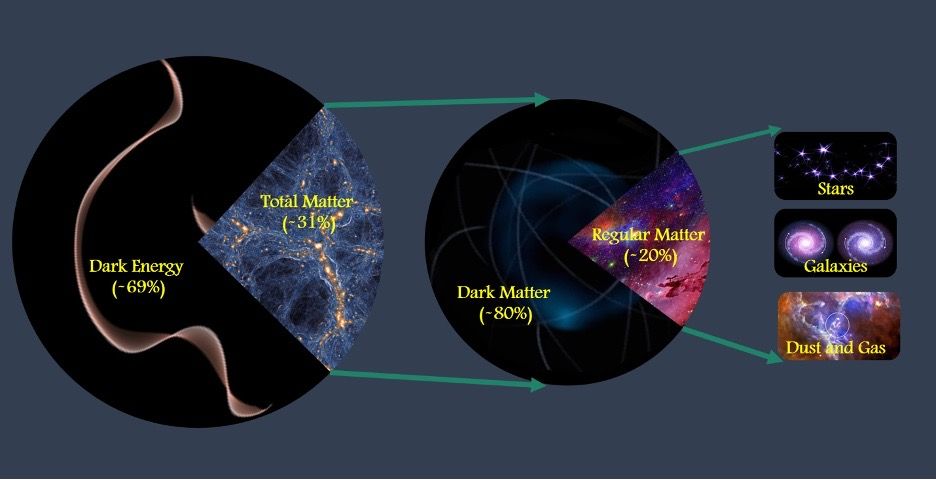
Understanding Dark Energy Dark energy is a mysterious and dominant force in the cosmos, accounting for approximately 68% of the universe’s total energy content. It acts as a repulsive influence, driving the accelerated expansion of space. Unlike matter and radiation, which become less influential as the universe expands, dark energy appears to maintain a constant […]

Read More →

Why We Still Need Ground-Based Astronomy in 2026

Definition of Ground-Based Astronomy Ground-based astronomy refers to the practice of observing celestial objects and phenomena using telescopes and instruments located on Earth’s surface. Despite the rise of space-based observatories, terrestrial astronomy remains a fundamental method for exploring the universe, offering unique advantages in scale, flexibility, and accessibility that complement space missions. Advantages of Terrestrial […]

Read More →

This Invisible Force Controls the Universe

Understanding the Invisible Forces of the Universe What hidden influence choreographs the movements of galaxies, shapes the vastness of space, and silently determines the destiny of stars? How can an unseen, intangible presence exert such pervasive control over the very structure of the cosmos? This mysterious force-both elusive and essential-challenges our comprehension, inspiring a quest […]

Read More →

How the James Webb Space Telescope Actually Works (No Jargon)

Overview of the James Webb Space Telescope Envision attempting to spot the flicker of a candle on the Moon’s surface from Earth-an almost impossible feat. Yet, astronomers manage to capture detailed images of galaxies billions of light-years away. This extraordinary capability is made possible by the James Webb Space Telescope (JWST), a pinnacle of contemporary […]

Read More →