How to detect cosmic rays reaching the earth?

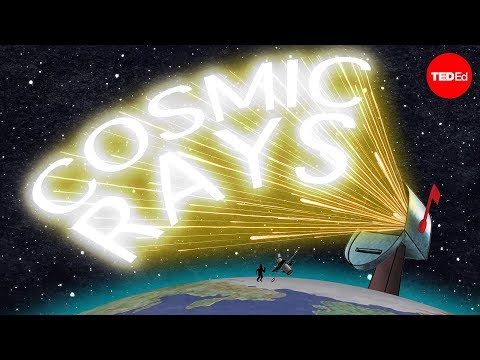
Definition of Cosmic Rays Cosmic rays are highly energetic particles that originate from outer space and continuously strike the Earth. These particles, primarily protons and atomic nuclei, travel at nearly the speed of light and carry valuable information about astrophysical phenomena occurring far beyond our planet. Their study offers profound insights into the fundamental processes […]

Read More →

Could cosmic rays be used for spacecraft propulsion?

Definition of Cosmic Rays and Their Role in Space Propulsion Cosmic rays are highly energetic particles that originate from various astrophysical sources, including the sun, supernovae, and active galactic nuclei. These particles primarily consist of protons but also include heavier atomic nuclei and electrons traveling at velocities close to the speed of light. Their energies […]

Read More →

Neutrinos Take Center Stage: Background Particles in the Spotlight

Definition of Neutrinos Neutrinos are fundamental subatomic particles classified within the lepton family, which also includes electrons and muons. Characterized by their extremely small mass and lack of electric charge, neutrinos are elusive particles that interact very weakly with matter. They are produced in vast quantities during nuclear reactions, such as those occurring in stellar […]

Read More →

If neutrinos have mass

Understanding Neutrinos Neutrinos are fundamental particles that are both abundant and elusive in the universe. They are generated in vast quantities through nuclear processes within stars, during supernova explosions, and from the radioactive decay of elements on Earth. Despite their widespread presence, neutrinos interact very weakly with matter, making their detection exceptionally challenging. One of […]

Read More →

Do comets ever produce Cosmic Rays?

Definition of Comets and Cosmic Rays Comets are icy celestial objects composed mainly of frozen gases, dust, and rocky materials. They have fascinated astronomers and skywatchers for centuries due to their bright, glowing tails and transient appearances. Cosmic rays, on the other hand, are highly energetic particles that travel through space at nearly the speed […]

Read More →

China–US Neutrino Facility Opens: Physics Without Borders

Overview of the China-US Neutrino Facility The inauguration of the China-US Neutrino Facility marks a transformative milestone in particle physics, symbolizing a new chapter of international scientific collaboration that transcends political boundaries. This cutting-edge research center is set to revolutionize our grasp of the universe’s fundamental components by enabling unprecedented studies into neutrinos, some of […]

Read More →

Neutrino Hunters Recruit the Romans: Archaeology Meets Physics

Understanding Neutrinos and Their Significance Neutrinos are fundamental subatomic particles that play a crucial role in the universe’s underlying processes. Often dubbed “ghost particles,” neutrinos are generated in vast quantities through nuclear reactions occurring in stars, supernovae, and radioactive decay. Their defining characteristics include an extremely small mass and the absence of electric charge, enabling […]

Read More →

Universe Under Scrutiny: Analysis Challenges the Standard Model

Overview of the Standard Model in Particle Physics The Standard Model stands as a cornerstone theoretical framework in particle physics, offering a comprehensive description of the universe’s fundamental constituents and their interactions. It categorizes elementary particles into two main groups: fermions, which constitute matter, and bosons, which mediate forces. The model successfully integrates three of […]

Read More →

Why are neutrinos important for your body?

Definition of Neutrinos Neutrinos are elementary subatomic particles distinguished by their extremely small mass and lack of electric charge. These particles are incredibly abundant throughout the universe, yet they interact so weakly with matter that they pass through most objects, including the human body, almost undetected. Originating from various cosmic and terrestrial sources, neutrinos are […]

Read More →

What are the origins and causes of dark matter?

Understanding Dark Matter: A Comprehensive Overview Definition and Significance Dark matter is a mysterious form of matter that constitutes roughly 27% of the universe’s total mass-energy composition. Unlike ordinary matter, it neither emits nor absorbs light, making it invisible and detectable only through its gravitational effects. This elusive substance has intrigued scientists for decades, as […]

Read More →