
Short Answer
Definition of the Casimir Effect
The Casimir effect is a quantum phenomenon predicted by quantum field theory, where an observable force emerges from the vacuum of space. Typically, this force appears as an attraction between two uncharged, parallel conducting plates placed very close together in a vacuum. This attraction arises due to quantum fluctuations of the electromagnetic field in the vacuum, which create a pressure difference between the inside and outside regions of the plates.
Quantum Vacuum Fluctuations Explained
At the heart of the Casimir effect lies the concept of quantum vacuum fluctuations. Contrary to classical assumptions that a vacuum is empty, quantum theory reveals that it is filled with transient virtual particles that continuously pop into and out of existence within extremely brief time intervals. These fluctuations generate a dynamic environment where electromagnetic modes are restricted between closely spaced surfaces. The reduction in allowed modes between the plates compared to the surrounding space leads to an imbalance in vacuum energy, producing a net force that pulls the plates together.
Mechanism Behind the Casimir Force
The Casimir force results from the difference in zero-point energy of the electromagnetic field between the plates and the external vacuum. When two conductive plates are placed in close proximity, the boundary conditions limit the wavelengths of virtual photons that can exist between them. This limitation reduces the vacuum energy density between the plates relative to the outside, causing a net inward pressure that manifests as an attractive force.
Emergence of Repulsive Casimir Forces
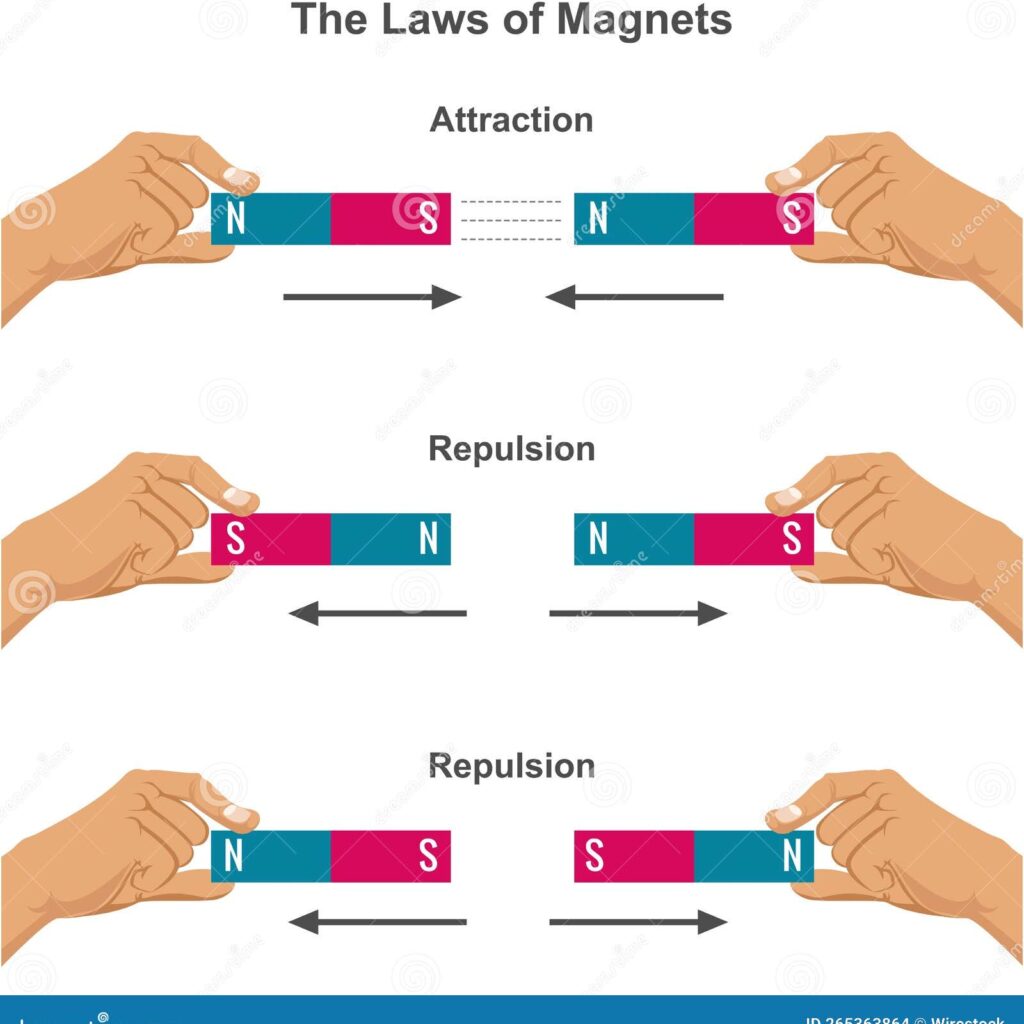
While the Casimir force is conventionally attractive, recent theoretical developments suggest that under certain conditions, it can become repulsive. This reversal is linked to changes in the boundary conditions at the surfaces of the materials involved. By employing materials with unusual electromagnetic properties-such as negative permittivity or permeability-the interaction between vacuum fluctuations and the surfaces can be altered, leading to a repulsive Casimir force. This phenomenon challenges traditional views and opens new avenues for manipulating quantum forces.
Role of Metamaterials in Casimir Force Manipulation
Metamaterials, artificially engineered composites with tailored electromagnetic responses, play a crucial role in achieving repulsive Casimir forces. These materials can exhibit properties not found in nature, including negative refractive indices, by controlling their structure at scales smaller than the wavelength of light. When used as the interacting surfaces, metamaterials can modify the vacuum fluctuations in such a way that the Casimir force switches from attraction to repulsion. This capability has significant implications for developing frictionless nanoscale devices and innovative micro-electromechanical systems (MEMS).
Quantum Field Theory Perspective on Negative Casimir Forces
From the standpoint of quantum field theory, the negative Casimir force arises due to complex dielectric responses in certain materials that affect the vacuum energy density. These materials can induce negative contributions to the effective vacuum energy between the plates. At specific separations, the repulsive component can dominate over the attractive one, necessitating a reevaluation of fundamental force interactions at the quantum level. This insight deepens our understanding of emergent quantum phenomena and the dynamic nature of vacuum energy.
Experimental Investigations and Challenges
Although theoretical models predict the existence of repulsive Casimir forces, experimental confirmation remains challenging. Most measurements to date have observed only attractive forces, largely due to technological limitations in controlling nanoscale separations and material properties. However, advances in nanofabrication and precision measurement techniques are gradually enabling experiments designed to detect repulsive Casimir effects. These efforts are critical for validating theoretical predictions and exploring practical applications.
Practical Applications and Technological Impact
The ability to control the Casimir force, especially to induce repulsion, holds transformative potential for various fields. In nanotechnology, repulsive Casimir forces could reduce stiction and wear in MEMS devices, enhancing their reliability and lifespan. Additionally, this phenomenon could lead to the development of novel nanoscale actuators, frictionless bearings, and even contactless propulsion systems. Furthermore, understanding and harnessing these forces may influence quantum computing architectures and the manipulation of materials at atomic scales.
Common Misconceptions About the Casimir Effect
The vacuum is completely empty.
Quantum theory shows that the vacuum is filled with fluctuating virtual particles that generate measurable effects like the Casimir force.
The Casimir force is always attractive.
Under specific material and geometric conditions, the Casimir force can become repulsive, especially when using metamaterials with engineered electromagnetic properties.
Philosophical and Scientific Significance
The study of the Casimir effect, particularly its transition from attraction to repulsion, raises profound questions about the nature of forces and reality itself. It challenges classical intuitions by demonstrating that forces are not fixed but depend on the quantum state and boundary conditions of the system. This dynamic perspective enriches philosophical discussions about locality, causality, and the fabric of the universe, while simultaneously pushing the boundaries of modern physics.
Summary: Advancing Quantum and Material Science
The discovery that the Casimir force can be tuned from attraction to repulsion marks a significant milestone in quantum physics and materials science. By leveraging metamaterials and deepening our understanding of quantum vacuum fluctuations, researchers are unlocking new possibilities for technological innovation and fundamental science. Although experimental hurdles remain, the pursuit of negative Casimir forces promises to revolutionize nanoscale engineering and expand our comprehension of quantum interactions, ultimately reshaping how we perceive forces in the universe.
FAQ
What causes the Casimir force?
It arises from quantum vacuum fluctuations that create pressure differences between closely placed conducting plates.
Can the Casimir force be both attractive and repulsive?
Yes, conventional Casimir force is attractive, but it can become repulsive under certain conditions involving engineered materials like metamaterials.
What role do metamaterials play in the Casimir effect?
Metamaterials can alter electromagnetic boundary conditions, enabling the Casimir force to switch from attraction to repulsion.
What are potential applications of the negative Casimir force?
They include advanced nanoscale mechanical devices, quantum computing enhancements, and novel propulsion systems.
Why is empirical validation of the negative Casimir force challenging?
Because it requires precise nanoscale control and measurement technologies that are still developing.






Leave a Reply