

Short Answer
Understanding Matter and Antimatter
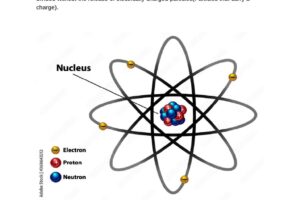
Matter forms the tangible substance of the universe, consisting of atoms made up of protons, neutrons, and electrons. Antimatter, conversely, is composed of particles that are the exact opposites of those in matter: positrons (antielectrons), antiprotons, and antineutrons. When matter and antimatter meet, they annihilate each other, releasing energy as described by Einstein’s famous equation, E=mc2. This annihilation process highlights the fundamental incompatibility of matter and antimatter coexisting in the same space, which is a key factor in the observed dominance of matter in the cosmos.
- Matter:
Consists of atoms with protons, neutrons, and electrons. - Antimatter:
Made up of antiparticles such as positrons, antiprotons, and antineutrons. - Annihilation:
When matter and antimatter collide, they convert mass into energy.
Concept of Heavy Antimatter Atoms
The idea of heavy antimatter atoms, such as anti-plutonium, extends the concept of antimatter beyond simple particles to complex atomic structures. Plutonium, a heavy element with atomic number 94, is well-known for its nuclear properties and applications in energy and weaponry. Its antimatter equivalent would theoretically consist of 94 antiprotons, an equal number of antineutrons, and positrons orbiting the nucleus, mirroring the structure of normal plutonium but with antiparticles.
However, synthesizing such a heavy antimatter atom presents enormous scientific and technical challenges. While particle accelerators can produce individual antiparticles like antiprotons and positrons, assembling them into a stable, heavy antimatter atom remains beyond current technological reach due to the extreme difficulty in producing and containing sufficient quantities of antimatter.
Production and Containment Challenges
Generating antimatter requires immense energy inputs, typically achieved in high-energy physics experiments or naturally occurring cosmic ray interactions. The quantities produced are minuscule and fleeting, making the formation of complex antimatter atoms like anti-plutonium practically impossible with today’s technology.
Moreover, antimatter’s tendency to annihilate instantly upon contact with matter complicates containment. Specialized magnetic traps and vacuum chambers are used to isolate antimatter particles, but scaling these methods to hold heavy antimatter atoms safely is a formidable obstacle. The annihilation events release bursts of energy that pose both experimental hazards and logistical difficulties.
Scientific and Philosophical Implications
The pursuit of heavy antimatter atoms is not only a technical endeavor but also a gateway to profound scientific questions. One of the most puzzling mysteries in cosmology is the apparent imbalance between matter and antimatter in the universe, known as baryogenesis. Understanding whether heavy antimatter atoms can exist and be studied could shed light on why matter dominates and how the early universe evolved.
Additionally, exploring heavy antimatter could refine theoretical physics frameworks, including the Standard Model and quantum mechanics, and potentially contribute to unifying gravity with quantum forces. The existence of antimatter galaxies or civilizations, while speculative, invites reconsideration of cosmic evolution and the fundamental laws governing the universe.
Potential Applications and Ethical Considerations
Research into antimatter holds promise for revolutionary technologies, such as propulsion systems based on matter-antimatter annihilation, which could transform space travel by providing unprecedented thrust. However, the immense energy released by antimatter interactions also raises significant ethical and safety concerns. Responsible stewardship and stringent regulatory oversight are essential to prevent misuse and ensure that scientific progress benefits humanity without unintended consequences.
Summary: The Quest for Anti-Plutonium
The investigation into whether heavy atoms like plutonium can exist as antimatter represents a multidisciplinary journey bridging physics, cosmology, and ethics. While current scientific capabilities limit the creation and study of such atoms, the theoretical exploration continues to inspire new questions about the nature of the universe and our place within it. The challenge of understanding heavy antimatter underscores the delicate balance between imagination and empirical science, driving humanity’s quest for deeper knowledge.
Frequently Asked Questions
Is it possible for heavy atoms such as plutonium to have antimatter counterparts?
In principle, heavy atoms like plutonium could have antimatter equivalents composed of antiprotons, antineutrons, and positrons. However, producing and stabilizing such atoms remains beyond current experimental capabilities.
What are the main obstacles to creating heavy antimatter atoms?
The primary difficulties include generating sufficient antimatter particles, assembling them into complex atomic structures, and safely containing antimatter to prevent annihilation with matter.
Why does the universe contain more matter than antimatter?
This phenomenon, called baryogenesis, is not yet fully understood but is thought to result from processes during the Big Bang that favored the production of matter over antimatter.
What scientific benefits could arise from producing anti-plutonium?
Creating anti-plutonium could provide valuable insights into fundamental physics, help test and refine the Standard Model, and improve our understanding of the matter-antimatter asymmetry in the universe.
Are there ethical issues related to antimatter research?
Yes, due to the immense energy involved in antimatter interactions, ethical considerations and strict regulatory frameworks are crucial to ensure safe and responsible scientific exploration.




Leave a Reply