Why We Don’t Build Telescopes You Can Live Inside

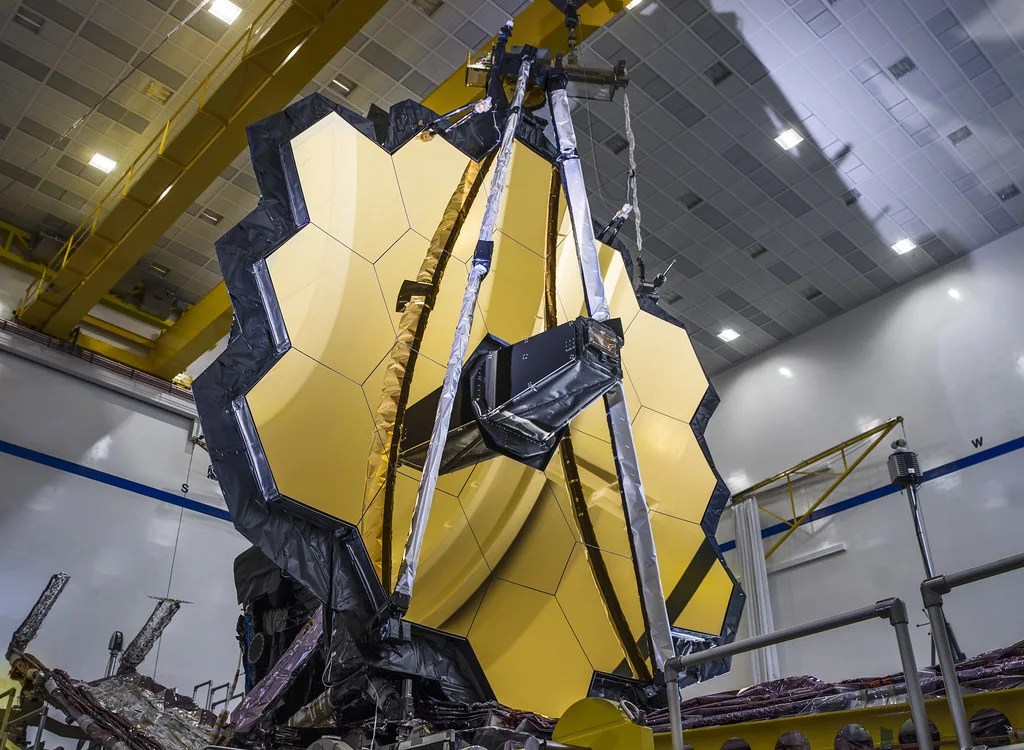
Definition of Telescopes and the Concept of Habitable Telescopes Telescopes are sophisticated optical instruments designed to gather and focus electromagnetic radiation-primarily visible light-to create detailed images of distant celestial bodies. Their primary function is to enhance our ability to observe and study astronomical phenomena far beyond the reach of the naked eye. The idea of […]

Read More →

The Biggest Mysteries the Standard Model Can’t Explain

Definition of the Standard Model The Standard Model of particle physics represents a landmark achievement in contemporary science, providing a detailed and mathematically robust framework to describe the fundamental particles that constitute matter and the forces governing their interactions. It successfully integrates three of the four fundamental forces-electromagnetism, the weak nuclear force, and the strong […]

Read More →

Is Dark Matter Even Real? The Debate Isn’t Over

Definition of Dark Matter Dark matter is a hypothesized form of matter that does not emit, absorb, or reflect light, making it invisible to current electromagnetic observational methods. Despite its invisibility, it is believed to constitute a significant portion of the universe’s total mass, influencing the gravitational behavior of galaxies and the large-scale structure of […]

Read More →

Is Astrophysics Just Math? The Surprising Answer

Definition of Astrophysics Astrophysics is a scientific discipline dedicated to understanding the physical nature and behavior of celestial objects and phenomena. It integrates principles from physics and astronomy to explore the universe’s fundamental components, from stars and planets to galaxies and the cosmos at large. Far from being solely a mathematical exercise, astrophysics combines theoretical […]

Read More →

How Close Can You Get to a Magnetar and Survive?

Definition of Magnetars Magnetars are a unique class of neutron stars distinguished by their extraordinarily powerful magnetic fields. These stellar remnants emerge from the collapse of massive stars following supernova explosions. Unlike typical neutron stars, magnetars possess magnetic fields that can reach intensities between 1013 and 1015 gauss, vastly exceeding Earth’s magnetic field, which is […]

Read More →

Do All Objects in the Universe Have Gravity?

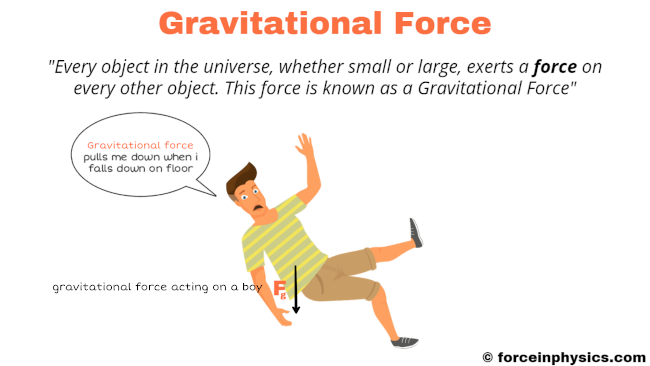
Definition of Gravity Gravity is a fundamental natural force responsible for the attraction between objects that possess mass. It governs the motion of celestial bodies, the behavior of objects on Earth, and the structure of the universe itself. This force acts universally, influencing entities ranging from the tiniest particles to the largest galaxies. Universal Attraction: […]

Read More →

What Happens When a Star Becomes Too Massive?

Definition of Massive Stars Massive stars are celestial bodies whose masses significantly exceed that of our Sun, typically surpassing 20 solar masses. These stars are characterized by their extraordinary brightness, rapid nuclear fusion processes, and relatively short lifespans. Unlike smaller stars, massive stars undergo complex evolutionary stages that culminate in dramatic and often violent endpoints, […]

Read More →

Can We Ever Test Gravity at the Quantum Level?

Understanding Quantum Gravity The question of whether gravity can be examined at the quantum scale delves into one of the most profound frontiers in contemporary physics. Gravity, one of the four fundamental forces shaping our universe, remains enigmatic when scrutinized at the smallest scales. Unlike electromagnetism and the nuclear forces, which have been extensively studied […]

Read More →