
Short Answer
Definition of Atomic Clocks and Their Sensitivity to Temperature
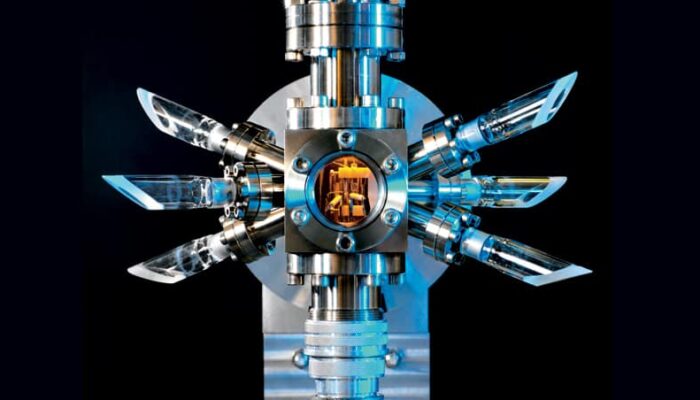
Atomic clocks are highly precise timekeeping devices that rely on the quantum mechanical properties of atoms to measure time with extraordinary accuracy. These clocks use the consistent oscillation frequencies of specific atoms, such as cesium or rubidium, as their fundamental timekeeping standard. The official definition of a second is based on the cesium-133 atom, where one second corresponds to exactly 9,192,631,770 cycles of radiation emitted during the transition between two hyperfine energy levels of its ground state. However, the precision of these atomic transitions can be influenced by environmental factors, particularly temperature variations, which affect the clock’s performance and reliability.
Principles Behind Atomic Clock Operation
Atomic clocks function by exploiting the stable resonant frequencies of atoms when subjected to electromagnetic radiation. Cesium and rubidium atoms are commonly used because their electron transitions produce highly stable microwave frequencies. When these atoms absorb or emit radiation at these frequencies, the clock counts the cycles to measure time intervals with remarkable consistency. The stability of these atomic transitions is crucial, as any deviation can lead to inaccuracies in time measurement.
Thermal Effects on Atomic Clock Performance
Impact of High Temperatures
Elevated temperatures cause atoms within the clock to move more rapidly, increasing their kinetic energy. This heightened motion leads to the Doppler effect, where the frequency of atomic transitions appears shifted due to the velocity of the atoms. The result is spectral broadening, which reduces the precision of the frequency measurement and introduces timing errors. To counteract these effects, atomic clocks are often housed in temperature-controlled environments that minimize thermal fluctuations and maintain atomic stability.
Behavior at Ultra-Low Temperatures
At temperatures approaching absolute zero, atoms exhibit highly coherent quantum states, which can be harnessed to improve clock accuracy. Optical lattice clocks, a cutting-edge type of atomic clock, trap atoms using laser light in ultra-cold conditions, significantly enhancing frequency stability beyond traditional cesium clocks. However, achieving and maintaining such cryogenic temperatures requires advanced cooling technologies, posing practical challenges for widespread deployment.
Technological Innovations Addressing Thermal Challenges
Thermal Regulation and Insulation
Given the dual nature of temperature effects-detrimental at high temperatures and beneficial at low temperatures-engineers have developed sophisticated thermal management systems. These include active thermal control mechanisms and advanced insulation materials designed to shield atomic clocks from environmental temperature swings, ensuring consistent operation even in harsh conditions such as outer space.
Material Science Contributions
Advances in materials science have played a pivotal role in enhancing atomic clock resilience. The use of materials with low thermal expansion coefficients helps maintain the structural integrity of clock components despite temperature changes. This stability is essential for preserving the precise alignment and functioning of the atomic system, thereby reducing timing errors caused by physical distortions.
Integration of Adaptive Electronics
Modern atomic clocks incorporate digital signal processors and other electronic systems capable of real-time adjustments. These adaptive technologies monitor temperature-induced variations and dynamically correct the clock’s operational parameters, further improving accuracy and reliability across diverse environments.
Applications and Importance of Temperature-Stable Atomic Clocks
Atomic clocks underpin critical technologies such as global navigation satellite systems (GNSS), telecommunications networks, and fundamental physics experiments. Their ability to maintain precise timekeeping despite thermal fluctuations is essential for the synchronization and accuracy of these systems. As demands for precision grow, especially in emerging fields like quantum computing, understanding and mitigating thermal effects on atomic clocks becomes increasingly vital.
Common Misconceptions About Atomic Clocks and Temperature
Atomic clocks are unaffected by environmental conditions.
While highly precise, atomic clocks are sensitive to temperature changes that can alter atomic transition frequencies, necessitating thermal control.
Lower temperatures always improve atomic clock performance.
Although ultra-cold conditions enhance stability, maintaining such environments is technologically challenging and not always practical for all applications.
Conclusion: The Future of Atomic Clocks in Thermal Extremes
The study of how temperature influences atomic clock operation highlights the intricate balance between quantum physics and engineering. Overcoming thermal challenges is key to pushing the boundaries of time measurement accuracy. Continued interdisciplinary research and innovation in thermal management, materials science, and adaptive electronics will ensure atomic clocks remain the gold standard for precision timekeeping, enabling advancements in science and technology that depend on exact temporal measurement.
FAQ
What are atomic clocks?
Atomic clocks are precise timekeeping devices that measure time using the oscillation frequencies of atoms, such as cesium or rubidium.
How do temperature changes affect atomic clocks?
Temperature changes can alter atomic transition frequencies, leading to inaccuracies in time measurement.
What technologies improve atomic clock accuracy?
Technologies such as thermal regulation systems, advanced materials, and adaptive electronics help maintain atomic clock accuracy across temperature variations.






Leave a Reply