
Short Answer
Definition of Cosmic Rays
Cosmic rays are highly energetic charged particles, predominantly protons, that originate from sources beyond our solar system. These particles travel through space at speeds approaching that of light, carrying energies far surpassing those produced by human-made particle accelerators. Their genesis is linked to powerful cosmic phenomena such as supernova explosions, active galactic nuclei, and the intense environments surrounding neutron stars. As a fundamental component of the universe, cosmic rays continuously bombard Earth, embedding themselves in the fabric of cosmic radiation.
Origins and Nature of Cosmic Rays
The sources of cosmic rays are diverse and rooted in some of the most energetic events in the cosmos. Supernovae, the explosive deaths of massive stars, accelerate particles to extreme velocities. Similarly, active galactic nuclei-supermassive black holes at the centers of galaxies-emit jets and winds that propel particles across vast distances. Neutron stars, with their intense magnetic fields and rapid rotation, also contribute to the cosmic ray population. These origins explain the immense energy and relativistic speeds characteristic of cosmic rays.
Interaction with Earth’s Atmosphere and Magnetic Field
Upon reaching Earth, cosmic rays encounter the planet’s atmosphere and magnetic field, which serve as natural protective barriers. The atmosphere absorbs and scatters many of the incoming high-energy particles, significantly reducing their intensity before they reach the surface. This shielding effect is most effective at sea level, where only a small fraction of cosmic radiation penetrates. Additionally, Earth’s magnetic field deflects charged particles, further diminishing the flux of cosmic rays that can impact living organisms.
Biological Effects of Cosmic Ray Exposure
When cosmic rays collide with atoms in the atmosphere, they generate secondary particles such as neutrons and muons. These secondary radiations possess the ability to penetrate biological tissues, potentially causing ionization events that can damage cellular structures. Such damage may lead to mutations, disruptions in cellular function, or even cancer development. The risk associated with cosmic ray exposure is influenced by factors including altitude, duration of exposure, and individual susceptibility.
Radiation Dose from Cosmic Rays
- Background Exposure:
At ground level, cosmic rays contribute a minor portion of the total annual radiation dose, which is overshadowed by other sources like radon gas, medical procedures, and dietary intake. - Elevated Exposure at Altitude:
Passengers and crew on commercial flights receive higher doses of cosmic radiation due to reduced atmospheric shielding at cruising altitudes. - Space Environment:
Astronauts on missions beyond Earth’s protective layers face significantly increased exposure, raising concerns about long-term health effects.
Health Risks for Air Travelers and Astronauts
Individuals who spend extended periods at high altitudes or in space are subject to increased cosmic radiation doses. Frequent flyers and airline personnel accumulate higher radiation exposure compared to the general population. In space, the absence of atmospheric and magnetic protection exposes astronauts to intense cosmic radiation, which can affect critical organs and systems, including the central nervous system. These risks necessitate ongoing research and the development of protective measures to safeguard human health during air travel and space missions.
Protective Mechanisms Against Cosmic Rays
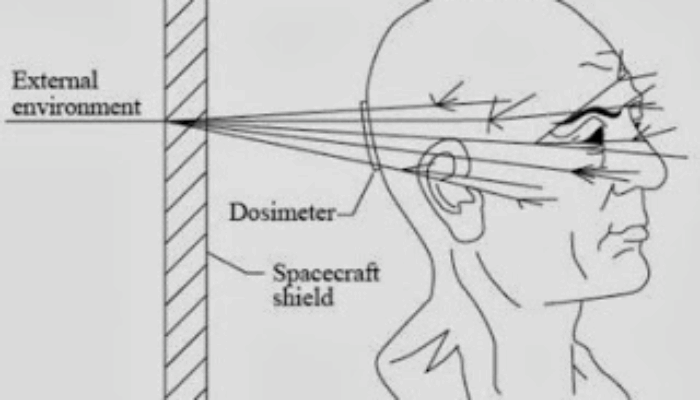
Earth’s atmosphere and magnetic field constitute the primary defenses against cosmic radiation. The atmosphere’s layers absorb and scatter incoming particles, while the geomagnetic field deflects charged cosmic rays, reducing their penetration. However, these natural shields weaken with altitude, making high-flying aircraft and spacecraft more vulnerable. To mitigate exposure, the aviation industry employs strategies such as flight path optimization and scheduling during periods of lower solar activity. In space exploration, advanced shielding materials and radiation-hardened habitats are being developed to protect astronauts.
Cosmic Rays and Space Exploration Challenges
As humanity ventures further into space, understanding and managing cosmic ray exposure becomes increasingly critical. Missions to the Moon, Mars, and beyond will require innovative solutions to shield astronauts from harmful radiation. This includes the design of spacecraft with enhanced protective materials and the creation of habitats capable of minimizing radiation penetration. Additionally, research into the biological effects of prolonged cosmic ray exposure is essential to ensure the safety and well-being of space travelers.
Biological Defense and DNA Repair
Despite the potential hazards posed by cosmic rays, living organisms possess intrinsic mechanisms to counteract radiation damage. DNA repair pathways involve a suite of proteins that detect and correct mutations caused by ionizing radiation. This evolutionary adaptation reflects the long-standing presence of natural radiation in the environment and highlights the resilience of biological systems in the face of cosmic radiation.
Common Misconceptions About Cosmic Rays
Cosmic rays are completely blocked by Earth’s atmosphere.
While the atmosphere significantly reduces cosmic ray intensity, some particles and secondary radiation still reach the surface, contributing to background radiation.
Cosmic rays pose an immediate and severe health threat to everyone.
For most people at sea level, cosmic ray exposure is minimal and not harmful; risks increase primarily with altitude and duration of exposure.
Space radiation only comes from cosmic rays.
Space radiation includes cosmic rays as well as solar particle events and trapped radiation belts, all contributing to the overall radiation environment.
Significance of Understanding Cosmic Rays
Comprehending cosmic rays and their effects is vital for multiple fields, including astrophysics, environmental science, medicine, and aerospace engineering. This knowledge informs radiation safety protocols for air travel and space missions, guides the development of protective technologies, and enhances our understanding of radiation’s role in biological processes. As humanity expands its presence beyond Earth, addressing the challenges posed by cosmic rays is essential for ensuring the health and safety of explorers and advancing scientific discovery.
Summary
Cosmic rays are energetic particles originating from powerful cosmic events that continuously interact with Earth’s atmosphere and magnetic field. While they contribute a small portion of natural background radiation at ground level, their intensity and potential health risks increase with altitude and in space. Protective mechanisms, both natural and engineered, play a crucial role in mitigating exposure. Ongoing research and technological innovation are imperative to manage the risks associated with cosmic rays, especially as human activity extends into the high-altitude and extraterrestrial environments. Understanding cosmic rays not only deepens our grasp of the universe but also supports the safe advancement of air and space travel.
FAQ
What are cosmic rays?
Cosmic rays are energetic charged particles originating from cosmic phenomena such as supernovae and active galactic nuclei.
How do cosmic rays affect human health?
They can cause ionization in biological tissues potentially leading to cellular damage, mutations, and cancer, especially at high altitudes or in space.
Why is cosmic ray exposure higher in space?
Because space lacks the protective atmosphere and magnetic field that reduce cosmic ray intensity on Earth.
Can cosmic rays be completely blocked?
No, Earth's atmosphere significantly reduces but does not completely block cosmic rays; some particles and secondary radiation reach the surface.
What precautions are taken to protect air travelers and astronauts?
Flight path optimization, scheduling during low solar activity, and spacecraft shielding materials are used to mitigate exposure.



Leave a Reply