

Short Answer
Definition of Cosmic Rays and the AMS-02 Experiment
Cosmic rays are high-energy particles, predominantly protons, electrons, and heavier atomic nuclei, that travel through space at nearly the speed of light. These particles originate from various astrophysical sources and carry valuable information about the universe’s most energetic phenomena. The Advanced Alpha Magnetic Spectrometer (AMS-02) is a state-of-the-art particle physics detector installed on the International Space Station (ISS) in 2011. Its mission is to analyze cosmic rays with unprecedented precision, providing insights into their composition, origins, and the fundamental physics governing their behavior.
- Cosmic Rays:
Charged particles from outer space, including protons, electrons, and atomic nuclei, that bombard Earth’s atmosphere. - AMS-02:
A sophisticated magnetic spectrometer designed to measure cosmic ray particles aboard the ISS, enabling long-term data collection beyond Earth’s atmosphere.
Mechanisms Behind Cosmic Ray Detection and Analysis
The AMS-02 operates by using a powerful magnetic field to bend the trajectories of incoming charged particles, allowing it to determine their charge, mass, and energy. By continuously monitoring cosmic rays in the near-Earth environment, AMS-02 distinguishes between different particle types and measures their energy spectra. This data helps scientists understand how cosmic rays propagate through the galaxy, interact with interstellar media, and potentially originate from exotic sources.
Key Discoveries: The Positron Anomaly and Its Implications
One of the most groundbreaking findings from AMS-02 is the unexpected rise in the fraction of positrons (the antimatter counterparts of electrons) at high energies. Traditional astrophysical models predict that positrons should decrease in proportion as energy increases, assuming they are secondary particles produced by cosmic ray collisions. However, AMS-02 data reveals an anomalous increase, suggesting the presence of additional sources or processes not accounted for in classical theories.
- Positron Fraction Increase:
Contrary to expectations, the ratio of positrons to electrons rises at higher energies, indicating unknown origins. - Potential Explanations:
Hypotheses include contributions from pulsars, dark matter particle annihilation, or other exotic astrophysical phenomena.
Dark Matter and Cosmic Rays: A Possible Connection
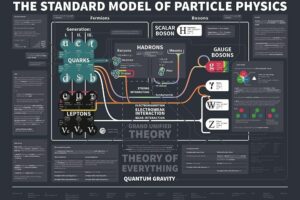
The positron excess detected by AMS-02 has invigorated research into dark matter, a mysterious form of matter that does not emit light but exerts gravitational influence on visible matter. Theories involving weakly interacting massive particles (WIMPs) propose that when these particles annihilate, they produce standard particles such as positrons. While this offers an exciting avenue for explaining the positron anomaly, the exact nature of dark matter remains elusive, and AMS-02’s findings encourage further exploration beyond the Standard Model of particle physics.
Cosmic Ray Propagation and Galactic Environments
The AMS-02 results also prompt a reassessment of how cosmic rays travel through the galaxy. As these particles move through turbulent magnetic fields, shock waves, and hot interstellar gas, they lose energy and interact in complex ways. Understanding these processes requires sophisticated modeling of galactic environments, including the role of supernova remnants and stellar systems that act as cosmic ray accelerators. This research enhances our knowledge of the lifecycle and distribution of cosmic rays across the Milky Way.
Astrophysical Sources of Cosmic Rays
Astrophysical objects such as neutron stars, pulsars, and black holes are believed to be significant contributors to cosmic ray production. The extreme gravitational and electromagnetic conditions near these bodies create natural particle accelerators capable of generating high-energy cosmic rays. Investigating these environments sheds light on the fundamental physics of particle acceleration and energy transfer in the universe, raising questions about whether classical physics fully explains these phenomena or if new principles are at play.
Heavy Nuclei in Cosmic Rays and Their Origins
Beyond protons and electrons, AMS-02 has advanced the study of heavier atomic nuclei within cosmic rays. The elemental composition and distribution patterns of these nuclei provide clues about nucleosynthesis-the formation of elements in stars-and the astrophysical events that inject these particles into space. Observations suggest that sources such as gamma-ray bursts and supernova explosions contribute to the presence of heavy nuclei, offering a broader perspective on cosmic ray origins and galactic chemical evolution.
Practical Significance of Cosmic Ray Research
Understanding cosmic rays extends beyond theoretical physics, impacting fields like atmospheric science, aviation, and space exploration. High-energy cosmic particles interact with Earth’s atmosphere, producing secondary radiation that can affect electronic systems on aircraft and spacecraft. Accurate knowledge of cosmic ray fluxes is essential for assessing radiation exposure risks to astronauts and high-altitude pilots, thereby informing safety protocols and technological designs for future missions beyond low-Earth orbit.
The Future of Cosmic Ray Studies and Interdisciplinary Collaboration
As AMS-02 continues to collect data, it remains at the forefront of a transformative scientific endeavor. The complexity of cosmic ray phenomena demands collaboration among physicists, astronomers, and engineers to develop innovative models and technologies. This interdisciplinary approach fosters a deeper understanding of the universe and drives progress in both fundamental science and applied research, highlighting the importance of cosmic rays as a natural laboratory for exploring the unknown.
Summary: The Cosmic Ray Enigma and Humanity’s Quest for Knowledge
The discoveries made by AMS-02 have unveiled intricate challenges that span multiple scientific domains, from the origins of cosmic rays to the fundamental interactions of particles. This cosmic ray puzzle not only captivates researchers but also symbolizes humanity’s enduring pursuit of knowledge beyond our terrestrial boundaries. As we stand on the threshold of new cosmic insights, the study of cosmic rays exemplifies the relentless human drive to comprehend the universe’s deepest mysteries.
FAQ
What is AMS-02 and where is it located?
AMS-02 is a particle physics detector installed on the International Space Station to study cosmic rays.
What unusual findings has AMS-02 reported?
It reported an unexpected increase in high-energy positrons that challenges current astrophysical models.
How might AMS-02 findings relate to dark matter?
The positron anomaly may be caused by the annihilation of dark matter particles called WIMPs.
Why is studying cosmic rays important for space exploration?
Understanding cosmic rays helps predict radiation exposure risks for astronauts and protects space technology.



Leave a Reply