
Short Answer
Understanding Stars and Planets
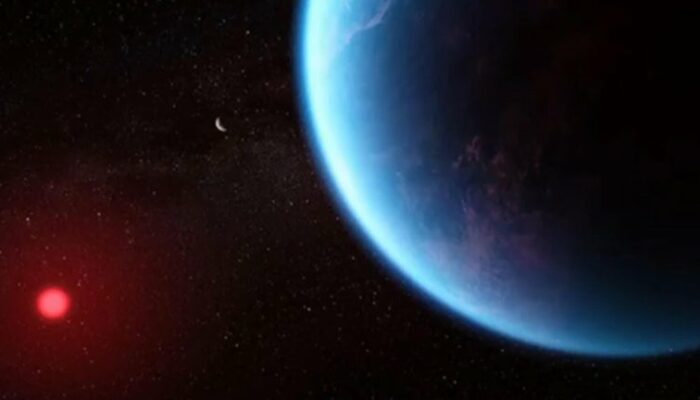
The universe is a vast expanse woven with stars and planets, each playing distinct yet interconnected roles in the cosmic fabric. Stars are luminous spheres of plasma, powered by nuclear fusion reactions that emit light and heat across immense distances. Planets, in contrast, are generally seen as quieter companions orbiting these stellar beacons, moving in gravitational harmony without producing their own light. However, the boundary between these two celestial categories is not always clear-cut, prompting intriguing questions about the nature of massive planets and their relationship to stars.
Definition and Characteristics of Stars
Stars are astronomical objects that generate energy through nuclear fusion, primarily by converting hydrogen into helium in their cores. This process requires a critical mass-typically around 75 to 80 times that of Jupiter-to create the extreme pressure and temperature conditions necessary for sustained fusion. Stars shine brightly due to this internal energy production, distinguishing them from other celestial bodies.
- Mass Threshold:
Stars must exceed a minimum mass to initiate and maintain nuclear fusion. - Energy Generation:
Fusion reactions produce the light and heat that define stars. - Lifecycle:
Stars undergo various evolutionary stages depending on their mass and composition.
Planets: Formation and Limitations
Planets form from the accumulation of dust and gas within protoplanetary disks surrounding stars. Unlike stars, they lack the mass required to trigger nuclear fusion, resulting in bodies that reflect or absorb light rather than emit it. Planetary sizes vary widely, from small rocky worlds like Mercury to gas giants such as Jupiter, the largest planet in our Solar System. Despite its size, Jupiter’s mass is less than one-thousandth that of the Sun, highlighting the significant mass gap between planets and stars.
- Formation:
Planets arise through accretion processes in stellar disks. - Mass Range:
From small terrestrial planets to massive gas giants. - Non-luminous:
Planets do not produce energy through fusion.
Brown Dwarfs: The Intermediate Class
Between planets and stars lies a fascinating category known as brown dwarfs. Often described as “failed stars,” these objects possess masses between approximately 13 and 80 times that of Jupiter. Brown dwarfs can ignite deuterium fusion-a weaker and short-lived nuclear process-but never achieve the sustained hydrogen fusion that defines true stars. This intermediate status challenges traditional classifications and blurs the line between planetary and stellar objects.
- Mass Range:
13 to 80 Jupiter masses. - Fusion Capability:
Can fuse deuterium but not hydrogen. - Classification Challenge:
Exhibit properties of both planets and stars.
Physical Principles Governing Mass and Fusion
The distinction between planets, brown dwarfs, and stars hinges on the interplay of mass, pressure, temperature, and nuclear reactions within their interiors. A celestial body’s mass determines whether gravitational forces can compress its core sufficiently to ignite fusion. Objects below the fusion threshold remain planets or brown dwarfs, while those above become stars. Massive planets nearing this threshold experience intense internal pressures and temperatures, placing them in a unique category that shares traits with both planets and brown dwarfs.
Exoplanets Near the Stellar Boundary
Recent advances in exoplanet research have uncovered planets with masses approaching the lower limits of stars, especially those orbiting small or faint stars such as white dwarfs. These massive planets challenge conventional cosmic hierarchies, sometimes resembling stellar companions more than typical planets. This role reversal highlights the diversity of planetary systems and the complexity of formation processes.
Astrophysical Implications of Massive Planets
Planets with masses close to stellar thresholds exhibit remarkable astrophysical phenomena. Their strong gravitational fields can significantly warp spacetime, influencing orbital dynamics and potentially creating extreme atmospheric conditions. These planets may experience intense tidal forces from their host stars, driving geological activity such as volcanism and powerful atmospheric winds. Understanding their formation raises questions about whether they result from traditional planetary accretion or processes akin to binary star formation.
Observational Challenges and Opportunities
Massive planets orbiting small stars produce pronounced transit signals, often causing deeper dimming of starlight than typical planet-star pairs. This makes them valuable targets for photometric studies, enabling detailed analysis of their atmospheres and compositions. The gravitational interactions in such systems can also reveal insights into planetary geology and atmospheric dynamics under extreme conditions.
Philosophical and Scientific Reflections on Classification
The existence of massive planets near the stellar mass boundary invites reconsideration of how we categorize celestial bodies. The universe often defies rigid definitions, presenting objects that straddle traditional boundaries. This fluidity underscores the complexity of cosmic formation and evolution, reminding us that astrophysical phenomena exist on a continuum rather than in discrete categories.
Significance in Cosmic Evolution
While planets cannot become stars in the strict sense of sustaining nuclear fusion, those approaching stellar masses play a crucial role in shaping their stellar environments. These giant planets influence the dynamics of their systems and provide valuable clues about the processes governing star and planet formation. Their study enriches our understanding of the universe’s diversity and the intricate dance of celestial bodies.
Summary
In summary, the boundary between planets and stars is nuanced and complex. Stars require sufficient mass to sustain nuclear fusion, while planets lack this capability. Brown dwarfs occupy the intermediate space, exhibiting partial fusion processes. Massive planets near this threshold challenge traditional distinctions, revealing a spectrum of celestial objects that blur the lines between categories. These discoveries expand our knowledge of cosmic structures and highlight the dynamic, evolving nature of the universe.
FAQ
What defines a star?
A star is defined as an astronomical object that generates energy through nuclear fusion, primarily converting hydrogen into helium.
What is the mass range for brown dwarfs?
Brown dwarfs have masses between approximately 13 and 80 times that of Jupiter.
Can planets become stars?
Planets cannot become stars as they lack the mass required to sustain nuclear fusion.

Leave a Reply