
Short Answer
Definition of Gravitational Waves
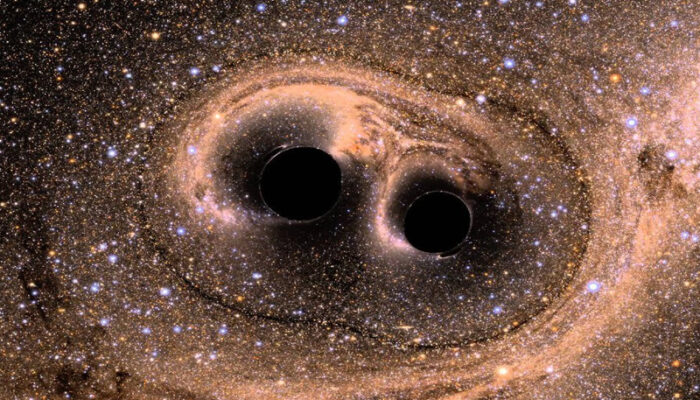
Gravitational waves are ripples that propagate through the very fabric of spacetime, generated by some of the most violent and energetic events in the universe. First predicted by Albert Einstein over a century ago within the framework of general relativity, these waves represent oscillations in spacetime curvature caused by accelerating masses, especially those undergoing asymmetric motion. Unlike electromagnetic waves, which travel through electromagnetic fields, gravitational waves are distortions of spacetime itself, carrying information about their cataclysmic origins across vast cosmic distances.
Generation and Physical Characteristics
These waves arise primarily from systems involving massive objects in dynamic, non-symmetrical motion, such as binary black holes spiraling inward before merging or neutron stars orbiting closely. As gravitational waves pass through a region, they induce tiny, rhythmic changes in distances by alternately stretching and compressing space in perpendicular directions. Although these distortions are extraordinarily small-often less than the diameter of a proton-they are detectable with highly sensitive instruments like LIGO and Virgo, which amplify these minute spacetime fluctuations.
Interaction with Matter and Movement of Objects
Gravitational waves exert a subtle influence on matter, but not through conventional forces like pushing or pulling. Instead, their passage causes free-floating objects to oscillate relative to one another due to the periodic stretching and squeezing of spacetime. For example, two particles initially at rest will experience rhythmic changes in their separation as a wave passes, demonstrating that gravitational waves can induce motion. However, these displacements are so minuscule that they remain imperceptible without advanced detection technology and have negligible effects on everyday objects bound by other forces.
Energy Transport by Gravitational Waves
One of the fundamental properties of gravitational waves is their ability to carry energy away from their sources. According to general relativity, changes in spacetime curvature embody energy and momentum, and gravitational waves represent a traveling flux of this energy. The energy emitted originates from the kinetic and potential energy of astrophysical systems, such as merging black holes, which lose orbital energy as they radiate gravitational waves. This process results in a reduction of the system’s total mass-energy, with a portion emitted at the speed of light in the form of gravitational radiation.
Mathematical Description of Energy in Gravitational Waves
Quantifying the energy carried by gravitational waves is complex due to the nonlinear and geometric nature of general relativity. Unlike electromagnetic energy, gravitational energy cannot be pinpointed to a specific location but is instead described through waveforms and energy fluxes measured far from the source. The effective stress-energy tensor approximation is employed to represent the average energy flux transported by these waves through spacetime, providing a mathematical framework for understanding their energy content.
Empirical Evidence and Observational Insights
The direct detection of gravitational waves has confirmed that they indeed transport energy. Observations of binary black hole mergers have revealed that several times the mass of our Sun is converted into gravitational radiation within fractions of a second-an energy release surpassing that of many electromagnetic phenomena such as supernovae. This discovery has unveiled a previously inaccessible channel for energy transfer in the cosmos, opening new avenues for astrophysical research and understanding.
Additional Effects on Matter and Astrophysical Implications
Beyond causing minute displacements, gravitational waves can also induce resonant vibrations in extended bodies or excite oscillation modes within massive celestial objects. These effects require either exceptionally strong waves or specific resonance conditions, making them rare in everyday contexts but valuable for probing the internal structures and dynamics of astrophysical bodies. The dual role of gravitational waves as carriers of both energy and information provides a powerful tool for studying otherwise invisible cosmic events.
Significance in Astronomy and Fundamental Physics
Gravitational waves have revolutionized astronomy by enabling the study of distant, compact object mergers through their waveforms and energy fluxes. This capability allows scientists to reconstruct the properties of phenomena that are otherwise undetectable by traditional electromagnetic observations. Furthermore, investigating how gravitational waves transfer momentum and energy offers profound insights into the limits of energy conservation in curved spacetime and the interaction of gravity with exotic forms of matter, enriching the theoretical landscape of physics.
Conclusion: The Dual Role of Gravitational Waves
In summary, gravitational waves are not merely abstract distortions of spacetime but active agents that subtly move matter and carry vast amounts of energy away from violent cosmic events. Their ability to induce tiny oscillations in objects and transport energy across the universe enhances our understanding of gravitational dynamics and energy transfer. As detection methods improve and observational data accumulate, further exploration of gravitational waves promises to deepen our knowledge of the universe’s hidden processes, marking a new era in the study of cosmic phenomena.
FAQ
What are gravitational waves?
Gravitational waves are disturbances in the fabric of spacetime caused by accelerating masses, such as merging black holes, predicted by Einstein's theory of general relativity.
Can gravitational waves move objects?
Yes, they cause extremely small oscillations in objects by stretching and compressing spacetime, though these movements are generally too small to detect without sensitive instruments.
Do gravitational waves carry energy?
Yes, gravitational waves transport energy from astrophysical sources, evidenced by the loss of orbital energy in merging black holes.
How are gravitational waves detected?
They are detected using laser interferometers such as LIGO and Virgo, which measure minute changes in distances caused by passing waves.
Why is the energy of gravitational waves difficult to quantify?
Because gravitational energy is not localized in general relativity, it is described via approximate mathematical tools like the stress-energy tensor and measured far from the wave source.

Leave a Reply