
Short Answer
Definition
The question of whether the physical laws established on Earth apply universally throughout the cosmos probes the fundamental nature of reality. It challenges the assumption that the principles governing motion, energy, and matter are consistent everywhere in space and time. This inquiry explores if the laws of physics, as derived from terrestrial experiments, hold true across the vast and varied environments of the universe or if they are context-dependent approximations.
Foundations of Physical Law Universality
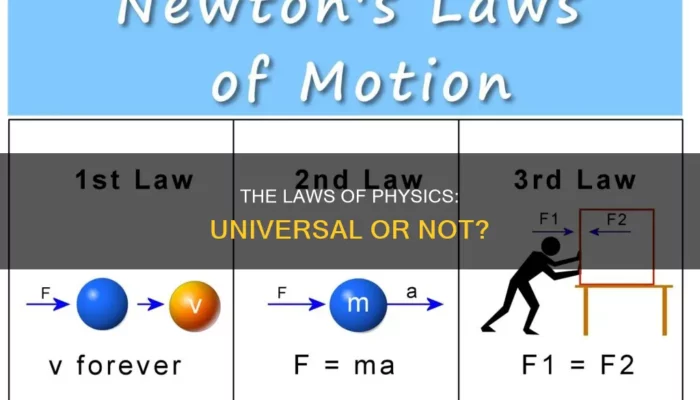
Classical physics is built on the premise that the laws discovered through experiments on Earth-such as Newton’s laws of motion, Maxwell’s equations of electromagnetism, and thermodynamic principles-are immutable and universally applicable. This belief in uniformity, known as invariance, assumes that physical laws do not change with location or epoch, reflecting a homogeneous and isotropic cosmos. The elegance and predictive success of these laws on Earth have long supported the conviction that they govern the entire universe without exception.
Challenges to Universality: Astrophysical and Cosmological Insights
Modern astrophysics and cosmology introduce complexities that question the absolute universality of Earth-based physical laws. Phenomena like dark energy and dark matter, along with observed variations in fundamental constants such as the fine-structure constant, suggest that the laws of physics might exhibit subtle regional differences or evolve over cosmic time. These findings imply that what we perceive as universal laws may be effective descriptions valid only within certain environmental or temporal boundaries.
The Dynamic Nature of Spacetime and Its Effects
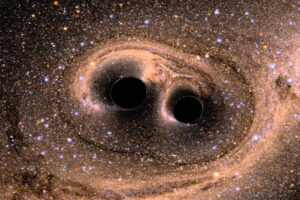
Contrary to the notion of space as a passive stage, general relativity reveals spacetime as a dynamic fabric that bends and warps in response to mass and energy. This curvature affects how physical laws manifest locally. For example, near massive objects like black holes, phenomena such as gravitational time dilation and frame-dragging cause deviations from the behavior predicted by Earth-based physics. These extreme environments highlight the limitations of applying terrestrial laws without modification.
Quantum Mechanics and the Scale-Dependent Nature of Physical Laws
While classical physics governs macroscopic phenomena, quantum mechanics dominates at microscopic scales, introducing principles like superposition, entanglement, and uncertainty. These quantum effects challenge classical intuitions and complicate the unification of physics laws. The ongoing difficulty in reconciling quantum mechanics with general relativity suggests that the known laws may not seamlessly apply across all scales and conditions, hinting at the possibility of emergent or altered physical laws in regimes inaccessible on Earth.
Influence of Extraterrestrial Environments on Physical Laws
The discovery of exoplanets and diverse cosmic environments with extreme temperatures, pressures, radiation levels, and chemical compositions raises questions about how physical interactions operate under such conditions. Hypothetical exotic states of matter, such as those theorized within neutron stars or dark matter candidates, might obey modified or entirely new physical laws. These considerations expand the scope of physics beyond terrestrial experiments, encouraging a more pluralistic understanding of natural laws.
Temporal Evolution of Physical Constants
The universe’s expansion introduces a temporal dimension to the study of physical law constancy. Over billions of years, fundamental constants might have experienced slight variations, which would imply that physical laws evolve with cosmic time. Although current observations place stringent limits on such changes, ongoing research using distant astrophysical phenomena-like quasar spectral lines and the cosmic microwave background-continues to test this possibility.
Multiverse Hypotheses and the Contextuality of Physical Laws
Multiverse theories propose that our universe is one among many, each potentially governed by different physical constants and laws. This perspective reframes Earth-centric physics as a localized set of rules within a broader cosmic anthology. If true, it suggests that physical laws are not absolute but contingent on the specific conditions of each universe, challenging the notion of universal applicability.
Implications for Science and Exploration
Understanding whether physical laws vary across space and time has profound consequences for space exploration, fundamental physics, and philosophy. Variations or extensions of known laws could influence spacecraft engineering, navigation, and communication technologies. For theoretical physics, acknowledging potential regional variability may guide the development of unified frameworks that incorporate higher-dimensional or context-dependent principles. Philosophically, this inquiry invites a reassessment of human knowledge and the anthropocentric assumptions underlying scientific inquiry.
Conclusion: Embracing Complexity and Mystery
The investigation into the universality of Earth’s physical laws represents a journey from certainty to curiosity, expanding our comprehension from familiar terrestrial phenomena to the vast, intricate cosmos. It underscores the provisional nature of scientific laws as powerful yet context-sensitive tools. This ongoing exploration promises to reshape our understanding of the universe and our place within it, embracing both the known and the mysterious as integral to the cosmic narrative.
FAQ
Are Earth’s physical laws universal across the cosmos?
Generally, yes, but evidence from astrophysics and cosmology indicates potential exceptions or modifications in extreme environments and over cosmic time.
What evidence challenges the universality of physical laws?
Observations of dark matter, dark energy, variations in fundamental constants, and phenomena near black holes suggest that physical laws may not be strictly uniform everywhere.
How does quantum mechanics impact the universality of physical laws?
Quantum mechanics introduces scale-dependent effects that differ from classical laws, complicating the idea that a single set of laws applies at all scales.
What is the significance of multiverse theories for physical laws?
Multiverse theories propose that different universes may have different physical constants and laws, implying that our Earth-based laws are not absolute but locally determined.
Why is understanding the universality of physical laws important?
It affects the accuracy of scientific models, the design of space missions, and our philosophical understanding of nature and reality.
Leave a Reply