
Short Answer
Understanding the Total Mass of the Universe
The vastness of the universe has long inspired awe and curiosity, prompting one of the most profound questions in science and philosophy: “What is the total mass of the universe?” This inquiry reflects humanity’s deep-seated desire to quantify and comprehend the cosmos, while also revealing the intricate complexities that define the universe’s fundamental nature.
Definition and Composition of the Universe
At its core, the universe encompasses everything that exists-matter, energy, space, and time. When discussing its total mass, it is crucial to recognize the diverse constituents that make up the cosmic landscape.
- Baryonic Matter:
This is the ordinary matter composed of protons, neutrons, and electrons, forming stars, planets, gas clouds, and dust. It is the matter we can directly observe and measure. - Dark Matter:
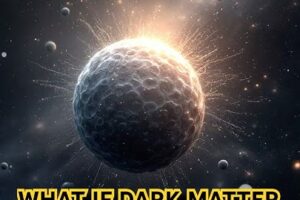
An invisible form of matter that does not emit or absorb light but exerts gravitational effects, accounting for approximately 27% of the universe’s total mass-energy content. - Dark Energy:
A mysterious form of energy responsible for the accelerated expansion of the universe, constituting about 68% of the total energy content. Unlike matter, it behaves as a repulsive force rather than traditional mass.
Observable Universe and Its Limits
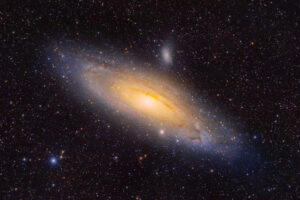
The observable universe extends roughly 46 billion light-years in every direction and contains an estimated two trillion galaxies. Each galaxy hosts billions or trillions of stars and other baryonic matter. However, the observable universe represents only a fraction of the entire cosmos, limited by the speed of light and the expansion of space. Consequently, any calculation of total mass is inherently restricted to this observable portion, making it an approximation subject to refinement as our observational capabilities improve.
How Scientists Estimate the Universe’s Mass
Measuring the universe’s total mass is far from straightforward. Scientists rely on indirect methods and cosmological models to infer the mass distribution and composition.
- Gravitational Effects:
Observations such as galaxy rotation curves and gravitational lensing reveal the presence of dark matter by showing gravitational influences that visible matter alone cannot explain. - Cosmic Microwave Background (CMB):
The CMB radiation provides a snapshot of the early universe, encoding information about density fluctuations and matter composition. Satellites like Planck have delivered precise measurements that inform cosmological parameters. - ΛCDM Model:
The Lambda Cold Dark Matter model is the prevailing cosmological framework that integrates data on baryonic matter, dark matter, and dark energy to describe the universe’s composition and evolution.
Mathematical Framework: Critical Density and Mass Density
The concept of critical density is central to understanding the universe’s mass and geometry. It represents the density threshold that determines the universe’s overall shape and fate.
Critical Density (ρc): The density at which the universe is flat, balancing gravitational attraction and expansion.
Total Matter Density (Ωm): The ratio of the actual matter density (including baryonic and dark matter) to the critical density, estimated to be about 0.31 (31%).
Mathematically, this is expressed as:
Ωm = ρm / ρc
- ρm: Actual matter density of the universe
- ρc: Critical density required for a flat universe
If Ωm > 1, the universe would eventually collapse; if Ωm < 1, it would expand forever. Current observations suggest the universe is very close to flat, with Ωm near 0.31.
Real-World Implications and Examples
The distribution and amount of mass in the universe have profound effects on cosmic structures and their evolution:
- Galaxy Formation:
Dark matter’s gravitational pull acts as a scaffold, enabling baryonic matter to coalesce into galaxies and clusters. - Cosmic Web:
The large-scale structure of the universe, a vast network of filaments and voids, is shaped by the interplay of mass and gravity. - Expansion Dynamics:
Dark energy influences the rate at which the universe expands, affecting its ultimate fate.
Common Misconceptions About the Universe’s Mass
The universe’s mass is solely composed of visible matter.
Visible or baryonic matter accounts for only about 5% of the total mass-energy content; the majority is dark matter and dark energy.
Dark energy is a form of mass.
Dark energy is an energy form causing accelerated expansion and does not behave like traditional mass.
The total mass of the universe can be precisely measured.
Due to observational limits and the universe’s vastness, total mass estimates are approximate and continually refined.
Significance of Understanding the Universe’s Mass
Grasping the total mass of the universe is vital for multiple reasons:
- Cosmological Evolution:
It informs models predicting the universe’s past, present, and future dynamics. - Fundamental Physics:
Investigations into dark matter and dark energy challenge and expand our understanding of physics beyond the Standard Model. - Philosophical Insight:
The quest to quantify the universe’s mass reflects humanity’s broader search for meaning and place within the cosmos.
Conclusion: The Ongoing Quest to Unveil Cosmic Mass
The total mass of the universe is a complex mosaic of observable matter, elusive dark matter, and enigmatic dark energy. While baryonic matter forms the tangible universe we experience, it represents only a small fraction of the cosmic inventory. The interplay of these components shapes the universe’s structure, behavior, and destiny. As technology advances and theoretical frameworks evolve, our understanding of the universe’s mass will deepen, continuing to illuminate the profound mysteries of existence and the cosmos.
FAQ
What are the main components of the universe's total mass?
The universe's total mass comprises baryonic matter, dark matter, and dark energy.
Why can't the total mass of the universe be precisely measured?
Total mass estimates are approximate due to observational limits and the vastness of the universe.
What is the significance of dark matter in the universe?
Dark matter accounts for approximately 27% of the universe's total mass-energy content and influences galaxy formation.



Leave a Reply