
Short Answer
Understanding the Greatest Mystery in Physics
Physics has long been marked by profound questions that challenge our grasp of reality and the fundamental laws governing the universe. Among these, the most compelling enigma lies in the intersection of quantum mechanics and gravity-a complex interplay between the universe’s largest and smallest scales. Recent scientific advancements suggest that this formidable puzzle is approaching a breakthrough, potentially revolutionizing our understanding of the cosmos.
Definition: The Quantum-Gravity Conundrum
This mystery centers on the contrasting frameworks physicists use to describe the universe. Quantum mechanics provides an exceptionally accurate and probabilistic description of phenomena at the subatomic level. In contrast, general relativity offers a comprehensive explanation of gravity and the behavior of massive objects. Despite their individual successes, these two pillars of modern physics remain fundamentally incompatible, resisting unification into a single, cohesive theory. This unresolved tension highlights the incomplete nature of our current scientific worldview.
Challenges in Unifying Quantum Mechanics and Gravity
The discord between quantum theory and general relativity has historically obstructed efforts to understand phenomena where both domains overlap, such as the event horizons of black holes or the earliest moments after the Big Bang. Theoretical models like string theory and loop quantum gravity have attempted to bridge this divide by proposing mathematically sophisticated frameworks. However, these theories have yet to be conclusively validated through experimental data, leaving the problem largely unsolved and fostering a sense of intellectual impasse.
Recent Advances and New Perspectives
In recent years, breakthroughs in experimental techniques, computational methods, and theoretical insights have begun to unravel this mystery. Researchers are increasingly viewing spacetime not as a smooth continuum but as a discrete, quantized structure that may emerge from more fundamental principles. This shift in perspective is reshaping the foundational concepts of physics.
Quantum Entanglement and the Fabric of Spacetime
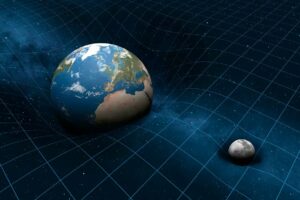
One of the most intriguing ideas emerging from this new viewpoint is the role of quantum entanglement. Rather than being a mere oddity of particle behavior, entanglement is now considered a fundamental element in constructing spacetime itself. The geometry of spacetime might arise from networks of entangled quantum states, effectively weaving the universe’s fabric. This suggests that gravity is not a standalone fundamental force but an emergent phenomenon rooted in the properties of quantum information.
Empirical Evidence and Experimental Progress
Recent observations, including the detection of subtle gravitational waves and high-energy particle interactions, have opened experimental windows into previously inaccessible regimes. These findings provide critical data that refine theoretical models and enable testable predictions, marking a significant step toward bridging theory and observation in this domain.
Interdisciplinary Insights: Black Hole Thermodynamics and Information Theory
The fusion of black hole thermodynamics with information theory has added a new dimension to this quest. The black hole information paradox, which challenges the principle of information conservation in quantum mechanics, has perplexed scientists for decades. Contemporary approaches to resolving this paradox may reveal the microscopic structure underlying spacetime and offer clues to harmonizing quantum mechanics with gravity. This interdisciplinary synergy exemplifies how cross-field collaboration propels scientific frontiers.
Significance and Broader Implications
Solving this profound mystery extends far beyond theoretical interest. It promises to deepen our comprehension of reality’s fundamental nature and could pave the way for novel technologies exploiting the interplay between quantum mechanics and gravity. Insights gained may illuminate the universe’s origin and ultimate fate, while also prompting a reevaluation of philosophical concepts such as time, causality, and locality. If spacetime and gravity emerge from deeper quantum substrates, our conventional understanding of these concepts may require radical revision.
The Evolution of Scientific Understanding
This ongoing journey underscores that science is a dynamic process of transformation rather than mere accumulation. Each new insight and theoretical innovation shifts our conceptual frameworks, expanding the horizons of knowledge. The universe’s once-hidden secrets are gradually becoming accessible, revealing a complex and nuanced tapestry that demands careful interpretation.
Looking Ahead: The Future of Fundamental Physics
As this grand enigma nears resolution, excitement within the physics community intensifies. Rather than marking an endpoint, these breakthroughs ignite fresh questions and research directions. The future promises a thrilling frontier where bold theoretical ideas meet rigorous empirical testing, potentially unlocking unprecedented clarity about the essence of space, time, and matter.
Conclusion: The Human Quest to Decode the Cosmos
The pursuit to unravel the greatest mystery in physics epitomizes humanity’s relentless drive to understand existence. With each step forward, we move closer to a unified narrative that connects the vastness of the cosmos with its most minute constituents. This monumental endeavor not only illuminates the nature of reality but also inspires ongoing curiosity and exploration into the profound workings of the universe.
FAQ
What is the biggest mystery in physics?
The biggest mystery in physics is the challenge of unifying quantum mechanics and general relativity into a single coherent theory that explains the fundamental nature of spacetime and gravity.
Why can't quantum mechanics and general relativity be unified easily?
Quantum mechanics and general relativity are based on fundamentally different frameworks—quantum mechanics describes probabilistic behavior at microscopic scales, while general relativity explains gravity and large-scale structures deterministically—making it difficult to merge them into one theory.
What recent advances are helping to solve this mystery?
Recent advances include new theoretical models like string theory and loop quantum gravity, improved experimental techniques detecting gravitational waves, and insights into quantum entanglement’s role in the fabric of spacetime.
How does quantum entanglement relate to spacetime?
Quantum entanglement is now viewed as a fundamental component that may construct the geometry of spacetime, suggesting that gravity could emerge from networks of entangled quantum states.
What are the broader implications of solving this mystery?
Solving this mystery could revolutionize physics, deepen our understanding of the universe’s origin and fate, lead to new technologies, and require revising foundational concepts such as time, causality, and locality.


Leave a Reply