
Short Answer
Overview of Space Telescopes
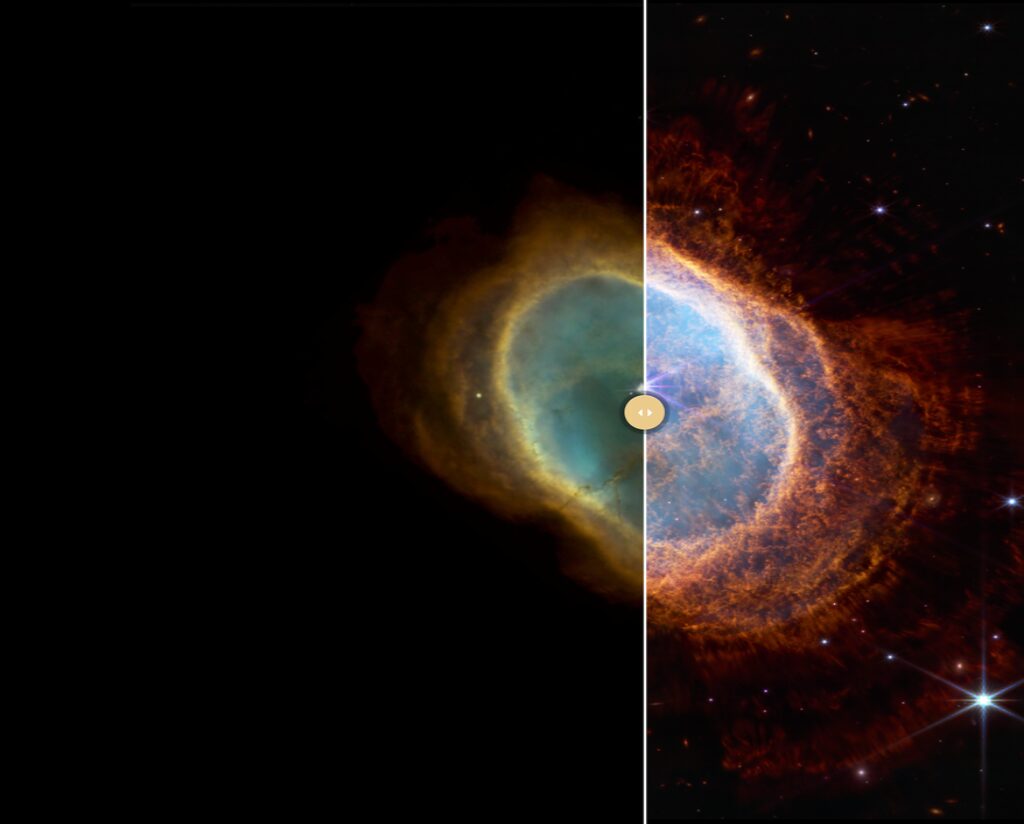
Humanity’s exploration of the cosmos has evolved dramatically, from early rudimentary telescopes to sophisticated observatories orbiting beyond Earth’s atmosphere. Among these, the Hubble Space Telescope and the James Webb Space Telescope (JWST) stand out as monumental achievements in astronomical technology. Far more than mere instruments, they serve as profound narrators of the universe’s history, each offering unique insights that captivate scientists and enthusiasts alike. Comparing these two iconic observatories requires an understanding of their distinct capabilities, technological innovations, and contributions to our cosmic knowledge.
Definition and Purpose
Space telescopes are advanced observational tools positioned beyond Earth’s atmosphere to capture clearer images of celestial objects without atmospheric distortion. Both Hubble and JWST are designed to observe the universe across different wavelengths, enabling astronomers to study phenomena invisible to ground-based telescopes.
- Hubble Space Telescope:
Launched in 1990, Hubble primarily observes in the visible and ultraviolet light spectra, providing sharp optical images of stars, galaxies, and nebulae. - James Webb Space Telescope:
Launched decades later, JWST focuses on infrared wavelengths, allowing it to peer through cosmic dust and observe the earliest stages of star and galaxy formation.
Technological Foundations
The design and operational environments of Hubble and JWST reflect their specialized scientific missions.
- Hubble’s Orbit and Instruments:
Positioned approximately 547 kilometers above Earth, Hubble’s relatively close orbit has enabled multiple servicing missions by astronauts, extending its lifespan and upgrading its instruments such as the Wide Field Camera 3 and Cosmic Origins Spectrograph. - JWST’s Location and Engineering:
Stationed nearly 1.5 million kilometers away at the second Lagrange point (L2), JWST benefits from a stable thermal environment essential for infrared observations. Its large 6.5-meter primary mirror and multi-layered sunshield protect sensitive instruments from solar heat, maintaining cryogenic temperatures necessary for detecting faint infrared signals.
How They Operate
Both telescopes function by collecting and analyzing electromagnetic radiation from celestial sources, but their operational wavelengths and methods differ significantly.
- Hubble:
Captures visible and ultraviolet light, producing high-resolution images that reveal detailed structures of nearby galaxies, star clusters, and planetary systems. - JWST:
Observes primarily in the infrared spectrum, enabling it to see through interstellar dust clouds and detect the faint heat signatures of distant, early-universe objects.
Scientific Contributions and Discoveries
Each telescope has made groundbreaking contributions to astronomy, complementing one another’s strengths.
- Hubble’s Legacy:
Over three decades, Hubble has provided iconic images such as the Pillars of Creation and the Whirlpool Galaxy, advanced measurements of the Hubble constant (the universe’s expansion rate), and deepened understanding of star formation and planetary science. - JWST’s Emerging Impact:
Despite its recent deployment, JWST is already revolutionizing astrophysics by probing exoplanet atmospheres for potential biosignatures, studying protoplanetary disks, and unveiling the earliest galaxies formed after the Big Bang.
Comparative Analysis: Strengths and Limitations
Rather than viewing Hubble and JWST as rivals, it is more accurate to see them as complementary instruments, each excelling in different domains.
- Hubble’s Optical Precision:
Its sharp imaging in visible and ultraviolet light is unmatched for studying relatively nearby cosmic phenomena and dynamic processes over time. - JWST’s Infrared Prowess:
Its ability to detect faint infrared signals allows it to explore the distant, early universe and penetrate dust-obscured regions inaccessible to Hubble. - Operational Considerations:
Hubble’s proximity allows for maintenance and upgrades, whereas JWST’s distant orbit demands autonomous operation with no possibility for repairs, highlighting its engineering resilience.
Formula and Measurement: The Hubble Constant
One of Hubble’s significant contributions is refining the value of the Hubble constant (H0), which quantifies the universe’s expansion rate. The formula is:
v = H0 × d
- v: Recessional velocity of a galaxy (how fast it is moving away)
- H0: Hubble constant (expansion rate of the universe)
- d: Distance to the galaxy
This relationship underpins cosmological models and helps estimate the universe’s age and size.
Common Misunderstandings
- Misconception: JWST is simply a more powerful version of Hubble.
Correction: JWST is designed for different wavelengths and scientific goals, focusing on infrared observations, while Hubble specializes in visible and ultraviolet light. - Misconception: Hubble is obsolete now that JWST is operational.
Correction: Hubble continues to provide valuable data and complements JWST’s findings, especially in optical and ultraviolet astronomy.
Significance in Astronomy and Beyond
The combined capabilities of Hubble and JWST have transformed our understanding of the cosmos, enabling multi-wavelength studies essential for a holistic view of astronomical phenomena. Their discoveries inform theories about the universe’s origin, evolution, and the potential for life beyond Earth. Moreover, their iconic images inspire public interest and support for space science, fostering a culture of curiosity and exploration.
Conclusion: A Collaborative Cosmic Journey
Rather than competing, the Hubble and James Webb Space Telescopes represent successive chapters in humanity’s quest to unravel the universe’s mysteries. Each telescope illuminates different facets of the cosmic story-Hubble with its optical clarity and cultural resonance, JWST with its pioneering infrared vision and reach into the universe’s earliest epochs. Together, they exemplify the pinnacle of scientific ambition and technological innovation, guiding us toward deeper cosmic insights and inspiring generations to look upward with wonder and understanding.
FAQ
What are the main differences between the Hubble and James Webb Space Telescopes?
Hubble primarily observes in visible and ultraviolet light while JWST focuses on infrared wavelengths, allowing it to see through cosmic dust.
Is the James Webb Space Telescope replacing the Hubble Space Telescope?
No, they complement each other, with Hubble continuing to provide valuable data in optical astronomy.


Leave a Reply