
Short Answer
Definition of Astrophysics
Astrophysics is a scientific discipline that merges the principles of physics and astronomy to study the physical properties and underlying laws governing celestial bodies and the universe as a whole. It seeks to understand phenomena such as stars, black holes, galaxies, and cosmic events by applying advanced theoretical frameworks and observational techniques.
- Scope:
Investigates the nature and behavior of astronomical objects and cosmic phenomena. - Interdisciplinary Nature:
Combines physics, mathematics, and astronomy to explore the universe’s fundamental mechanisms. - Key Topics:
Includes quantum mechanics, relativity, cosmology, dark matter, gravitational waves, and cosmic microwave background radiation.
Academic Challenges and Curriculum
Pursuing a major in astrophysics involves a demanding academic program that emphasizes rigorous mathematical and physical concepts. Students must master advanced calculus, differential equations, abstract algebra, and statistical mechanics to build a solid foundation in physics. The curriculum balances theoretical studies with practical applications, including laboratory work and computational simulations.
- Mathematical Rigor:
Extensive use of higher-level mathematics to model and solve astrophysical problems. - Theoretical Focus:
Deep engagement with abstract physics concepts such as quantum theory and general relativity. - Practical Skills:
Hands-on experience with spectroscopy, data analysis software, and simulation tools.
Research and Practical Experience
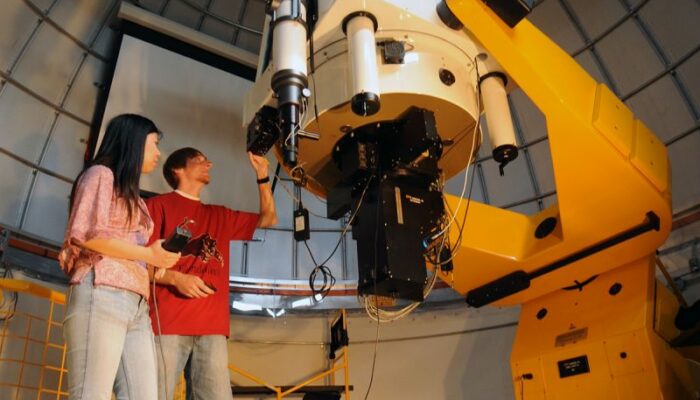
Astrophysics education offers numerous opportunities for immersive research, fostering critical thinking and innovation. Students often participate in observational studies using terrestrial telescopes or analyze data from space missions. These experiences provide a direct connection between theoretical knowledge and empirical evidence, enhancing scientific understanding and contributing to ongoing discoveries.
- Observational Campaigns:
Involvement in data collection through ground-based or space telescopes. - Research Projects:
Collaborative investigations that deepen comprehension of cosmic phenomena. - Internships and Mentorship:
Practical training and guidance from experienced researchers to support academic and career growth.
Career Paths and Employment Outlook
Graduates with a degree in astrophysics have access to a variety of career options, though the traditional academic and research routes are highly competitive. Many pursue advanced degrees to secure positions in universities, government agencies, or private research institutions. However, the skill set developed in astrophysics is also valuable in other sectors such as technology, finance, and engineering.
- Academic Careers:
University professorships, research fellowships, and observatory roles. - Industry Opportunities:
Positions in data science, software development, aerospace, and defense. - Transferable Skills:
Expertise in programming, quantitative analysis, and problem-solving applicable across multiple fields.
Time and Financial Considerations
Embarking on an astrophysics major requires a significant investment of time and resources. Typically, an undergraduate degree serves as a foundation, with graduate studies often necessary for advanced research roles. Financial returns in the early stages may be modest compared to other STEM disciplines, making passion and perseverance essential for long-term success.
- Duration:
Extended education pathway including graduate and possibly postdoctoral training. - Financial Outlook:
Initial salaries may be lower than in commercial STEM fields, with intrinsic rewards often outweighing monetary gains. - Commitment:
Sustained motivation needed to navigate challenging coursework and research demands.
Collaborative Environment and Community
The field of astrophysics thrives on collaboration, often involving interdisciplinary and international partnerships. Students and professionals engage in joint research, co-author scientific papers, and participate in global conferences. This cooperative culture fosters continuous learning and innovation, making it an ideal environment for those who value teamwork and intellectual exchange.
- Interdisciplinary Projects:
Integration with particle physics, geophysics, and computational science. - Global Collaboration:
Participation in international research networks and conferences. - Supportive Community:
Mentorship and peer learning that enhance academic and professional development.
Philosophical and Personal Fulfillment
Beyond academic and career considerations, astrophysics offers profound personal satisfaction for those fascinated by the cosmos. The study of extraordinary phenomena such as neutron stars and cosmic inflation invites deep reflection on the nature of existence, time, and space. This intellectual engagement can be deeply rewarding, though it may also present moments of isolation due to the abstract nature of the subject.
Common Misconceptions About Astrophysics
Astrophysics is only about looking through telescopes.
While observation is important, much of astrophysics involves theoretical modeling, simulations, and data analysis using advanced technology.
A degree in astrophysics guarantees a high-paying job.
The field is competitive with limited academic positions; many graduates find rewarding careers in related industries requiring additional skills.
Why Studying Astrophysics Is Important
Astrophysics plays a crucial role in expanding humanity’s understanding of the universe, driving technological innovation, and inspiring scientific curiosity. The discipline contributes to advancements in fields such as space exploration, telecommunications, and computational methods. Moreover, it nurtures critical thinking and analytical skills that are valuable across numerous scientific and technological domains.
Is Astrophysics the Right Major for You?
Deciding to major in astrophysics requires weighing both its intellectual rewards and practical challenges. It demands strong mathematical aptitude, a passion for scientific inquiry, and readiness for a competitive job market. For those captivated by the mysteries of the cosmos and eager to engage in a lifelong journey of discovery, astrophysics offers a uniquely fulfilling academic and professional path.
FAQ
What is astrophysics?
Astrophysics is a scientific discipline that merges physics and astronomy to study celestial bodies and the universe.
What are the career prospects for astrophysics graduates?
Graduates can pursue careers in academia, research, technology, finance, and engineering, although competition is high.
Is astrophysics a good major for someone interested in space?
Yes, it offers a deep understanding of the universe and is ideal for those passionate about cosmic phenomena.






Leave a Reply