
Short Answer
Understanding Gravity
Gravity is a fundamental force that governs the attraction between masses. It acts as an invisible guide, orchestrating the movements of objects on Earth and beyond-from the gentle fall of leaves to the orbits of satellites. This force is essential in shaping the natural world and the cosmos, influencing everything from raindrops to planetary motion.
Definition and Principles of Gravity
At its core, gravity is the mutual attraction between objects with mass. Sir Isaac Newton formalized this concept through his law of universal gravitation, which states that the force of gravity diminishes with the square of the distance between two masses. This inverse-square law means that as one moves farther from the center of the Earth, the gravitational pull weakens.
- Newton’s Law of Universal Gravitation:
The gravitational force between two objects is proportional to the product of their masses and inversely proportional to the square of the distance separating them. - Inverse-Square Relationship:
Doubling the distance between objects reduces the gravitational force to one-quarter of its original value.
How Gravity Changes with Altitude
When ascending from the Earth’s surface, gravity’s strength decreases, but this reduction is subtle within the atmosphere. For example, at the cruising altitude of commercial airplanes (around 35,000 feet or 10.7 kilometers), gravity is only about 0.1% weaker than at sea level-too slight for humans to perceive. Even at the edge of the stratosphere, approximately 60 miles (97 kilometers) above Earth, gravity remains about 90% as strong as at sea level.
In low Earth orbit, where the International Space Station (ISS) operates roughly 250 miles (400 kilometers) above the surface, gravity still exerts about 90% of its sea-level strength. The sensation of weightlessness experienced by astronauts is not due to the absence of gravity but results from continuous free fall around the planet.
Earth’s Shape and Its Effect on Gravity
Gravity’s variation with altitude is influenced not only by distance but also by Earth’s shape. The planet is an oblate spheroid, meaning it bulges at the equator due to its rotation. This causes the radius from Earth’s center to the surface to differ by about 21 kilometers between the poles and equator.
- Polar Regions:
Gravity is stronger at the poles because the surface is closer to Earth’s center of mass. - Equatorial Regions:
Gravity is slightly weaker due to the increased radius and the centrifugal force generated by Earth’s rotation.
Local Variations in Gravity
Earth’s internal structure is heterogeneous, with varying densities caused by mountain ranges, ocean trenches, and geological formations. These differences create localized fluctuations in gravitational strength, which can be detected by satellites and gravimetric surveys. Such variations form a complex gravitational landscape, akin to an uneven blanket with ridges and valleys.
These subtle anomalies have significant applications in geophysics, navigation, and climate science. They help scientists map subterranean features, refine satellite orbits, and understand ocean current dynamics influenced by gravitational differences.
Mathematical Relationship of Gravity and Altitude
The decrease in gravitational acceleration with height can be quantified using Newton’s formula:
g(h) = g₀ × (R / (R + h))²
- g(h): Gravitational acceleration at altitude h
- g₀: Standard gravitational acceleration at sea level (~9.81 m/s²)
- R: Earth’s mean radius (~6,371 kilometers)
- h: Altitude above sea level
This equation illustrates that gravity diminishes with the square of the distance from Earth’s center, explaining why the force decreases slowly at typical altitudes but more rapidly at greater distances.
Practical Examples of Gravity Variation
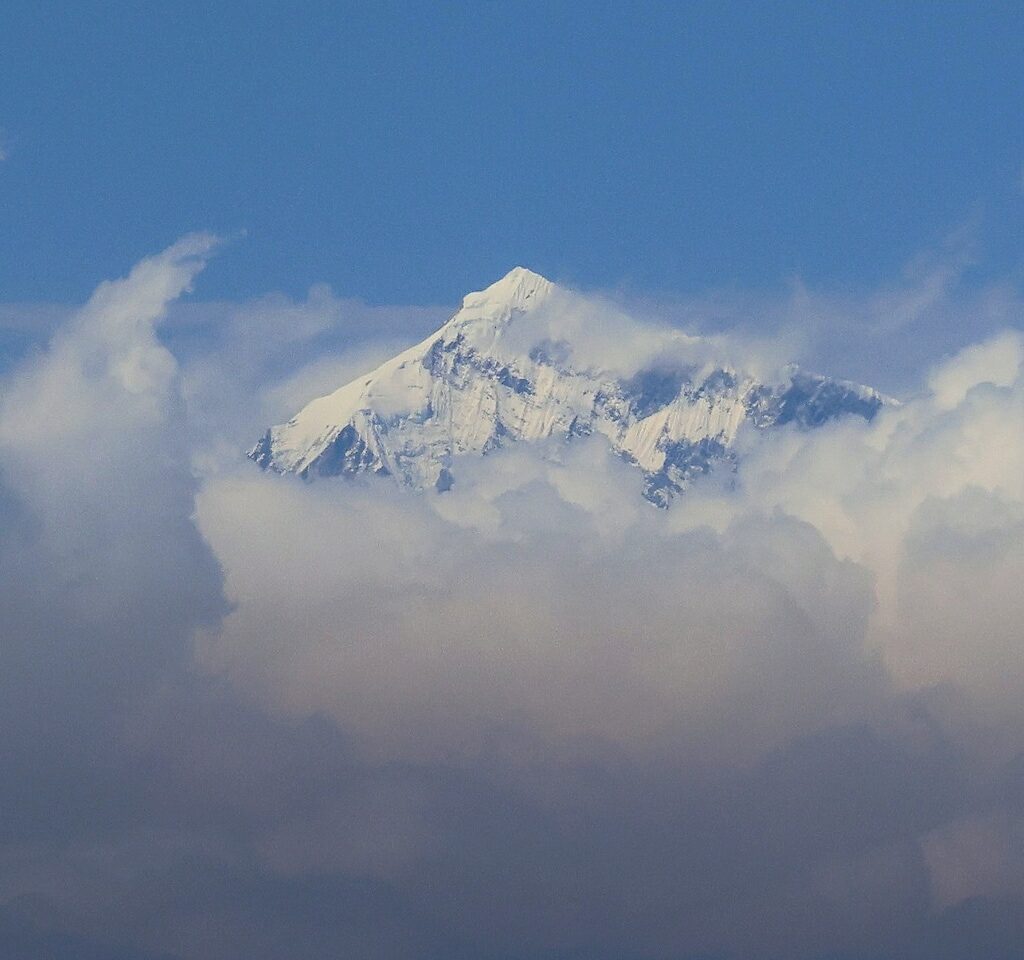
At the summit of Mount Everest (8,848 meters), gravity is roughly 0.284% weaker than at sea level. While this difference is minor, it slightly affects physical exertion, though oxygen scarcity remains the primary challenge for climbers. Similarly, hot air balloons ascending several kilometers experience a barely noticeable reduction in gravitational pull, measurable only with sensitive instruments.
Beyond Earth, gravity’s behavior varies with planetary characteristics. The Moon’s gravity is about one-sixth that of Earth’s, and altitude changes cause proportional decreases from this lower baseline. Gas giants, with their massive sizes, exhibit gravitational fields that decline more gradually with altitude, influencing atmospheric dynamics and spacecraft navigation.
Common Misconceptions About Gravity and Altitude
Gravity disappears in space.
Gravity remains strong in orbit; weightlessness is due to free fall, not the absence of gravity.
Gravity decreases significantly just a few kilometers above Earth.
Gravity decreases very slightly within the atmosphere; substantial reduction occurs only at much higher altitudes.
Significance of Gravity’s Variation with Altitude
Understanding how gravity changes with height is vital for numerous scientific and technological fields. It informs satellite deployment and orbital mechanics, aids geophysical exploration, and enhances climate modeling. Moreover, it enriches human experiences such as parabolic flights that simulate weightlessness, deepening our connection to the cosmos.
Gravity’s subtle modulation with altitude reflects Earth’s immense scale and complex structure. Far from being a fixed constant, gravity is a dynamic force that narrates the story of planetary formation, governs celestial movements, and anchors our daily lives.
FAQ
How does gravity change with altitude?
Gravity weakens with altitude due to the inverse-square law and Earth's shape, but the effect is minimal at low altitudes.
What are some practical applications of understanding gravity's variation?
It aids in satellite deployment, geophysical exploration, and climate modeling.
Leave a Reply