
Short Answer
Overview of CERN
The European Organization for Nuclear Research, commonly known as CERN, stands as a pinnacle of contemporary scientific and engineering achievement. Established in 1954, CERN hosts some of the most advanced scientific apparatuses ever created, aimed at probing the universe’s most fundamental components. Beyond the fascination with particle physics, CERN sparks a profound existential curiosity: What exactly is CERN’s role and purpose? To answer this, one must delve into its diverse goals, pioneering research projects, and the wider significance of its discoveries.
Definition and Mission of CERN
CERN is an international research center dedicated to the study of particle physics, the branch of science focused on understanding the smallest building blocks of matter and the forces governing them. Its primary mission is to explore the fundamental particles and interactions that constitute the universe.
- Particle Physics Research:
CERN investigates the subatomic world to uncover the laws that govern matter and energy. - Technological Innovation:
The organization fosters advancements that often transcend pure science, impacting various technological fields. - International Collaboration:
CERN unites scientists from over 23 member countries and numerous global partners to pursue common scientific objectives.
How CERN Explores the Universe
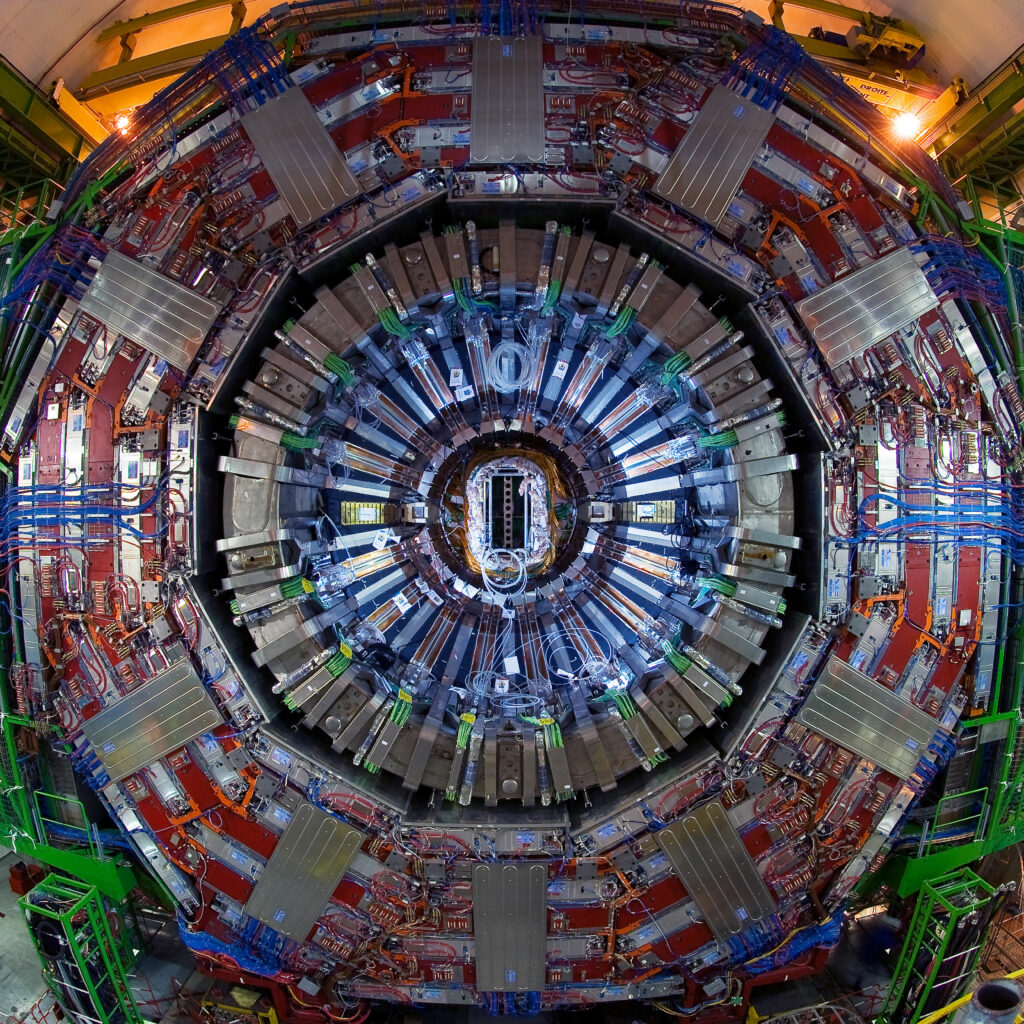
At the heart of CERN’s scientific endeavors lies the Large Hadron Collider (LHC), the world’s most powerful particle accelerator. This colossal machine propels protons to velocities approaching the speed of light, causing them to collide with immense energy levels reminiscent of those just after the Big Bang. These high-energy collisions enable physicists to observe rare and fleeting phenomena, such as the discovery of the Higgs boson, which explains how particles acquire mass.
Technological Contributions and Innovations
CERN’s research extends beyond theoretical physics, driving technological breakthroughs that have practical applications across multiple sectors. A notable example is the invention of the World Wide Web, originally developed at CERN to facilitate information sharing among scientists. This innovation revolutionized global communication and exemplifies how fundamental research can lead to transformative technologies.
International Cooperation and Scientific Unity
CERN exemplifies global scientific partnership, bringing together researchers from diverse cultural and academic backgrounds. This collaborative environment accelerates discovery and fosters a shared commitment to addressing worldwide challenges, including climate change and public health crises. By transcending national borders, CERN embodies a model of unity and collective responsibility in science.
Philosophical and Cosmological Implications
The investigations conducted at CERN extend into profound philosophical territory, challenging and expanding our understanding of reality and existence. Research into elusive phenomena such as dark matter and dark energy-components that constitute the majority of the universe’s mass-energy content-has significant implications for theories of gravity, spacetime, and the universe’s ultimate destiny. These inquiries inspire reflection on humanity’s place within the cosmic order.
Visualizing Particle Physics
The data produced by CERN’s experiments often manifest as striking visual patterns, resembling intricate works of art. These vivid images not only illustrate the complex interactions occurring at the subatomic level but also engage the public’s imagination, fostering broader interest and dialogue about fundamental scientific research.
Historical Context and Scientific Evolution
CERN’s work is part of a long continuum in the evolution of physics, tracing a path from classical Newtonian mechanics through the revolutionary ideas of quantum mechanics and general relativity. Today’s particle physicists at CERN stand at the forefront of this intellectual journey, poised to make discoveries that could redefine scientific paradigms and deepen our comprehension of the universe.
Ethical Considerations in Particle Physics Research
As CERN pushes the boundaries of knowledge, it also confronts important ethical questions related to experimental practices and the potential dual-use nature of its technological advancements. Issues such as global security, energy consumption, and environmental impact are carefully considered to ensure responsible research that aligns with human values and ethical standards.
Significance of CERN in Science and Society
Far from being merely a facility for particle collisions, CERN symbolizes humanity’s insatiable curiosity and collaborative spirit. By addressing fundamental questions about the universe and our existence, CERN advances knowledge that was once the realm of philosophy, while simultaneously driving technological progress and fostering international cooperation. As public interest grows and innovations continue to emerge, CERN’s role in shaping the future of science and society becomes increasingly vital.
FAQ
What is CERN?
CERN is an international research center dedicated to studying the fundamental particles and forces of the universe through particle physics.
What is the Large Hadron Collider?
The Large Hadron Collider is the world's largest and most powerful particle accelerator, used by CERN to collide particles at near light speeds for research.
Why is CERN important?
CERN advances fundamental scientific knowledge, drives technological innovation, and fosters international scientific collaboration.



Leave a Reply