
Short Answer
Understanding Time: A Fundamental Concept
Time is an abstract dimension that shapes our perception of existence, captivating the minds of philosophers and scientists for centuries. It serves as a framework within which events occur, yet its true nature remains elusive. Modern physics has revolutionized our comprehension of time, especially through the theories of relativity and quantum mechanics. Central to this evolution is the European Organization for Nuclear Research, widely known as CERN, which has played a pivotal role in deepening our insight into time’s complexities.
CERN’s Role in Advancing Time Research
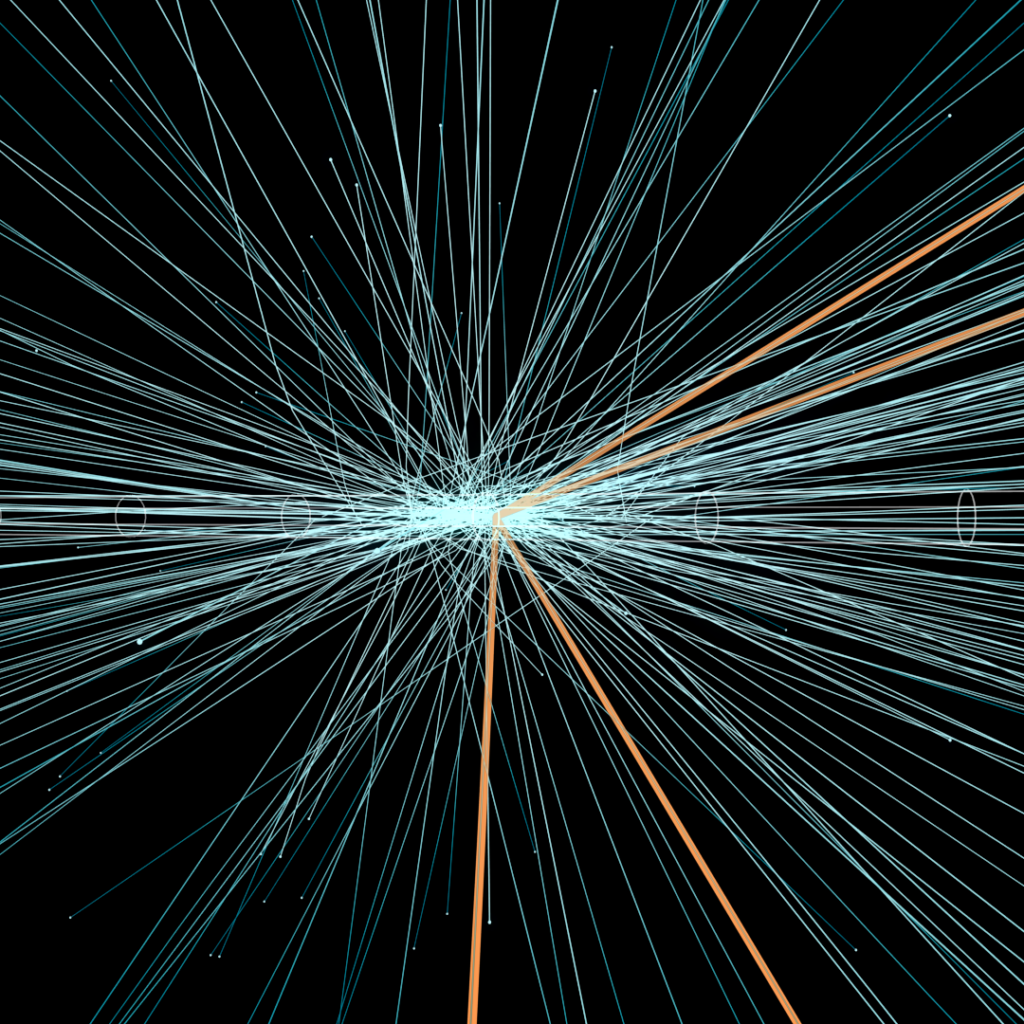
CERN stands at the forefront of scientific exploration, pushing the boundaries of knowledge about matter, energy, and the fabric of spacetime. Its flagship instrument, the Large Hadron Collider (LHC), is the world’s most powerful particle accelerator. By colliding particles at velocities nearing the speed of light, the LHC recreates conditions similar to those just after the Big Bang, offering unique glimpses into the universe’s earliest moments. These high-energy collisions produce transient phenomena that challenge conventional understandings of temporal progression, blurring the lines between past, present, and future.
Time Dilation and Relativity Confirmed at CERN
One of the most significant revelations from CERN’s experiments is the empirical validation of time dilation, a cornerstone of Einstein’s theory of relativity. When particles such as muons are accelerated to relativistic speeds, their observed lifespans extend dramatically compared to when they are at rest. This effect demonstrates that time is not absolute but relative, varying according to the observer’s frame of reference. Such findings underscore the fluidity of time and its dependence on velocity and gravitational fields.
The Intersection of Time and Particle Physics
CERN’s research also enriches the Standard Model of particle physics, which explains the fundamental forces and particles that constitute the universe. Within this framework, time is not a passive backdrop but an active element intertwined with the structure of spacetime. The pursuit of a unified theory that reconciles quantum mechanics with gravity raises profound questions about the essence of time, suggesting it may be more dynamic and complex than previously thought.
Quantum Entanglement and Temporal Paradoxes
Explorations at CERN have shed light on the enigmatic relationship between time and quantum phenomena. Quantum entanglement, where particles remain interconnected regardless of distance, defies classical temporal and spatial constraints. This phenomenon implies that entangled particles share a connection that transcends the linear flow of time, prompting physicists to rethink causality and the sequential nature of events. Such insights open doors to theories involving multiverses and alternate dimensions.
Time as an Emergent Phenomenon
Some theoretical physicists propose that time may not be a fundamental entity but rather an emergent property arising from the universe’s thermodynamic and entropic processes. In this view, time resembles an illusion generated by the complex interactions of particles and forces, shaped by the unfolding cosmic narrative. This perspective challenges traditional notions, suggesting that what we perceive as time is a macroscopic effect of microscopic dynamics.
Philosophical and Existential Implications
The idea that time could be a construct rather than an intrinsic feature of reality invites profound reflection on humanity’s place within the cosmos. If time emerges from particle interactions, then our experiences might represent fleeting moments within an infinite continuum. This realization fosters a sense of cosmic humility, emphasizing the transient nature of individual histories against the vast backdrop of the universe.
Practical Applications of CERN’s Time-Related Discoveries
Beyond theoretical insights, CERN’s work has tangible impacts on various fields. The synchrotron radiation generated during particle collisions is utilized in medical imaging, materials science, and technological innovation. Techniques such as radiocarbon dating and advanced imaging technologies owe their development to principles uncovered through CERN’s experiments. Consequently, CERN’s influence extends from abstract physics to practical tools that improve everyday life.
Summary: CERN’s Enduring Influence on Time Research
CERN’s contributions to our understanding of time exemplify the synergy between experimental evidence and theoretical exploration. From confirming relativistic time dilation to probing the possibility of time as an emergent phenomenon, CERN continues to illuminate the mysteries of temporal existence. Each experiment enriches the grand narrative of the universe, inviting humanity to contemplate the profound nature of time and its role in the cosmic order. As research progresses, the intersection of particle physics and time promises to reveal even more groundbreaking discoveries.
FAQ
What role does CERN play in studying time?
CERN uses particle accelerators like the LHC to recreate extreme conditions, enabling the study of time-related phenomena such as time dilation and quantum entanglement.
How does CERN's research support Einstein's theory of relativity?
By accelerating particles to near light speeds and observing their extended lifespans, CERN provides experimental validation of time dilation predicted by relativity.
Can CERN's findings explain the nature of time itself?
CERN's findings open new avenues for understanding time, including hypotheses that time may be an emergent phenomenon rather than a fundamental dimension.






Leave a Reply