

Short Answer
Understanding Dark Matter
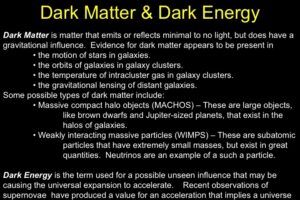
Dark matter is a mysterious and invisible substance that constitutes about 27% of the universe’s total mass-energy composition. Unlike ordinary matter, it neither emits nor absorbs electromagnetic radiation, making it undetectable by conventional telescopes. Its existence is primarily inferred through its gravitational influence on visible matter, such as stars and galaxies, as well as its effects on the bending of light, known as gravitational lensing. This unseen matter forms a vast, invisible halo around galaxies, playing a crucial role in their formation, structure, and stability.
Conceptualizing Dark Matter’s Role in the Universe
Imagine dark matter as an unseen framework or scaffolding that supports the luminous structures of the cosmos-galaxies, stars, and gas clouds. While we observe the brilliant cosmic architecture, the dark matter scaffolding remains hidden, detectable only through subtle gravitational anomalies. Revealing the nature of this scaffolding would provide profound insights into the fundamental composition and evolution of the universe.
Methods of Direct Detection
Scientists have developed sophisticated experiments aimed at directly detecting dark matter particles, particularly focusing on hypothetical candidates like Weakly Interacting Massive Particles (WIMPs). These experiments are often conducted deep underground to shield detectors from cosmic rays and environmental noise that could obscure faint signals.
- Subterranean Detectors:
Facilities such as LUX-ZEPLIN and XENONnT use large volumes of ultra-pure xenon to detect the tiny recoils caused when a WIMP collides with a xenon atom. These detectors are designed to identify the rare and subtle interactions that would indicate the presence of dark matter. - Axion Searches:
Axions, another proposed dark matter candidate, are ultralight particles that may convert into photons in strong magnetic fields. The Axion Dark Matter eXperiment (ADMX) employs resonant microwave cavities to detect these conversions, leveraging quantum properties and theoretical symmetries to capture these elusive signals.
Indirect Detection Techniques
Beyond direct detection, researchers also seek indirect evidence of dark matter through astrophysical observations and particle decay signatures.
- Astrophysical Observations:
Measurements of cosmic microwave background fluctuations, gravitational lensing, and galaxy distributions help constrain dark matter properties by analyzing its gravitational effects on large-scale cosmic structures. - Particle Annihilation and Decay:
Instruments like the Fermi Gamma-ray Space Telescope scan for high-energy gamma rays and cosmic rays that could result from dark matter particles annihilating or decaying, especially in dense regions such as the galactic center. These signals, however, are often difficult to distinguish from other astrophysical sources.
Challenges in Detecting Dark Matter
The pursuit of direct detection faces significant obstacles, including the extreme rarity and subtlety of dark matter interactions and the need to eliminate background noise and systematic errors. Detecting dark matter is akin to observing the shadow of a butterfly under moonlight-requiring extraordinary precision and patience. Despite advances in sensitivity, no conclusive direct detection has yet been achieved, prompting scientists to explore alternative theories and detection methods.
Expanding Theoretical Horizons
As experimental results remain inconclusive, theorists consider a broader range of dark matter candidates and properties:
- Exotic Particles:
Candidates such as sterile neutrinos or particles interacting solely through gravity challenge existing detection paradigms and necessitate novel experimental approaches. - Primordial Black Holes:
Some hypotheses propose that dark matter could consist of black holes formed in the early universe, which would require different observational strategies. - Multi-Component Dark Matter:
The possibility that dark matter comprises multiple types of particles, including cold, collisionless particles and warm, self-interacting species, adds complexity to detection efforts and calls for diverse investigative techniques.
Significance of Detecting Dark Matter
Unveiling the true nature of dark matter would revolutionize our understanding of fundamental physics, potentially revealing new particles, forces, or insights into the fabric of spacetime itself. Direct detection represents a pivotal breakthrough in cosmology, akin to deciphering the universe’s hidden language and unlocking the secrets of its origin, structure, and ultimate fate.
Summary and Future Outlook
The quest to directly detect dark matter is a formidable scientific challenge filled with both obstacles and immense promise. Current technologies and theoretical models push the boundaries of human ingenuity, yet the universe remains reticent. Whether through faint signals in underground detectors, subtle electromagnetic conversions, or cosmic gamma-ray signatures, each investigative step brings us closer to illuminating this profound cosmic mystery. The journey to detect dark matter not only deepens our cosmic understanding but also inspires continued exploration into the fundamental nature of reality.
FAQ
What is dark matter?
Dark matter is an invisible substance that makes up about 27% of the universe and is detectable only through its gravitational effects.
How do scientists detect dark matter?
Scientists use direct detection methods like underground detectors and indirect methods like astrophysical observations to infer the presence of dark matter.
What are the challenges in detecting dark matter?
The main challenges include the rarity of interactions and the need to eliminate background noise in detection experiments.




Leave a Reply