
Short Answer
Understanding Fundamental Particles
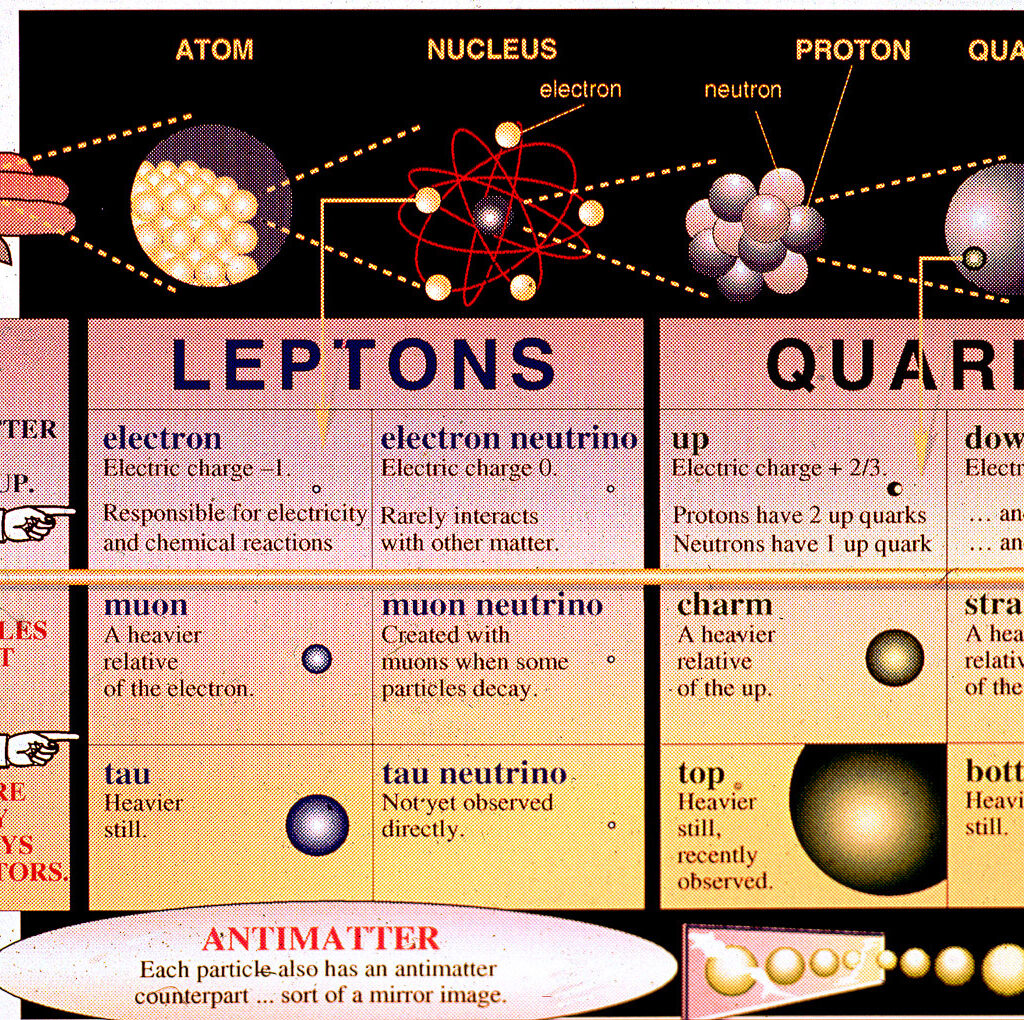
At the core of particle physics lies a complex network of elementary particles that form the foundation of all matter. Among these, quarks and electrons are recognized as the primary constituents. However, the quest to determine if there exist even more elementary entities beneath these particles has driven physicists to explore beyond established knowledge. This inquiry involves not only experimental findings but also theoretical models that challenge and expand our comprehension of the subatomic world.
Historical Context of Particle Discovery
The exploration of the microscopic universe has unfolded through landmark discoveries over the past century. Early pioneers like J.J. Thomson and Ernest Rutherford identified electrons and atomic nuclei, respectively, revealing the atom’s internal structure. Electrons, fundamental in nature, are crucial to atomic configuration, while quarks-discovered later through particle accelerator experiments-compose protons and neutrons within the nucleus. These particles are currently categorized as fundamental within the Standard Model, the prevailing theoretical framework that describes the behavior and interactions of subatomic particles.
Theoretical Perspectives Beyond the Standard Model
Despite the Standard Model’s success, the possibility of particles more basic than quarks and electrons has inspired alternative theories. One prominent approach is string theory, which replaces point-like particles with one-dimensional “strings.” These strings vibrate at distinct frequencies, each vibration mode corresponding to a unique particle. This suggests that quarks and electrons might be different vibrational states of a deeper, underlying entity.
Superstrings and Extra Dimensions
Advanced versions of string theory introduce the concept of superstrings, which imply the existence of multiple spatial dimensions beyond the familiar three, along with time. The oscillations of superstrings could represent the fundamental fabric of reality, potentially more elementary than quarks and electrons. Metaphorically, if quarks are individual notes in a cosmic symphony, superstrings are the musical score that orchestrates the entire composition, hinting at a profound underlying structure of the universe.
Quantum Chromodynamics and the Role of Gluons
Another significant theoretical framework is quantum chromodynamics (QCD), which focuses on the strong nuclear force binding quarks together. This force is mediated by gluons, massless particles that act as the “glue” holding quarks within protons and neutrons. While quarks are fundamental in the Standard Model, gluons are equally essential in explaining particle interactions. This raises the question of whether gluons or other yet-undiscovered entities might be even more fundamental components of matter.
Exploring Dark Matter and Exotic Particles
Beyond known particles, the universe contains mysterious substances such as dark matter and dark energy, which constitute a large portion of its total mass-energy. Dark matter candidates, including Weakly Interacting Massive Particles (WIMPs), are hypothesized to be particles that differ fundamentally from quarks and electrons. The ongoing search for these elusive particles underscores the possibility that the universe’s true building blocks might be hidden from current detection methods, representing a frontier in particle physics research.
Significance of Discovering Sub-Quark Particles
Uncovering particles smaller or more fundamental than quarks and electrons would revolutionize our understanding of the universe. Such findings could unify disparate physical theories into a comprehensive “theory of everything,” bridging gaps between quantum mechanics and general relativity. This would not only deepen scientific knowledge but also potentially lead to technological advancements by revealing new principles governing matter and energy.
Common Misconceptions About Fundamental Particles
Quarks and electrons are the smallest possible particles.
While currently considered fundamental, theories like string theory propose entities smaller than quarks and electrons, such as vibrating strings.
Gluons are just force carriers and not fundamental.
Gluons are massless particles essential to the strong force and may be as fundamental as quarks in the structure of matter.
Dark matter is made of known particles.
Dark matter likely consists of unknown particles that do not interact strongly with ordinary matter, making them fundamentally different from quarks and electrons.
Conclusion: The Ongoing Quest in Particle Physics
The question of whether entities exist that are more elementary than quarks and electrons remains one of the most profound in modern physics. While the Standard Model provides a solid foundation, theoretical and experimental research continues to push the boundaries of what we know. The universe may conceal deeper layers of reality, challenging our current paradigms and inspiring future discoveries that could redefine the essence of matter and existence itself.
FAQ
What are quarks and electrons?
Quarks and electrons are elementary particles considered fundamental constituents of matter in the Standard Model of particle physics.
Is there experimental evidence for particles smaller than quarks and electrons?
As of now, there is no experimental evidence confirming particles smaller than quarks and electrons, though theoretical models like string theory suggest their existence.
What is string theory?
String theory is a theoretical framework proposing that fundamental particles are one-dimensional strings vibrating at different frequencies, potentially replacing point-like particles.
What are gluons?
Gluons are massless particles that mediate the strong nuclear force, effectively holding quarks together inside protons and neutrons.
How does dark matter relate to fundamental particles?
Dark matter is believed to consist of unknown particles that differ fundamentally from known particles like quarks and electrons and are a subject of ongoing research.






Leave a Reply