

Short Answer
Definition of Radiation in Medical Settings
Radiation refers to the emission and propagation of energy through space or a medium in the form of waves or particles. In the context of healthcare, radiation is a critical tool used for both diagnosing and treating various medical conditions. Hospitals employ different types of radiation, each selected based on its unique properties and suitability for specific clinical applications.
Categories of Radiation Used in Hospitals
Ionizing Radiation
Ionizing radiation consists of high-energy particles or electromagnetic waves that have enough energy to remove tightly bound electrons from atoms, creating ions. This property makes ionizing radiation highly effective for medical imaging and cancer therapy.
- X-rays:
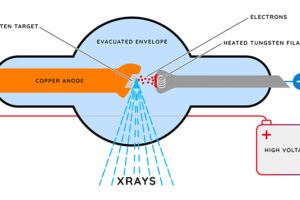
These are electromagnetic waves commonly used in diagnostic radiology. X-rays penetrate the body to varying degrees depending on tissue density, enabling visualization of bones and internal organs. Techniques such as standard radiography and computed tomography (CT) scans rely on x-rays to produce detailed images for clinical evaluation. - Gamma Rays:
Emitted from radioactive isotopes, gamma rays possess greater tissue penetration than x-rays. They are extensively utilized in nuclear medicine for imaging metabolic activity and in radiotherapy to target and destroy malignant cells with precision. - Particle Radiation:
This includes alpha and beta particles, which are charged particles emitted by certain radioactive substances. Though less common in routine diagnostics, particle radiation is valuable in targeted cancer treatments, delivering localized doses that minimize harm to surrounding healthy tissues.
Non-Ionizing Radiation
Non-ionizing radiation lacks sufficient energy to ionize atoms or molecules but plays a vital role in various diagnostic and therapeutic procedures due to its safer profile.
- Ultrasound:
Utilizing high-frequency sound waves, ultrasound imaging produces real-time images of soft tissues and organs. It is widely used in obstetrics to monitor fetal development and in guiding minimally invasive procedures such as biopsies. - Magnetic Resonance Imaging (MRI):
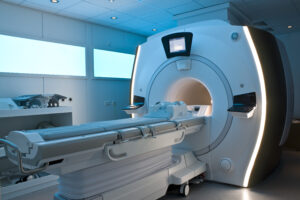
MRI employs strong magnetic fields and radiofrequency waves to generate detailed images of soft tissues. It is particularly effective for neurological, musculoskeletal, and oncological assessments, offering high contrast resolution without exposure to ionizing radiation.
Mechanisms Behind Radiation in Medical Applications
Ionizing radiation works by depositing energy into biological tissues, causing ionization that can damage cellular components, including DNA. This effect is harnessed in imaging to create contrast and in therapy to destroy cancer cells. Non-ionizing radiation, on the other hand, interacts with tissues primarily through mechanical vibrations (ultrasound) or magnetic properties (MRI), producing images without altering atomic structures.
Mathematical and Physical Principles
The behavior of radiation in medical contexts can be described by several key formulas and concepts:
- Attenuation of X-rays:
I = I0e-μx
Where I is the intensity after passing through material thickness x, I0 is the initial intensity, and μ is the linear attenuation coefficient dependent on tissue type. - Energy of Photons:
E = hν
Where E is photon energy, h is Planck’s constant, and ν is the frequency of the electromagnetic wave. - Magnetic Resonance Frequency:
ω = γB
Where ω is the Larmor frequency, γ is the gyromagnetic ratio, and B is the magnetic field strength, fundamental to MRI signal generation.
Practical Applications in Healthcare
Radiation technologies are integral to both diagnosis and treatment:
- Diagnostic Imaging:
X-rays and CT scans provide detailed anatomical images, while nuclear medicine techniques using gamma rays reveal physiological functions. Ultrasound and MRI offer complementary soft tissue visualization without ionizing radiation. - Cancer Treatment:
External beam radiation therapy (EBRT) directs high-energy beams such as x-rays or protons at tumors from outside the body. Techniques like intensity-modulated radiation therapy (IMRT) and stereotactic body radiotherapy (SBRT) enhance precision. Brachytherapy involves implanting radioactive sources near or within tumors to deliver concentrated doses.
Safety Protocols and Regulatory Measures
Given the potential risks associated with radiation exposure, healthcare facilities implement strict safety standards. The ALARA (As Low As Reasonably Achievable) principle guides efforts to minimize exposure while ensuring diagnostic and therapeutic effectiveness. Regular equipment calibration, protective shielding, and comprehensive staff training are essential components of radiation safety programs.
Emerging Trends and Future Prospects
Advancements in radiation technology continue to transform medical practice. Radiogenomics integrates genetic information to customize radiation therapy, improving outcomes and reducing side effects. Artificial intelligence is increasingly applied to enhance image interpretation and treatment planning, paving the way for more personalized and efficient care.
Common Misunderstandings About Medical Radiation
- Misconception: All radiation exposure in hospitals is highly dangerous.
Correction: While ionizing radiation carries risks, strict safety protocols and dose management minimize harm, making diagnostic and therapeutic radiation safe when properly used. - Misconception: Non-ionizing radiation has no medical value.
Correction: Non-ionizing modalities like ultrasound and MRI are indispensable for safe, detailed imaging without the risks associated with ionization.
Significance of Radiation in Modern Medicine
Radiation technologies have revolutionized healthcare by enabling non-invasive diagnosis and effective treatment of complex diseases, particularly cancer. Their precise application improves patient outcomes, reduces invasive procedures, and enhances understanding of human physiology. As research and technology advance, radiation will remain a cornerstone of medical innovation and patient care.
FAQ
What is ionizing radiation?
Ionizing radiation consists of high-energy particles or electromagnetic waves that can remove tightly bound electrons from atoms, making it effective for medical imaging and cancer therapy.
What types of non-ionizing radiation are used in hospitals?
Non-ionizing radiation includes modalities such as ultrasound and MRI, which are used for imaging without the risks associated with ionization.


Leave a Reply