
Short Answer
Definition of MRI and the Significance of ‘Resonance’
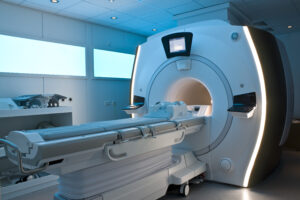
Magnetic Resonance Imaging (MRI) is a pivotal technology in medical diagnostics, transforming how clinicians visualize internal body structures and understand various pathologies. The acronym MRI stands for Magnetic Resonance Imaging, where each letter represents a critical component of the technology. While ‘Magnetic’ and ‘Imaging’ are relatively straightforward, the ‘R’-denoting ‘Resonance’-holds a deeper scientific and practical significance. Resonance refers to a physical phenomenon where systems oscillate with increased amplitude at specific frequencies, a principle that underlies the entire imaging process in MRI.
Fundamental Principles Behind Resonance in MRI
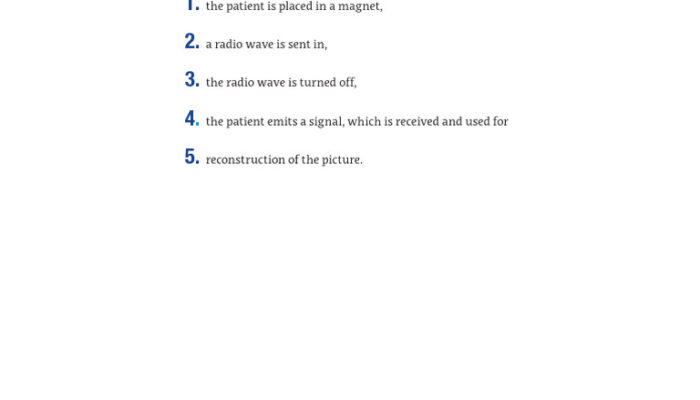
At the core of MRI technology lies the behavior of hydrogen nuclei, or protons, abundant in the human body due to its high water content. When a patient is placed inside the MRI scanner’s powerful magnetic field, these protons align with the field. The system then emits radiofrequency pulses that cause the protons to absorb energy and enter a state of resonance-oscillating at characteristic frequencies. Once the radiofrequency energy ceases, the protons relax back to their original alignment, releasing energy in the form of signals. These signals are captured and processed to generate detailed images of internal tissues.
How Resonance Enables Image Formation
- Proton Alignment:
Protons in hydrogen atoms align parallel or anti-parallel to the magnetic field, creating a net magnetization vector. - Radiofrequency Excitation:
Application of radiofrequency pulses tips the net magnetization away from equilibrium, inducing resonance. - Signal Emission:
As protons relax, they emit radiofrequency signals that are detected by the MRI sensors. - Image Reconstruction:
The emitted signals are mathematically transformed into cross-sectional images representing tissue characteristics.
Clinical Applications and Diagnostic Advantages
MRI’s ability to exploit resonance phenomena allows it to produce high-resolution images of soft tissues, making it invaluable across numerous medical specialties such as neurology, orthopedics, cardiology, and oncology. It excels in identifying abnormalities including tumors, lesions, and degenerative conditions with exceptional clarity. The use of contrast agents further enhances tissue differentiation, improving diagnostic accuracy and aiding treatment planning.
Patient Experience and Psychological Considerations
Understanding the resonance principle can also alleviate patient anxiety associated with MRI scans. The process, while technologically complex, is non-invasive and safe, relying on natural physiological responses of protons to magnetic fields and radio waves. Educating patients about how resonance works can transform apprehension into appreciation, fostering trust and cooperation during imaging procedures.
Comparative Advantages Over Other Imaging Modalities
Unlike imaging techniques such as computed tomography (CT) or X-rays, MRI does not use ionizing radiation, making it a safer option for repeated imaging. Its reliance on resonance allows for detailed visualization of soft tissues without exposure to harmful radiation, aligning with modern principles of patient-centered care and safety.
Research Implications and Technological Evolution
The resonance-based mechanism of MRI has propelled significant advances in medical research, particularly in studying neurodegenerative diseases. Longitudinal MRI studies enable observation of structural and functional brain changes, contributing to the development of novel therapeutic approaches. Furthermore, innovations like functional MRI (fMRI) leverage resonance to map brain activity in real time, enhancing our understanding of neural processes and supporting breakthroughs in psychiatry and neurology.
Mathematical and Physical Explanation of Resonance in MRI
The resonance phenomenon in MRI can be described mathematically by the Larmor equation:
ω = γB
- ω (Angular frequency): The frequency at which protons precess around the magnetic field.
- γ (Gyromagnetic ratio): A constant specific to the type of nucleus, for hydrogen approximately 42.58 MHz/Tesla.
- B (Magnetic field strength): The intensity of the external magnetic field applied by the MRI scanner.
This equation defines the resonance frequency at which protons absorb and emit radiofrequency energy, enabling precise tuning of the MRI system to detect signals from specific tissues.
Common Misunderstandings About MRI Resonance
- Misconception: MRI uses harmful radiation similar to X-rays.
Correction: MRI employs magnetic fields and radio waves, which are non-ionizing and safe for patients. - Misconception: Resonance in MRI causes pain or damage.
Correction: Resonance refers to energy absorption and emission at a molecular level, which is harmless and painless.
Importance of Resonance in Modern Medicine
The concept of resonance is fundamental to the success of MRI as a diagnostic tool. It bridges physics and biology, enabling non-invasive, detailed visualization of internal structures without radiation exposure. This synergy enhances patient safety, diagnostic precision, and expands research capabilities, making MRI an indispensable asset in contemporary healthcare and medical science.
FAQ
What does the 'R' in MRI stand for?
The ‘R’ in MRI stands for ‘Resonance’, which is essential to the imaging process.
Is MRI safe?
Yes, MRI is a non-invasive imaging technique that does not use ionizing radiation.
How does resonance work in MRI?
Resonance in MRI occurs when protons in the body align with a magnetic field and absorb radiofrequency energy, which allows for detailed imaging.


Leave a Reply