
Short Answer
Definition of Thermocouples
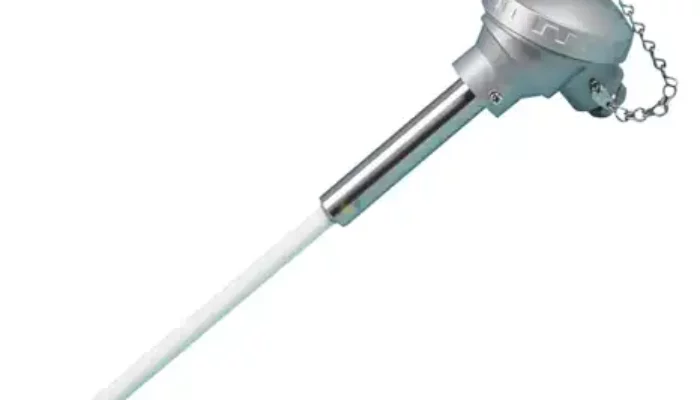
Thermocouples are devices that convert temperature differences into electrical voltage, enabling precise temperature measurement across various fields. They operate based on thermoelectric principles, making them essential tools in both industrial processes and scientific investigations. By transforming thermal energy into an electrical signal, thermocouples facilitate accurate monitoring and control of temperature-dependent systems.
Fundamental Principles Behind Thermocouples
The operation of thermocouples is grounded in the thermoelectric effect, primarily the Seebeck effect. This phenomenon arises when two distinct metal conductors are joined at two points, creating junctions with differing temperatures. The temperature gradient between these junctions induces a voltage difference proportional to the thermal disparity. This voltage results from the movement of charge carriers within the metals responding to heat, effectively converting thermal energy into an electrical signal that can be measured.
Types and Characteristics of Thermocouples
Thermocouples come in various types, each designed to suit specific temperature ranges and environmental conditions. These types are commonly identified by letter designations such as J, K, T, and E.
- Type K:
Known for its wide temperature range (-200°C to 1260°C) and excellent stability, Type K thermocouples are widely used in industries like food processing and welding due to their versatility. - Type J:
Suitable for temperatures up to 750°C, Type J thermocouples are valued for their sensitivity to rapid temperature fluctuations, making them ideal for applications requiring quick response times. - Other Types:
Types T and E are also prevalent, each offering unique advantages depending on the specific temperature range and environmental factors.
Material Composition and Calibration
The accuracy and reliability of thermocouples depend heavily on their material makeup and calibration. Some thermocouples incorporate noble metals such as platinum and rhodium to enhance precision and stability, especially at elevated temperatures. Calibration ensures that the thermoelectric response aligns with expected values across the operational temperature range, which is critical in high-precision fields like aerospace, pharmaceuticals, and semiconductor manufacturing.
Applications in Industrial Automation and Control
Thermocouples play a pivotal role in modern automation systems by providing real-time temperature data that informs control mechanisms. For instance, in ceramic kiln operations, thermocouples monitor temperature continuously to prevent overheating, thereby safeguarding product quality and operational safety. Their integration into feedback loops allows for fine adjustments, optimizing efficiency and reducing risks in various industrial processes.
Advantages Over Other Temperature Sensors
Compared to alternatives such as resistance temperature detectors (RTDs) and thermistors, thermocouples offer several benefits:
- Wide Temperature Range:
They maintain linearity and accuracy over extensive temperature spans. - Rapid Response:
Thermocouples react quickly to temperature changes, enabling timely measurements. - Durability:
Their robust construction allows them to withstand harsh and extreme environments. - Cost-Effectiveness:
Simplicity in design makes them economical for large-scale or budget-sensitive applications.
Limitations and Challenges
Despite their strengths, thermocouples have inherent drawbacks that must be acknowledged:
- Drift Over Time:
Prolonged exposure to high temperatures can cause measurement drift, reducing accuracy. - Electromagnetic Interference:
External electromagnetic fields can affect signal integrity, necessitating careful installation and shielding. - Material Degradation:
Harsh environments may degrade thermocouple materials, impacting longevity and performance.
Choosing the appropriate thermocouple type requires a comprehensive understanding of these factors to ensure optimal performance in specific applications.
Emerging Innovations and Future Prospects
Advances in materials science and nanotechnology are paving the way for next-generation thermocouples with enhanced accuracy and expanded temperature capabilities. Research into novel materials aims to extend operational limits, enabling temperature detection in extreme conditions previously unattainable by conventional devices. Such progress holds promise for fields like climate research, astrophysics, and advanced materials engineering.
Integration with Digital Technologies and IoT
The fusion of thermocouples with the Internet of Things (IoT) is revolutionizing temperature monitoring. Wireless thermocouples connected to sophisticated data analytics platforms facilitate remote sensing and predictive maintenance. This connectivity enhances decision-making processes across industries by providing real-time insights and enabling proactive interventions, marking a significant evolution in thermal measurement technology.
Significance of Thermocouples in Modern Science and Industry
Thermocouples embody a synergy of thermodynamics, engineering, and material innovation, making them indispensable in both scientific research and industrial applications. Their ability to convert heat into measurable electrical signals has deepened our understanding of thermal phenomena and driven technological advancements. As material innovations and digital integration continue to evolve, thermocouples will remain central to precise temperature measurement and control, underpinning progress across diverse sectors.
FAQ
What is a thermocouple?
A thermocouple is a temperature sensor made by joining two different metals at two points, producing a voltage related to the temperature difference.
How does a thermocouple work?
It works based on the Seebeck effect where a voltage is generated when there is a temperature difference between the junctions of two different metals.
What are the most common types of thermocouples?
The most common types are Type J, K, T, and E, each suitable for different temperature ranges and environments.
What are the advantages of using thermocouples?
They offer a wide measurement range, quick response, durability in harsh conditions, and are cost-effective.
What are the limitations of thermocouples?
They can experience drift over time, are sensitive to electromagnetic interference, and require proper calibration for accuracy.



Leave a Reply