
Short Answer
Definition of Atomic Composition in Molecules
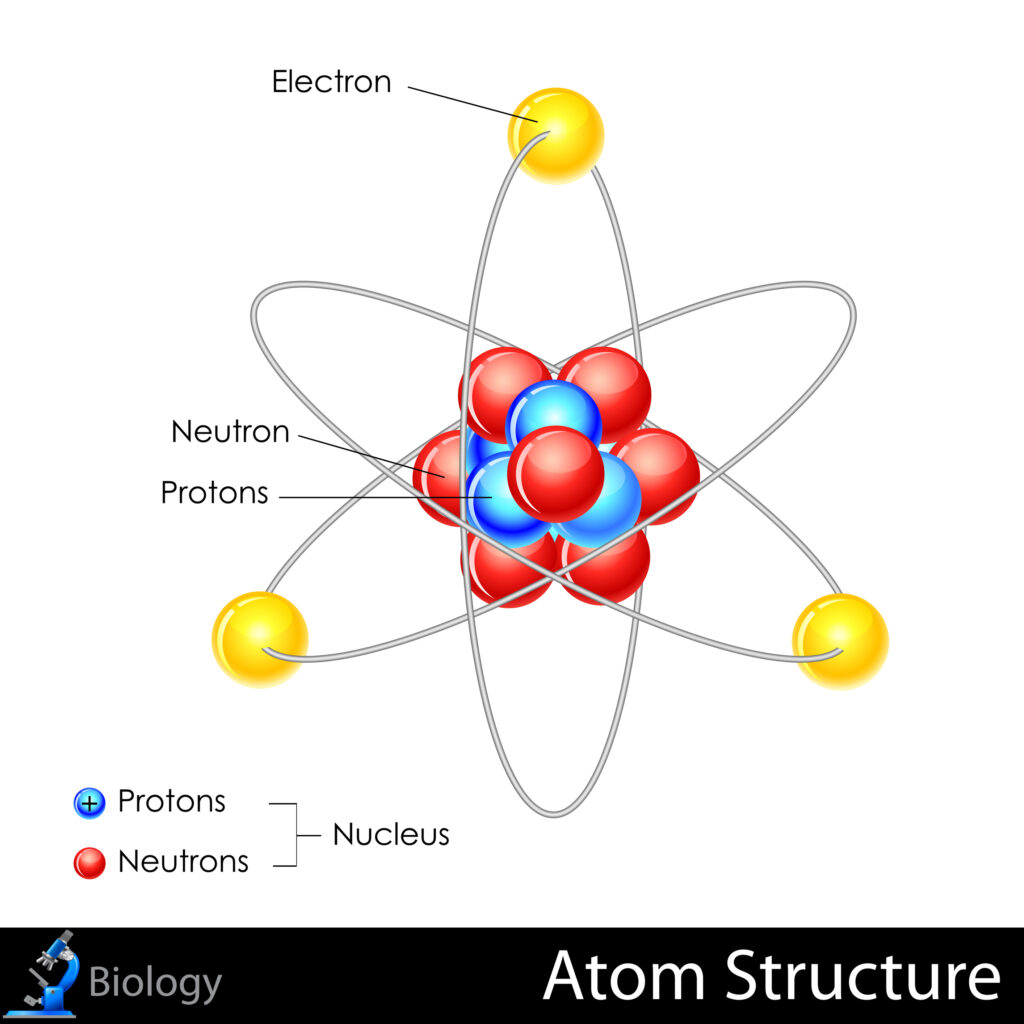
Atoms serve as the fundamental units of matter, each defined by a unique atomic number representing the count of protons in its nucleus. When atoms bond, they form molecules, whose properties depend on the types of atoms involved and their bonding patterns. Molecules can be classified based on whether they contain identical atoms or different types of atoms, leading to two primary categories: homonuclear and heteronuclear molecules.
- Homonuclear molecules:
Composed exclusively of atoms from the same element. - Heteronuclear molecules:
Contain two or more different elements bonded together.
Homonuclear Molecules: Uniform Atomic Composition
Homonuclear molecules consist solely of identical atoms bonded together. A classic example is the nitrogen molecule (N₂), where two nitrogen atoms share electrons through a triple covalent bond, creating a stable diatomic molecule. Similarly, oxygen (O₂) and hydrogen (H₂) molecules are formed by atoms of the same element, reinforcing the concept that molecules can be made up of indistinguishable atoms. These molecules demonstrate that atomic uniformity within a molecule is not only possible but common in elemental gases.
Heteronuclear Molecules: Diversity in Atomic Constituents
In contrast, heteronuclear molecules are formed from atoms of different elements, resulting in compounds with varied chemical and physical properties. Water (H₂O) exemplifies this category, comprising two hydrogen atoms and one oxygen atom. The distinct nature of these atoms leads to unique molecular characteristics such as polarity, which is essential for water’s role in biological systems. The interplay between different atoms in heteronuclear molecules underpins many chemical reactions and biological functions.
Atomic Arrangement and Molecular Structure
The complexity of molecules extends beyond the mere presence of different atoms to include their spatial arrangement and bonding patterns. Organic molecules, for example, often feature carbon atoms bonded to each other and to other elements, forming chains or rings. This arrangement can lead to isomerism, where molecules share the same molecular formula but differ in structure, such as butane and isobutane (both C₄H₁₀). These structural variations significantly influence molecular properties despite identical atomic compositions.
Isomerism and Its Impact
Isomers illustrate how molecules with the same atoms can exhibit different behaviors due to variations in atomic connectivity or spatial orientation. This phenomenon highlights that atomic identity alone does not fully define a molecule’s characteristics; the arrangement and bonding patterns are equally crucial.
Molecular Geometry and Its Influence
The three-dimensional shape of molecules plays a vital role in determining their chemical behavior. For instance, the bent geometry of the water molecule facilitates hydrogen bonding, a key factor in water’s high boiling point and solvent capabilities. Conversely, linear molecules like carbon dioxide (CO₂) lack such interactions, resulting in different physical properties. Molecular geometry thus adds another layer of complexity to how atoms within molecules interact and function.
Isotopes Within Molecules: Subtle Atomic Variations
Atoms of the same element can differ in neutron number, forming isotopes that vary in mass and nuclear stability. These isotopic differences can exist within molecules, subtly affecting their properties. For example, carbon-12 and carbon-14 isotopes are used in biochemical tracing and radiometric dating. Although isotopes share chemical behavior, their presence introduces nuanced variations in molecular mass and reactivity, especially relevant in scientific and medical applications.
Atomic Orbital Hybridization and Molecular Behavior
Hybridization of atomic orbitals influences molecular shape and bonding. In methane (CH₄), carbon undergoes sp³ hybridization, creating a tetrahedral structure with hydrogen atoms positioned symmetrically around it. This spatial distribution affects the molecule’s stability and reactivity, demonstrating how atomic composition combined with orbital hybridization shapes molecular properties.
Common Misconceptions About Atomic Diversity in Molecules
All molecules must contain different types of atoms.
Many molecules, such as O₂ and N₂, consist entirely of identical atoms, forming homonuclear molecules.
Atoms in a molecule are always identical in every aspect.
Isotopes introduce subtle differences in atoms of the same element within molecules, affecting mass and stability.
Significance of Atomic Composition in Molecular Science
Understanding whether atoms in molecules are identical or different is fundamental to chemistry and molecular biology. The distinction between homonuclear and heteronuclear molecules informs the study of chemical bonding, molecular interactions, and material properties. This knowledge is crucial for applications ranging from drug design and materials science to environmental chemistry and biochemistry, where molecular behavior dictates function and efficacy.
Summary
Atoms within molecules can be either uniform or diverse. Homonuclear molecules demonstrate that identical atoms can form stable, functional molecules, while heteronuclear molecules showcase the rich variety arising from different atomic constituents. Factors such as molecular geometry, isotopic variation, and orbital hybridization further influence molecular characteristics, underscoring the intricate nature of atomic arrangements in shaping the material world.
FAQ
Are atoms in molecules always different?
No, atoms in molecules can be identical in homonuclear molecules or different in heteronuclear molecules.
What is a homonuclear molecule?
A molecule consisting of atoms of the same element, such as O₂ or N₂.
What is a heteronuclear molecule?
A molecule made up of atoms of different elements, like water (H₂O).
How do isotopes affect molecules?
Isotopes introduce variations in atomic mass within molecules, influencing stability and biochemical tracing.
Why is molecular geometry important?
Molecular geometry determines how atoms spatially arrange and interact, impacting molecular behavior and properties.






Leave a Reply