
Short Answer
Definition of Boron and Its Conductivity
Boron is a metalloid element with the atomic number 5, known for its unique chemical and physical properties. Despite its intriguing characteristics, one notable aspect is its poor electrical conductivity. This article aims to clarify why boron does not conduct electricity efficiently by examining its atomic structure, bonding nature, and electronic configuration.
Atomic and Electronic Structure of Boron
The electronic configuration of boron is 1s² 2s² 2p¹, indicating it has three valence electrons. This limited number of valence electrons plays a crucial role in its inability to conduct electricity effectively. Electrical conductivity depends on the presence and mobility of free charge carriers, primarily electrons. Metals, for example, have an abundance of free electrons that move easily through their lattice, enabling high conductivity. In contrast, boron’s scarcity of free electrons restricts its capacity to carry electric current.
Covalent Bonding and Its Impact on Conductivity
Boron atoms form strong covalent bonds due to their non-metallic nature. These bonds typically adopt a tetrahedral geometry involving sp³ hybridized orbitals, which contribute to the stability of the structure but limit electron mobility. The resulting rigid lattice structure hinders the free movement of electrons, thereby reducing boron’s electrical conductivity.
Role of Orbital Configuration in Conductivity
Unlike many metals that utilize partially filled d-orbitals to facilitate electrical conduction, boron does not employ d-orbitals in its bonding or conduction processes. This absence limits the formation of conduction bands, which are essential for electron flow. Although boron can exhibit some conductivity under specific conditions, such as doping, its fundamental electronic structure restricts its conductive capabilities.
Enhancing Boron’s Conductivity Through Doping
Material scientists have explored methods to improve boron’s conductivity by introducing impurities, a process known as doping. When doped with elements like phosphorus or arsenic, boron behaves as a semiconductor, allowing its electrical conductivity to be modulated. This adjustment opens possibilities for boron-based materials in electronic applications, although its conductivity remains lower than that of metals.
Influence of Boron’s Crystalline Structure
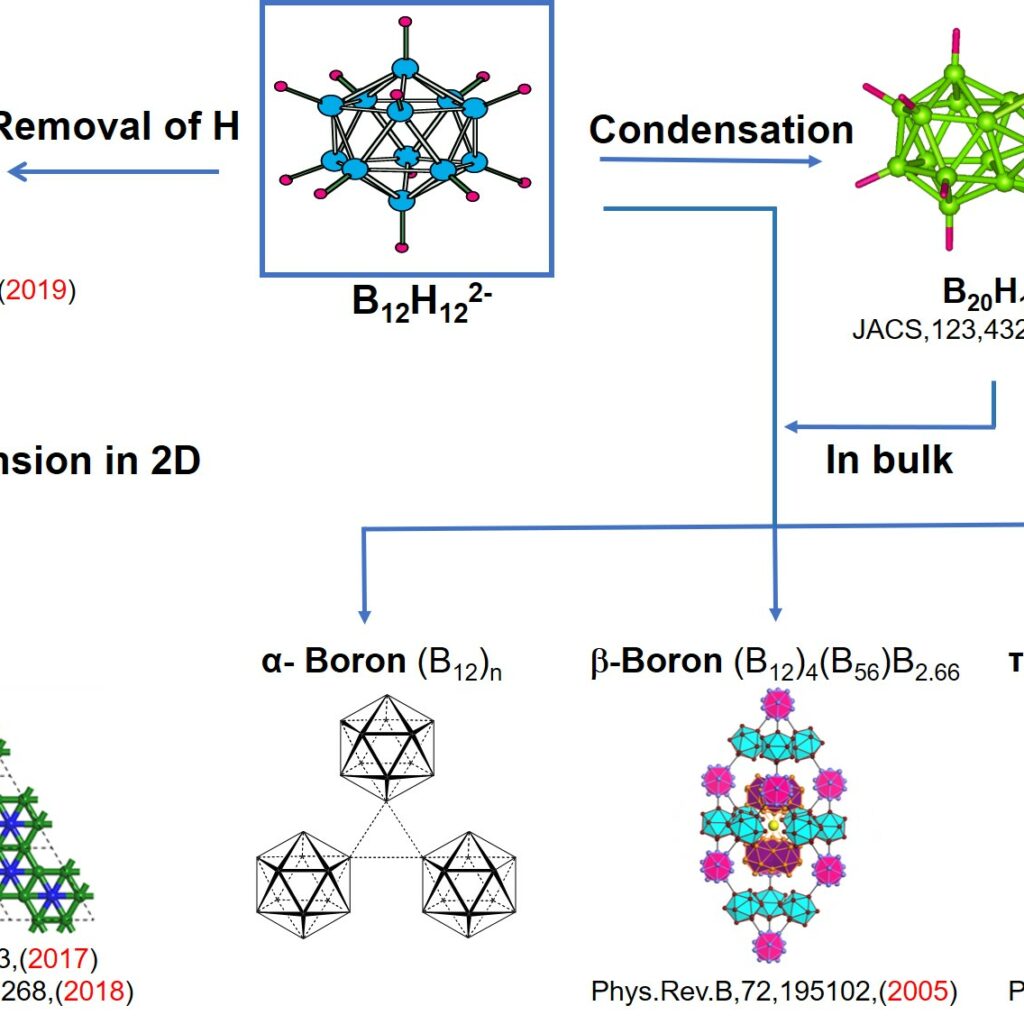
Boron exists in multiple allotropes, including amorphous and crystalline forms, each with distinct atomic arrangements. These structural variations affect its electronic properties and conductivity. Crystalline boron, in particular, offers potential pathways for improved conductivity when engineered carefully. Nevertheless, the intrinsic electronic limitations imposed by boron’s bonding persist across these forms.
Temperature Effects on Boron’s Conductivity
Temperature plays a significant role in the electrical behavior of boron. As temperature increases, thermal excitation raises the number of charge carriers, enhancing conductivity, especially in semiconductors. Despite this, boron’s conductivity, even when doped, remains inferior to that of metals, underscoring the fundamental constraints of its atomic makeup.
Comparison with Other Metalloids and Non-Metals
Examining boron alongside other metalloids highlights the diversity in conductive properties within this group. Silicon, for example, has four valence electrons and a crystalline structure that supports better charge carrier mobility, making it a more effective semiconductor. Boron’s fewer valence electrons and bonding characteristics place it at a disadvantage compared to silicon and metallic elements in terms of conductivity.
Why Boron’s Conductivity Matters
Understanding boron’s limited electrical conductivity is important for both fundamental science and technological applications. Its unique properties challenge researchers to develop innovative materials that could harness boron’s potential in electronics, especially in semiconductor technology. Exploring ways to enhance boron’s conductivity through doping and structural engineering could lead to new advances in materials science.
Common Misconceptions About Boron’s Conductivity
Boron is a metal and should conduct electricity like metals.
Boron is a metalloid with covalent bonding and limited free electrons, resulting in poor conductivity compared to metals.
Doping boron makes it as conductive as metals.
While doping improves boron’s conductivity by creating semiconductor properties, it does not reach the high conductivity levels of metals.
Summary and Future Perspectives
The poor electrical conductivity of boron arises from its limited valence electrons, strong covalent bonding, and lack of conduction bands involving d-orbitals. Although doping and structural modifications can enhance its conductivity, boron inherently remains less conductive than metals. Continued research into boron’s electronic behavior and innovative material design holds promise for developing boron-based semiconductors and other advanced materials, making it a compelling subject for ongoing scientific inquiry.
FAQ
Why does boron have poor electrical conductivity?
Boron has a limited number of valence electrons and forms strong covalent bonds, restricting the mobility of electrons.
Can doping improve boron's conductivity?
Yes, doping boron with elements like phosphorus or arsenic can enhance its conductivity, allowing it to behave as a semiconductor.






Leave a Reply