
Short Answer
Definition of Graphene
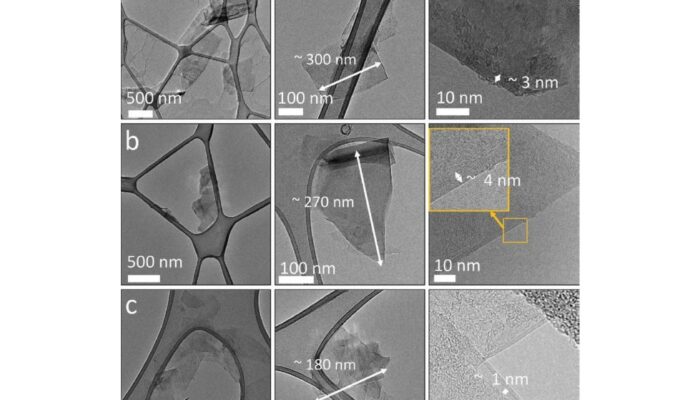
Graphene is an extraordinary form of carbon, distinguished by its single-atom-thick, two-dimensional structure. It consists of carbon atoms arranged in a hexagonal, honeycomb-like lattice, which imparts unique physical and chemical properties. This allotrope has attracted significant scientific and industrial interest due to its exceptional combination of strength, density, and flexibility.
Atomic Structure and Bonding in Graphene
At the microscopic level, graphene is composed of carbon atoms each bonded to three neighbors through strong covalent bonds. These bonds arise from sp2 hybridization, creating a flat, planar network. The short carbon-carbon bond lengths enable a tightly packed atomic arrangement, contributing to graphene’s remarkable density. Simultaneously, the robust bonding framework provides extraordinary tensile strength, measured at around 130 gigapascals-over 100 times stronger than steel.
Electron Delocalization and Mechanical Properties
The sp2 hybridized bonds facilitate the delocalization of electrons across the lattice, which is crucial for graphene’s mechanical flexibility. This electron mobility allows the material to absorb and dissipate energy efficiently when subjected to stress, enabling it to bend and stretch without fracturing. The interplay between strong covalent bonds and electron behavior underpins graphene’s unique balance of rigidity and elasticity.
Quantum Mechanical Phenomena in Graphene
Graphene’s electronic structure features the presence of Dirac cones, where electrons behave as massless fermions. This quantum mechanical property results in exceptional electron mobility, which is integral to the material’s flexibility and conductivity. When external forces deform the lattice, the carbon bonds can stretch and compress, allowing graphene to maintain its structural integrity while adapting to mechanical strain.
Density and Lightweight Nature
Despite its high density due to the compact carbon lattice, graphene remains incredibly lightweight. This paradox arises because the material is only one atom thick, giving it a high surface area-to-volume ratio. This combination of density and minimal mass makes graphene highly valuable for applications requiring strong yet lightweight materials.
Functionalization and Chemical Modifications
Graphene’s flexibility extends to its chemical versatility. Its surface can be functionalized by attaching various chemical groups without compromising the lattice’s structural strength. This ability to modify graphene chemically allows for tuning its mechanical and electronic properties, enhancing its performance in composites, coatings, and other advanced materials.
Phonon Behavior and Thermal Properties
Phonons, the quantized vibrations of the atomic lattice, play a significant role in graphene’s thermal conductivity and mechanical resilience. The interaction between electrons and phonons in graphene facilitates efficient heat transfer and sound propagation. The flexibility of carbon bonds enables deformation modes that reduce thermal resistance, allowing graphene to maintain high energy density and structural stability across a range of temperatures.
Graphene in Composite Materials
When integrated with polymers, metals, or ceramics, graphene enhances the mechanical and thermal properties of composite materials. Its combination of strength and flexibility improves fatigue resistance and thermal stability, resulting in composites that are lighter and more durable. This synergy opens new possibilities for engineering applications requiring advanced material performance.
Technological Applications of Graphene
Electronics and Flexible Devices
Graphene’s exceptional electron mobility and mechanical flexibility make it a promising material for next-generation electronics. It is being explored for use in transistors, sensors, and flexible touchscreens that can bend and flex without losing functionality. These properties enable innovative designs in consumer electronics and wearable technology.
Energy Storage and Renewable Energy
Graphene’s high surface area and density contribute to its effectiveness in energy storage devices such as supercapacitors and batteries. These graphene-based technologies offer faster charging times and higher energy capacities compared to traditional materials. Additionally, graphene enhances the efficiency of renewable energy systems, including solar cells and fuel cells, by improving power storage and transfer.
Common Misconceptions About Graphene
Graphene is just a thicker form of graphite.
Graphene is a single atomic layer of carbon atoms, whereas graphite consists of many stacked graphene layers.
Graphene is brittle due to its thinness.
Despite being one atom thick, graphene is extremely flexible and can withstand significant mechanical deformation without breaking.
Significance of Graphene in Science and Industry
The unique combination of density and flexibility in graphene has revolutionized materials science, offering unprecedented opportunities in various technological fields. Its strength-to-weight ratio, electrical conductivity, and thermal properties make it a cornerstone for innovations in electronics, energy, and composite materials. As research advances, graphene continues to bridge the gap between theoretical physics and practical applications, promising transformative impacts on future technologies.
FAQ
What is graphene?
Graphene is a single atomic layer of carbon atoms arranged in a honeycomb lattice, known for its unique properties.
Why is graphene considered flexible?
Graphene's covalent bonds allow it to bend and stretch without breaking, despite being only one atom thick.
What applications does graphene have?
Graphene is used in electronics, energy storage devices, and composite materials due to its strength and flexibility.






Leave a Reply