
Short Answer
Definition of Size
Size refers to the measure or extent of an object or concept, encompassing physical dimensions, abstract quantities, or comparative scales. It is a fundamental attribute used to describe how large or small something is relative to another entity or standard. The notion of size spans multiple disciplines, including mathematics, physics, biology, technology, and philosophy, each interpreting it through their unique lenses.
- Physical Size:
The tangible dimensions of an object, such as length, width, height, area, or volume. - Abstract Size:
Conceptual or relational magnitude, such as data volume, scale in art, or cosmological expanses. - Relative Size:
Size understood in comparison to other objects or within a specific context, highlighting the importance of perspective.
Physical Dimensions and Geometric Size
In the realm of physical objects, size is often quantified by measurable parameters like length, width, height, and volume. Geometry provides the tools to calculate these dimensions, enabling precise comparisons between shapes and forms.
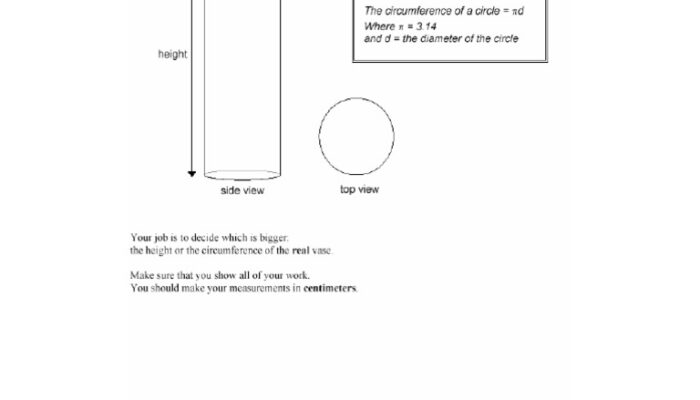
For example, comparing a square and a rectangle involves calculating their areas. While a rectangle may appear larger due to its elongated shape, its actual size depends on the specific measurements of its sides. This illustrates that assumptions about size require careful mathematical evaluation rather than intuition alone.
Higher-Dimensional Size
Beyond two- and three-dimensional objects, size extends into higher dimensions, where traditional spatial intuition becomes insufficient. Mathematicians study entities such as n-dimensional hypercubes, where size is defined through generalized volume or measure concepts.
Comparing a two-dimensional circle to a three-dimensional sphere involves contrasting area with volume, highlighting the complexity of size in multidimensional spaces. These considerations are crucial in advanced fields like topology and abstract algebra, where size transcends everyday experience.
Philosophical Perspectives on Size
Size is not always an inherent property but can be viewed as a construct dependent on context and perspective. Philosophically, the concept challenges absolute definitions, emphasizing relativity and perception.
For instance, an infinitesimal point in Euclidean geometry is considered dimensionless, yet it forms the foundation of spatial constructs. Conversely, the universe’s vastness dwarfs human scales, making size a relative notion that shifts with viewpoint and scale of reference.
Biological Scale and Size in Nature
Nature presents an extraordinary range of sizes, from microscopic bacteria to the colossal blue whale. This spectrum offers insights into evolutionary biology, ecology, and biomechanics, revealing how size influences function and survival.
- Scaling Laws:
Principles that describe how biological functions change with size, such as bone strength or metabolic rates. - Ecological Niches:
Size determines the role an organism plays within its environment, affecting its interactions and adaptations. - Evolutionary Advantages:
Specific sizes confer benefits or constraints, shaping species development over time.
Technological Evolution and Miniaturization
The history of technology showcases a dramatic reduction in the physical size of devices, from bulky early computers to compact smartphones. This trend, driven by advances in nanotechnology and materials science, has revolutionized functionality and accessibility.
Miniaturization enhances efficiency and portability, while emerging fields like quantum computing challenge traditional notions of size by manipulating information at atomic and subatomic scales.
Cosmological Scale: The Universe’s Immensity
In cosmology, size reaches its most staggering dimensions. The observable universe spans approximately 93 billion light-years in diameter, a scale that defies ordinary comprehension.
Moreover, the entire universe may be infinite, pushing the boundaries of human understanding and raising profound questions about our place within this vast expanse.
Data Size and Information Scale
In the digital era, size also pertains to data volume and information capacity. Terms like “big data” describe enormous datasets that require advanced processing and storage solutions.
Unlike physical objects, data size is abstract, involving bandwidth, computational power, and qualitative impact. For example, the viral spread of a meme may have outsized cultural influence despite representing a small data footprint.
Artistic and Aesthetic Dimensions of Size
Size in art and design carries emotional and psychological weight, influencing how audiences perceive and interact with works.
Large-scale sculptures can evoke awe and grandeur, while smaller pieces invite intimacy and detailed appreciation. Scale manipulation in architecture and visual arts shapes spatial experience and viewer engagement.
Common Misconceptions About Size
Bigger always means more significant.
Size does not necessarily correlate with importance; small entities can have profound effects, such as microorganisms or data packets.
Size is absolute and fixed.
Size is often relative and context-dependent, varying with perspective, dimension, and measurement criteria.
Why Understanding Size Is Important
Grasping the concept of size is essential across scientific disciplines, technology development, and everyday life. It informs how we measure, compare, and interpret the world around us, from microscopic scales to cosmic expanses.
Moreover, appreciating the multifaceted nature of size fosters critical thinking and interdisciplinary insights, enriching our comprehension of physical reality, abstract constructs, and human experience.
FAQ
What is size?
Size refers to the measure or extent of an object or concept, encompassing physical dimensions, abstract quantities, or comparative scales.
How is size measured?
Size is quantified by measurable parameters like length, width, height, and volume, using geometric tools for precise comparisons.
Why is understanding size important?
Understanding size is crucial across scientific disciplines and technology, informing how we measure, compare, and interpret the world.






Leave a Reply