
Short Answer
Definition of Sound Measurement
Sound measurement involves quantifying the properties of sound waves, which are vibrations traveling through various media such as air, water, or solids. Although sound is intangible, its characteristics-such as speed, frequency, and wavelength-can be precisely determined using specialized instruments. These measurements are fundamental to the study of acoustics and have broad applications in science and technology.
Key Instruments for Measuring the Speed of Sound
Several devices have been developed to measure the velocity of sound, each employing distinct physical principles and techniques. Among the most notable are the resonant tube (or Helmholtz resonator), the acoustic Doppler effect apparatus, and the ultrasonic flow meter. These instruments not only provide accurate measurements but also deepen our understanding of sound wave behavior in different environments.
Resonant Tube (Helmholtz Resonator)
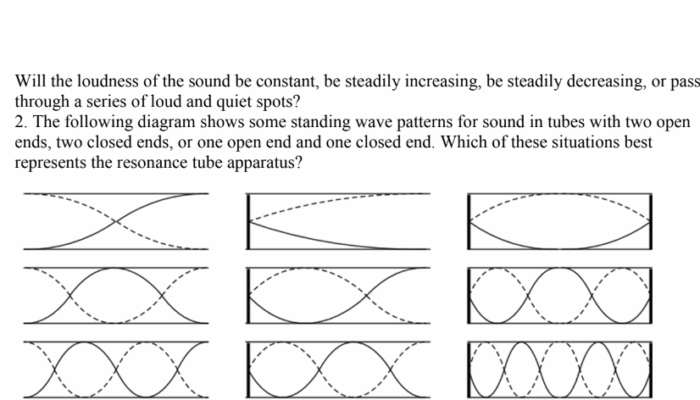
The resonant tube operates on the principle of resonance, where sound waves reflect within a confined space to produce standing waves. This device is conceptually similar to blowing across the mouth of a partially filled bottle, where the air column inside vibrates at a natural frequency. By adjusting the length of the tube and measuring the frequency of the resonant sound, the speed of sound can be calculated using the fundamental wave equation:
v = f × λ
- v (speed of sound): The velocity at which sound waves propagate through a medium.
- f (frequency): The number of oscillations per second of the sound wave.
- λ (wavelength): The distance between successive crests or troughs of the wave.
This method is particularly effective for determining the speed of sound in air under controlled laboratory conditions.
Acoustic Doppler Effect Apparatus
The acoustic Doppler effect device utilizes the frequency shift phenomenon discovered by Christian Doppler. When a sound source moves relative to an observer, the observed frequency changes-higher as the source approaches and lower as it moves away. This principle is harnessed by emitting sound waves toward moving objects (such as raindrops or aquatic life) and analyzing the frequency changes upon their return. The frequency shift allows calculation of both the speed of sound and the velocity of the moving target, providing valuable data in fields like hydrology and meteorology.
Ultrasonic Flow Meter
Designed primarily for fluid environments, the ultrasonic flow meter employs high-frequency sound waves beyond the audible range to measure fluid velocity and sound speed. Transducers send and receive ultrasonic pulses upstream and downstream within a flowing liquid. Because sound travels faster downstream than upstream, the difference in transit times is used to compute the flow rate and the speed of sound in the fluid. This technology is widely applied in water resource management, industrial process control, and environmental monitoring.
Environmental Influences on Sound Speed
The velocity of sound is not constant; it varies with environmental conditions such as temperature, humidity, and atmospheric pressure. For example, sound travels more rapidly in warmer air because increased temperature energizes air molecules, facilitating quicker vibration transmission. Humidity also affects sound speed since moist air is less dense than dry air, allowing sound waves to propagate faster. These dependencies necessitate careful calibration of measurement instruments to ensure accuracy under varying atmospheric conditions.
Applications Across Scientific and Practical Fields
Sound measurement technologies extend beyond pure physics, impacting numerous disciplines:
- Acoustic Engineering: Designing auditoriums, noise control, and audio equipment.
- Meteorology: Monitoring precipitation and wind speeds using Doppler-based instruments.
- Medical Diagnostics: Ultrasonic devices provide non-invasive imaging of internal body structures.
The versatility of these instruments highlights their importance in both theoretical research and practical applications, bridging gaps between abstract concepts and real-world phenomena.
Educational Importance of Sound Measurement Instruments
In academic settings, devices like resonant tubes and Doppler effect apparatuses serve as effective teaching tools. They enable students to engage directly with the principles of wave mechanics and acoustics, transforming abstract theories into tangible experiments. This hands-on experience fosters curiosity and deepens comprehension, inspiring future scientists and engineers to explore the complexities of sound and vibration.
Common Misconceptions About Sound Measurement
The speed of sound is the same in all conditions.
Sound speed varies significantly with temperature, humidity, and pressure, requiring adjustments for precise measurement.
Ultrasonic devices only measure sound speed.
Ultrasonic flow meters also measure fluid velocity, providing dual functionality in fluid dynamics studies.
Significance of Measuring the Speed of Sound
Understanding and accurately measuring the speed of sound is crucial for advancements in science and technology. It enables the design of better acoustic environments, improves weather prediction models, enhances medical imaging techniques, and supports environmental monitoring. As measurement technologies evolve, they continue to expand our knowledge of wave phenomena and their interactions with the physical world, driving innovation across multiple disciplines.
FAQ
What is the speed of sound?
The speed of sound is the rate at which sound waves travel through a medium, influenced by factors like temperature and humidity.
How does temperature affect sound speed?
Sound travels faster in warmer air because increased temperature energizes air molecules, facilitating quicker vibration transmission.

Leave a Reply