
Short Answer
Understanding Production Costs
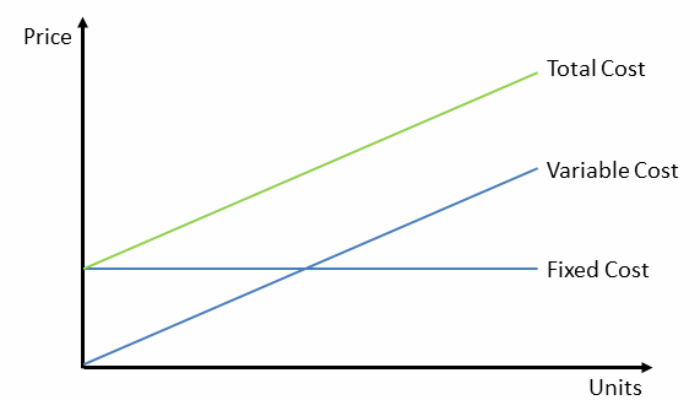
When analyzing the expenses involved in producing various goods and services, it is essential to distinguish between different categories of costs. Production costs primarily fall into two broad classifications: fixed costs and variable costs. Both types are crucial in assessing the financial feasibility and strategic planning of any business or project. A comprehensive grasp of these cost structures allows decision-makers to optimize operations and improve profitability.
Definition of Fixed and Variable Costs
Production costs can be categorized based on their behavior relative to output levels:
- Fixed Costs:
These are expenses that remain unchanged regardless of the quantity of goods or services produced. Fixed costs provide a stable financial baseline for businesses and include items such as rent, salaries of permanent employees, and depreciation of machinery and equipment. - Variable Costs:
These costs fluctuate directly with production volume. As output increases or decreases, variable costs adjust accordingly. Examples include raw materials, packaging, and wages paid to hourly workers involved in production.
How Fixed and Variable Costs Influence Production
The interaction between fixed and variable costs shapes the overall cost structure of a business. Fixed costs, while often substantial at the outset, can be spread over a larger number of units as production scales up, effectively lowering the cost per unit. This principle, known as economies of scale, is especially relevant in capital-intensive industries such as automotive manufacturing, aerospace, and heavy equipment production.
Conversely, businesses with minimal fixed costs benefit from greater operational flexibility. For example, software companies typically incur low fixed expenses, mainly salaries and server fees, while their variable costs-such as software licenses and cloud services-scale with user demand. This adaptability allows such firms to respond quickly to market changes without being encumbered by high fixed overheads.
Impact of Demand Variability on Production Costs
Fluctuations in market demand significantly affect the balance between fixed and variable costs. Seasonal products, like holiday decorations, experience sharp changes in production volume throughout the year. Managing these variations requires careful control of variable costs to avoid excess inventory and inflated expenses, which can erode profit margins. Strategic decisions about scaling production up or down are critical in such contexts to maintain cost efficiency.
Production Complexity and Cost Considerations
The intricacy of a product also plays a vital role in determining its cost structure. Complex items often demand higher fixed costs due to the need for specialized machinery and skilled labor. At the same time, variable costs may rise because of the requirement for unique or high-quality materials. Luxury goods, such as bespoke furniture or designer fashion, exemplify this dynamic, as their elevated production costs are offset by the ability to charge premium prices, resulting in attractive profit margins.
Production Costs in the Digital Era
The emergence of digital products has transformed traditional cost paradigms. In digital content creation, fixed costs typically include initial investments in platform development and content creation, while variable costs cover ongoing maintenance, updates, and distribution fees. For instance, video game development involves significant fixed expenses like salaries for designers and programmers, whereas variable costs fluctuate with licensing and market reach. This model highlights the distinct nature of production costs in technology-driven industries.
Technological Advancements and Cost Dynamics
Industries characterized by rapid technological progress, such as renewable energy, face evolving cost structures. High initial fixed costs are common due to the specialized equipment required, like solar panels or wind turbines. However, as innovations improve efficiency and reduce manufacturing expenses, variable costs associated with scaling production tend to decrease. This ongoing evolution necessitates adaptive business strategies to capitalize on cost-saving opportunities and maintain competitiveness.
Common Misconceptions About Production Costs
Fixed costs are always a disadvantage.
While fixed costs can be high initially, they enable economies of scale, reducing per-unit costs as production increases.
Variable costs are less important than fixed costs.
Variable costs directly impact profitability, especially in industries with fluctuating demand, making their management equally critical.
Significance of Understanding Production Costs
Grasping the distinctions and interplay between fixed and variable costs is fundamental for businesses aiming to enhance operational efficiency and economic sustainability. Whether producing physical goods or digital services, cost structures influence pricing strategies, investment decisions, and competitive positioning. By effectively managing these costs, companies can better align their operations with market demands and secure long-term success in dynamic economic environments.
FAQ
What are the main types of production costs?
The main types are fixed costs, which stay constant regardless of output, and variable costs, which fluctuate with production levels.
How do fixed and variable costs impact pricing?
Understanding fixed and variable costs helps businesses price products to cover expenses and achieve profitability.
Can production costs change over time?
Yes, technological improvements and scaling production can reduce both fixed and variable costs.
Why do some industries have higher fixed costs?
Industries requiring expensive infrastructure or machinery, like automotive or aerospace, have higher fixed costs.
How does product complexity affect production costs?
More complex products often require advanced machinery and skilled labor, increasing fixed and variable costs.






Leave a Reply