

Short Answer
Definition of an Air Bubble as a Lens
An air bubble submerged in water functions as a natural optical element, acting similarly to a convex lens. This phenomenon arises from the interaction of light with the bubble’s spherical shape and the differing optical properties of air and water. Understanding this effect requires exploring the principles of light refraction and the bubble’s geometry.
Fundamentals of Refraction and Light Behavior
Refraction is the bending of light as it passes between materials with different densities and refractive indices. When light moves from water, which has a refractive index of about 1.33, into air, with a refractive index near 1.00, it changes direction due to this difference. This bending of light rays at the water-air interface is the core mechanism that enables the air bubble to influence light paths and act like a lens.
- Refractive Index:
A measure of how much light slows down in a medium compared to vacuum. Water’s higher refractive index means light travels slower in water than in air. - Light Propagation:
As light crosses from water to air inside the bubble, it bends away from the normal line, altering its trajectory.
Structural Characteristics of the Air Bubble
The air bubble’s nearly perfect spherical shape results from surface tension forces striving to minimize surface area. This curvature is critical because it creates a curved interface where light rays refract. The spherical boundary causes light rays entering or exiting the bubble to bend in a manner that resembles the behavior of a convex lens, which typically converges light toward a focal point.
Curvature and Optical Effects
The curved surface of the bubble continuously changes the angle at which light rays meet the interface, leading to complex refraction patterns. This curvature is responsible for the bubble’s ability to focus or diverge light, depending on the incident angle and position of the rays.
Mechanism of Light Convergence and Divergence
Not all light rays passing through the bubble behave identically. Rays traveling near the center of the bubble experience minimal bending, while those striking the edges at sharper angles undergo more pronounced refraction. This variation causes optical aberrations, which can distort images seen through the bubble.
- Central Rays:
Light passing through the bubble’s center is refracted less, maintaining a straighter path. - Peripheral Rays:
Rays hitting the bubble’s edges bend more sharply, contributing to image distortion and magnification effects.
Mathematical Explanation of the Bubble’s Lens Effect
The lensing behavior of an air bubble can be analyzed using the lensmaker’s formula adapted for spherical interfaces:
1/f = (n₂/n₁ – 1) (2/R)
- f: Focal length of the bubble lens
- n₁: Refractive index of the surrounding medium (water ≈ 1.33)
- n₂: Refractive index of the bubble’s interior (air ≈ 1.00)
- R: Radius of curvature of the bubble’s surface
Since light travels from a denser medium (water) to a less dense medium (air), the bubble acts as a diverging lens with a negative focal length, causing light rays to spread out rather than converge.
Practical Applications and Scientific Significance
The optical properties of air bubbles have practical uses in various scientific fields. In microscopy, air bubbles can serve as simple magnifying lenses to enhance the visibility of small objects. Additionally, understanding how bubbles refract light aids in the design of advanced optical instruments and imaging technologies.
- Microscopy:
Utilizing bubbles as rudimentary lenses to magnify specimens. - Material Science:
Studying bubble optics helps in developing novel optical materials and devices. - Environmental Science:
Bubbles influence light propagation in aquatic environments, affecting underwater visibility and remote sensing.
Visual and Aesthetic Impact of Air Bubbles
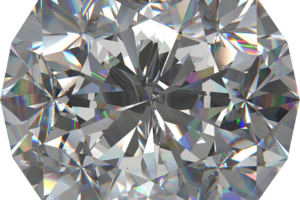
Beyond their scientific importance, air bubbles captivate observers through their mesmerizing optical effects. The interplay of light within the bubble creates vibrant patterns, reflections, and color dispersions that evoke a sense of wonder. This natural spectacle highlights the intersection of physics and beauty in everyday phenomena.
Common Misconceptions About Air Bubbles as Lenses
Air bubbles always act as converging lenses.
Due to the refractive index difference, air bubbles typically behave as diverging lenses, spreading light rays apart.
The bubble’s shape does not affect light behavior.
The spherical curvature is crucial in determining how light refracts and the resulting optical effects.
Importance in Science and Everyday Life
Studying the optical characteristics of air bubbles enriches our understanding of light behavior in complex media. This knowledge has implications for fields such as fluid dynamics, optics, and environmental monitoring. Moreover, recognizing the subtle beauty in such simple natural occurrences fosters a deeper appreciation for the physical world and encourages curiosity-driven exploration.
Summary
An air bubble immersed in water exemplifies a natural optical system where refraction and geometry combine to produce lens-like effects. Its spherical form and the refractive index contrast between air and water cause light to bend uniquely, often resulting in diverging light rays and image distortions. These properties not only have practical applications in science and technology but also inspire aesthetic admiration, illustrating the profound connections between nature, physics, and human perception.
FAQ
What type of lens is an air bubble inside water?
An air bubble inside water acts as a diverging lens due to the refractive index difference between air and water.
How does an air bubble affect light passing through it in water?
The bubble bends light rays away from the normal because light moves from a denser to a less dense medium, causing light to diverge.
Why does the shape of the air bubble matter in its lens effect?
The spherical shape of the bubble creates a curved interface that refracts light similarly to a convex lens but with diverging effects.
Are there any practical uses of air bubbles as lenses?
Yes, air bubbles can be used in microscopy and materials science to study optical properties and magnify small objects.



Leave a Reply