
Short Answer
Definition of CERN and Its Scientific Mission
The European Organization for Nuclear Research, commonly known as CERN, is a premier international research facility dedicated to exploring the fundamental principles of physics. Its primary objective is to investigate the smallest constituents of matter and the forces governing them, thereby deepening our understanding of the universe’s origins and structure.
- Location:
CERN is situated near the French-Swiss border, operating a vast underground complex. - Main Facility:
The Large Hadron Collider (LHC), the world’s most powerful particle accelerator, is CERN’s flagship instrument. - Scientific Goal:
To recreate conditions similar to those just after the Big Bang by colliding particles at extremely high energies.
How CERN’s Large Hadron Collider Functions
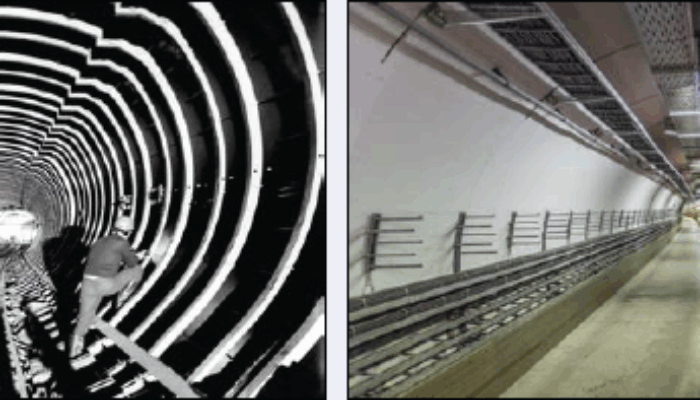
The LHC accelerates protons and other particles to velocities approaching the speed of light within a 27-kilometer circular tunnel. These particles are then collided head-on, producing energy densities that mimic the early universe’s extreme environment. Detectors surrounding the collision points capture data from the resulting particle interactions, enabling physicists to analyze fundamental forces and particles.
Theoretical Risks Associated with High-Energy Particle Collisions
While CERN’s experiments have led to landmark discoveries such as the Higgs boson, they also raise theoretical safety concerns that have sparked public and scientific debate.
- Miniature Black Holes:
Some hypotheses suggest that high-energy collisions could create tiny black holes. However, prevailing scientific consensus holds that if such black holes were formed, they would evaporate almost instantaneously via Hawking radiation, posing no danger to Earth. - Exotic Matter and Antimatter:
CERN’s experiments involve generating antimatter, which annihilates upon contact with matter, releasing energy comparable to nuclear explosions. Nonetheless, the minuscule quantities produced ensure that any risk remains purely theoretical and negligible.
Environmental Impact of CERN’s Operations
Operating the LHC demands substantial electrical power, approximately 1.3 terawatt-hours annually, which raises concerns about the environmental footprint of such large-scale scientific research.
- Energy Consumption:
The significant electricity usage contributes to carbon emissions depending on the energy source, prompting discussions on sustainability. - Balancing Innovation and Ecology:
The challenge lies in advancing fundamental physics while minimizing ecological consequences, encouraging CERN and the scientific community to explore greener operational practices.
Operational and Safety Considerations at CERN
Given the complexity and scale of CERN’s experiments, the potential for human error and technical malfunctions cannot be entirely ruled out.
- Equipment Failures:
Malfunctions in accelerator components or detectors could disrupt experiments or cause safety concerns. - Cybersecurity Risks:
As a high-profile research institution, CERN must safeguard against cyber threats that could compromise data integrity or operational control. - Safety Protocols:
Rigorous safety measures and emergency response plans are essential to mitigate risks and ensure the well-being of personnel and the environment.
Global Collaboration and Ethical Implications
CERN exemplifies international scientific cooperation, bringing together researchers from diverse nations to pursue common goals. However, this global nexus also introduces ethical and geopolitical considerations.
- Technology Misuse:
Advanced technologies developed at CERN could potentially be exploited for harmful purposes, necessitating strict oversight. - Policy and Public Engagement:
Transparent communication and collaboration between scientists, policymakers, and the public are crucial to responsibly manage the societal impact of CERN’s discoveries.
Philosophical and Existential Dimensions of CERN’s Research
Beyond scientific inquiry, CERN’s work touches on profound questions about existence and reality.
- Understanding Reality:
Discoveries at CERN may challenge current perceptions of the universe, prompting reflection on humanity’s place within it. - Ethical Frameworks:
As new phenomena are uncovered, society must develop ethical guidelines to navigate the implications of such knowledge.
Why Understanding CERN’s Risks and Contributions Is Crucial
CERN’s pioneering research pushes the boundaries of human knowledge, but it also embodies a complex interplay of potential risks and benefits. Recognizing and addressing theoretical dangers, environmental impacts, operational challenges, and ethical concerns is vital to ensuring that scientific progress proceeds responsibly. This balance is essential not only for advancing physics but also for safeguarding our planet and society as we explore the fundamental nature of reality.
FAQ
What are the risks associated with CERN’s experiments?
CERN’s experiments may theoretically produce miniature black holes or exotic matter, but these risks are considered negligible by the scientific community.
How does CERN impact the environment?
CERN’s operations consume significant energy, which can contribute to carbon emissions, prompting discussions on sustainability.
What safety measures are in place at CERN?
CERN has rigorous safety protocols and emergency response plans to mitigate operational risks.






Leave a Reply