

Short Answer
Understanding Dark Matter
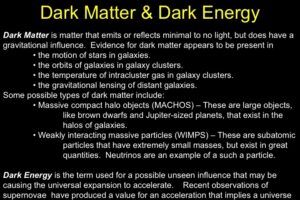
Dark matter represents one of the most profound mysteries in modern astrophysics and particle physics. Unlike ordinary matter, which interacts with light and can be observed directly, dark matter remains invisible, detectable only through its gravitational effects on visible objects in the universe. It is believed to constitute a significant portion of the total mass in the cosmos, shaping the formation and behavior of galaxies and large-scale cosmic structures.
Evidence for Dark Matter
The presence of dark matter is inferred from several key astronomical observations:
- Galactic Rotation Curves:
Stars in galaxies orbit their centers at speeds that cannot be explained solely by the gravitational pull of visible matter, implying an unseen mass component. - Gravitational Lensing:
Light from distant galaxies bends around massive galaxy clusters more than expected, indicating additional mass from invisible sources. - Cosmic Structure Formation:
The large-scale distribution of galaxies and cosmic filaments suggests the influence of a non-luminous matter component guiding their assembly.
Leading Dark Matter Candidates
Scientists have proposed various hypothetical particles and objects to explain dark matter’s elusive nature. These candidates differ in their properties and the mechanisms by which they might interact with ordinary matter.
Weakly Interacting Massive Particles (WIMPs)
WIMPs are among the most extensively studied dark matter candidates. They are theorized to interact via the weak nuclear force and gravity, making them difficult to detect but potentially observable through rare interactions with normal matter. WIMPs naturally arise in extensions of the Standard Model of particle physics, such as supersymmetry.
To detect WIMPs, scientists employ highly sensitive underground detectors shielded from cosmic radiation, searching for faint signals produced when WIMPs collide with atomic nuclei. Despite decades of experiments, no conclusive evidence for WIMPs has yet been found, prompting the exploration of alternative candidates.
Axions
Axions are ultralight particles originally proposed to resolve the strong CP problem in quantum chromodynamics, which concerns why the strong nuclear force preserves certain symmetries. Their extremely low mass and weak interaction with photons make axions compelling dark matter candidates.
Detection efforts, such as the Axion Dark Matter Experiment (ADMX), attempt to convert axions into detectable microwave photons within strong magnetic fields. This approach exemplifies the innovative techniques developed to probe particles that interact so subtly with the observable universe.
Sterile Neutrinos
Sterile neutrinos are hypothetical right-handed neutrinos that do not interact via the weak nuclear force, unlike the known left-handed neutrinos. Their interactions with ordinary matter would be even weaker, allowing them to pass through matter almost undetected.
If sterile neutrinos exist with appropriate masses, they could serve as dark matter, influencing the formation of galaxies and cosmic evolution. This possibility intriguingly links the mysteries of neutrino mass generation and dark matter composition.
Quasiparticles and Emergent Phenomena
Beyond fundamental particles, some theories propose that dark matter might arise from quasiparticles-collective excitations emerging from complex interactions within quantum fields. In condensed matter physics, quasiparticles behave like particles but are manifestations of collective behavior rather than individual entities.
Analogous quasiparticles in the quantum vacuum could contribute to dark matter, presenting unique challenges for detection since they do not conform to traditional particle interaction models. This perspective expands the search for dark matter into the realm of emergent phenomena and collective quantum effects.
Primordial Black Holes
Another intriguing candidate for dark matter is primordial black holes, which are compact objects formed from density fluctuations in the early universe. Unlike particle candidates, these black holes would exert gravitational influence consistent with dark matter’s role.
If primordial black holes exist within certain mass ranges, they could account for some or all of the dark matter, although current astronomical observations place constraints on their abundance. This hypothesis suggests that dark matter might be a composite of various entities, including both particles and compact objects.
Methods of Detection and Observation
Efforts to identify dark matter involve both direct and indirect approaches:
- Direct Detection:
Experiments aim to observe rare interactions between dark matter particles and atomic nuclei using ultra-sensitive detectors located deep underground to minimize background noise. - Indirect Detection:
Astronomical observations search for secondary effects of dark matter, such as gamma rays or neutrinos produced by dark matter annihilation or decay. - Astronomical Measurements:
Precise tracking of stellar motions, gravitational wave signals, and cosmic microwave background distortions provide indirect clues about dark matter’s properties and distribution.
Challenges and Theoretical Implications
The search for dark matter is not only a quest to identify missing mass but also a profound exploration of fundamental physics. Each candidate particle or object reflects different theoretical frameworks and raises unique questions about the universe’s composition and evolution.
The possibility that dark matter consists of a mixture of particles, quasiparticles, and compact objects challenges traditional detection methods and calls for innovative experimental and observational strategies. Moreover, uncovering dark matter’s nature could revolutionize our understanding of particle physics, cosmology, and the fundamental forces governing reality.
Common Misconceptions About Dark Matter
Dark matter is simply ordinary matter that is invisible.
Dark matter does not interact with electromagnetic radiation, making it fundamentally different from ordinary matter, which emits or absorbs light.
Dark matter particles have been directly detected.
Despite extensive searches, no direct detection of dark matter particles has been confirmed; evidence remains indirect through gravitational effects.
Dark matter is composed solely of one type of particle.
Dark matter may be a complex mixture of different particles and objects, including WIMPs, axions, sterile neutrinos, quasiparticles, and primordial black holes.
Significance of Dark Matter Research
Understanding dark matter is crucial for comprehending the universe’s structure, formation, and ultimate fate. It influences galaxy formation, cosmic evolution, and the behavior of gravitational systems on all scales. Advances in dark matter research drive innovation in particle physics, astrophysics, and cosmology, pushing the boundaries of human knowledge and technology.
The ongoing pursuit to unveil dark matter’s identity exemplifies the spirit of scientific inquiry, blending theoretical creativity with cutting-edge experimentation. As researchers probe deeper into this cosmic enigma, they edge closer to revealing the hidden components that shape the universe’s grand design.




Leave a Reply