
Short Answer
Understanding Magnetic Domains in Ferromagnetic Materials
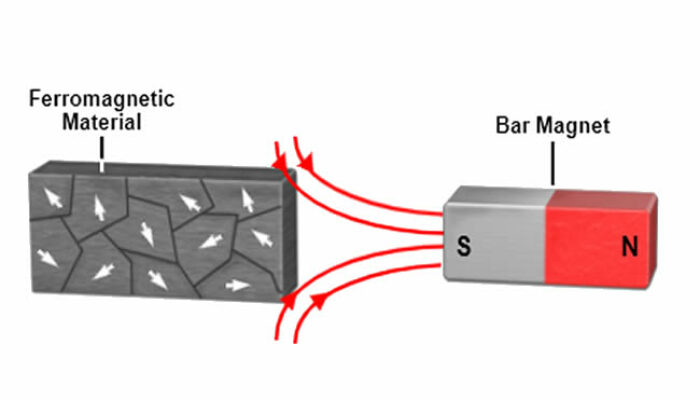
Magnetic domains are fundamental to the behavior of ferromagnetic substances such as iron, cobalt, and nickel. These materials consist of microscopic regions where magnetic moments align uniformly due to quantum mechanical exchange interactions. Each domain exhibits a consistent magnetic orientation, but adjacent domains often have opposing directions, creating boundaries where magnetization can be altered. Traditionally, external magnetic fields have been used to manipulate these domains, a principle that underpins technologies like magnetic data storage and sensing devices.
Definition and Role of Photons in Magnetism
Photons, the elementary particles of light, interact with magnetic materials through magneto-optical effects. This interaction can influence the orientation of magnetic moments within ferromagnets, leading to phenomena such as the Faraday rotation and the Kerr effect. These effects demonstrate that light can affect magnetic properties, but the extent to which photons can directly control the structure and behavior of magnetic domains remains an evolving field of study.
Mechanisms of Photon-Magnetic Domain Interaction
At the atomic scale, the interaction between light and ferromagnetic materials involves photon-induced electronic transitions that can modify magnetic ordering. Ultrafast laser pulses, particularly those in the femtosecond range, have the capability to deliver energy rapidly enough to realign magnetic domains almost instantaneously. This ultrafast manipulation opens avenues for innovative data storage technologies that leverage the swift reconfiguration of magnetization states.
Key Factors Influencing Photon-Induced Domain Manipulation
- Wavelength:
The specific energy of photons determines their interaction efficiency with electronic states in ferromagnets. - Intensity:
Higher light intensities can induce stronger magnetic responses but may also cause unwanted heating effects. - Polarization:
Circularly polarized light can exert torque on magnetic spins, enabling selective control over domain orientation.
Theoretical Models and Simulation Approaches
Researchers employ theoretical frameworks and computational models, such as Monte Carlo simulations and micromagnetic modeling, to understand how light influences magnetic domain configurations. These models help elucidate the parameters that govern domain stability and dynamics under photon exposure, providing insights into the temporal evolution of magnetization and the effects of thermal fluctuations.
Applications and Technological Implications
The ability to manipulate magnetic domains with light holds significant promise for advancing spintronics-a field focused on exploiting electron spin for information processing. Light-driven control of magnetization could lead to devices that operate at higher speeds and with lower energy consumption compared to traditional electronic components. Potential applications include:
- Advanced Data Storage:
Utilizing ultrafast laser pulses to write and erase magnetic information rapidly. - Magnetic Sensors:
Developing sensors whose sensitivity can be tuned or enhanced by light. - Signal Processing:
Creating photonic-magnetic hybrid devices for faster and more efficient data transmission.
Challenges in Integrating Photonics and Ferromagnetism
Despite the exciting prospects, several technical hurdles remain. Developing coherent and controllable light sources, such as fiber lasers with precise wavelength and polarization control, is critical for effective photon-magnetic interactions. Additionally, integrating photonic components with existing magnetic devices requires innovative engineering, especially at the nanoscale where coupling between light and nanostructured magnets can be optimized.
Interdisciplinary Collaboration and Future Directions
Progress in this domain depends on the synergy between physicists, materials scientists, and optical engineers. Collaborative research efforts are essential to unravel the complexities of photon-induced magnetic phenomena and to translate these findings into practical technologies. As understanding deepens, the fusion of photonics and magnetism may revolutionize fields ranging from information technology to materials science.
Common Misconceptions About Light and Magnetic Domains
Light can only heat magnetic materials without affecting their magnetic properties.
Beyond thermal effects, light can induce electronic transitions that directly alter magnetic ordering and domain structures.
Only magnetic fields can manipulate magnetic domains.
Photons, especially with specific polarization and ultrafast pulses, can exert torque and realign magnetic domains without external magnetic fields.
Significance of Photon-Controlled Magnetic Domains
The exploration of light’s influence on ferromagnetic domains is not only a frontier in fundamental physics but also a catalyst for technological innovation. Understanding and harnessing this interaction could lead to breakthroughs in faster, more energy-efficient memory devices and sensors, impacting everyday technology and scientific research. The ongoing investigation into this interplay promises to illuminate new principles of magnetism and photonics, shaping the future landscape of material science and information technology.
FAQ
What are magnetic domains?
Magnetic domains are regions in ferromagnetic materials where magnetic moments are aligned uniformly, but adjacent domains can have opposing orientations.
How do photons affect ferromagnetic materials?
Photons can interact with magnetic materials through magneto-optical effects, influencing the orientation of magnetic moments and thereby controlling magnetic properties.





Leave a Reply